
China’s Suxi Terminal: Autonomous Rail Innovation & Trade Boost
China launches first autonomous railway container terminal, boosting logistics efficiency.
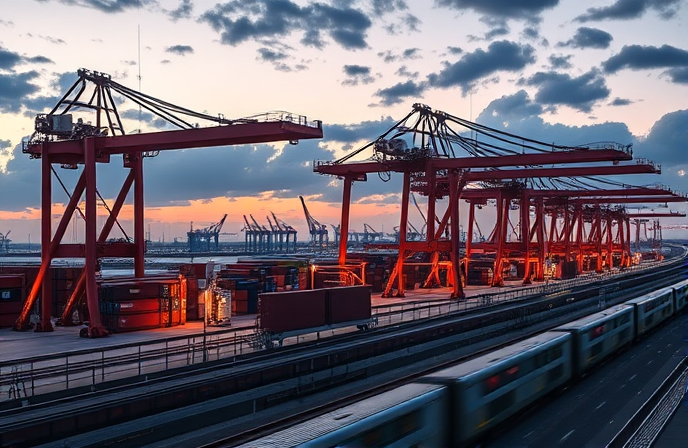
China Unveils First Mixed-Mode Autonomous Railway Container Terminal
In a move poised to redefine logistics and supply chain efficiency, China has inaugurated its first railway container terminal equipped with mixed-mode autonomous driving technology. Located at the Suxi container handling station in Yiwu, Zhejiang Province, the facility began operations on June 27th. This innovative terminal, a key component of the Yiwu (Suxi) International Hub Port initiative, integrates advanced automation with traditional manual workflows, aiming to modernize cargo handling, cut operational costs, and foster a more sustainable, intelligent transport system. This article will explore the technological advancements, operational benefits, and strategic implications of this groundbreaking project, examining how China is leveraging automation to streamline its rail freight operations and boost both domestic and international trade. The “Who” is China Railway Shanghai Bureau Group, and the “What” is a new autonomous railway container terminal. The “When” is June 27th. The “Where” is Suxi, China. The “Why” is to improve logistics, reduce costs, and support a low-carbon transportation system. The “How” is through a mixed-mode autonomous system.
Technological Advancements and Hybrid Operations
The Suxi container terminal represents a significant leap forward in railway automation. Approved as China’s first experimental zone for autonomous operations within a railway yard, the facility seamlessly blends automated and manual processes. This “mixed-mode” approach allows for the co-existence of remote-controlled gantry cranes, automated storage systems, and intelligent transporters alongside traditional operational practices. According to Li Jinsong, deputy director of the Hangzhou Railway Logistics Center, the design “allows for seamless integration of automated and manual processes, enhancing efficiency while ensuring operational flexibility.” This innovative hybrid design minimizes disruptions and maximizes operational capacity, allowing for faster throughput. The automation systems are also designed to reduce human error and improve safety within the terminal, leading to enhanced overall performance and reliability. This integrated approach is crucial for adapting to fluctuating cargo volumes and ensuring consistent efficiency throughout the day.
Operational Efficiency and Throughput Optimization
The Suxi terminal, directly connected to the Ningbo-Jinhua Railway, is designed to handle up to 660,000 twenty-foot equivalent units (TEUs) annually. This direct connection to a major rail line is essential for efficient cargo transport. Furthermore, the terminal’s design streamlines cargo movement. The facility incorporates a dedicated rail loading zone, a container yard, a customs supervision area, and a digital logistics management system, all working in concert to accelerate cargo flow. A significant benefit is the “one-time declaration, inspection, and release” procedure available at Suxi, mirroring the practices at maritime ports. This setup allows cargo to be processed as though it had already reached the port, accelerating the export process and reducing administrative bottlenecks. This expedited process minimizes transit times and substantially reduces overall logistical costs for shippers.
Strategic Role in National Logistics and Trade
The Suxi terminal plays a central role in connecting inland manufacturing and commercial centers with China’s maritime gateways. The facility establishes a crucial logistics corridor linking Yiwu with the Ningbo-Zhoushan Port, the world’s busiest cargo hub by tonnage. As General Manager of Zhejiang Seaport Yiwu Hub Port Co., Ltd, Zhao Jianmin noted that this direct link provides significant transit time and cost reductions. This improvement in supply chain efficiency supports China’s broader goals of enhancing domestic and international trade. China is also actively investing in logistics modernization to bolster supply chain performance, cut emissions, and build digital infrastructure. The Suxi terminal fits into this grander vision by establishing a multi-modal, high-efficiency transport system.
Future Outlook and Scalability
The mixed-mode autonomous capabilities deployed in Suxi offer a scalable solution for future terminals across China. The success of the project is expected to serve as a blueprint for similar developments in other strategic inland hubs. This approach will unlock faster trade flows and increase connectivity between ports and production regions. The Suxi terminal represents a significant step toward building a more resilient and interconnected national logistics network. As more terminals adopt these technologies, it will become increasingly easier to move goods efficiently. This technology can increase the competitiveness of Chinese manufacturers in international markets. This project highlights China’s commitment to technological innovation and its ambition to lead the global logistics industry.
Conclusion
The launch of China’s first mixed-mode autonomous railway container terminal at Suxi marks a transformative moment in the country’s logistics landscape. This innovative facility, integrating cutting-edge autonomous technologies with traditional operational methods, promises to revolutionize cargo handling, reduce operational costs, and enhance the efficiency of the nation’s supply chain. The facility’s design, with streamlined customs procedures and seamless integration with maritime ports, highlights China’s strategic focus on optimizing both domestic and international trade flows. By establishing a scalable model, the Suxi terminal sets a precedent for future developments across the country, fostering greater connectivity between production regions and maritime gateways. The success of this project will influence not only the efficiency of China’s rail freight operations but also contribute to the broader goals of building a sustainable, smart, and globally competitive transport infrastructure. The advancements showcased at Suxi will likely become a benchmark for other countries seeking to modernize their railway systems and bolster their international trade capabilities.
RELATED POSTS

September 18, 2017 10:17 pm
Revolutionize urban rail! Optimize efficiency and passenger experience with...
July 15, 2017 3:57 pm
Here's a voiceover-friendly excerpt tailored for railway professionals:**"Technology is transforming...
September 17, 2025 5:55 pm
SWR deploys body-worn cameras to combat rising staff assaults, launching...

September 9, 2015 2:14 pm
Bombardier Transportation announced today that its joint venture Bombardier CPC...
March 27, 2018 12:59 am
Revolutionize railway track inspection with our flexible ultrasound patch! ...

July 7, 2025 11:33 pm
Graves proposes flexible surface transportation bill, prioritizing state funding autonomy...