
DB & PKP IC Launch Direct Leipzig-Kraków EuroCity Line
Leipzig and Kraków are now directly connected by EuroCity trains! DB and PKP IC launch a 50% service increase, boosting vital east-west rail travel.
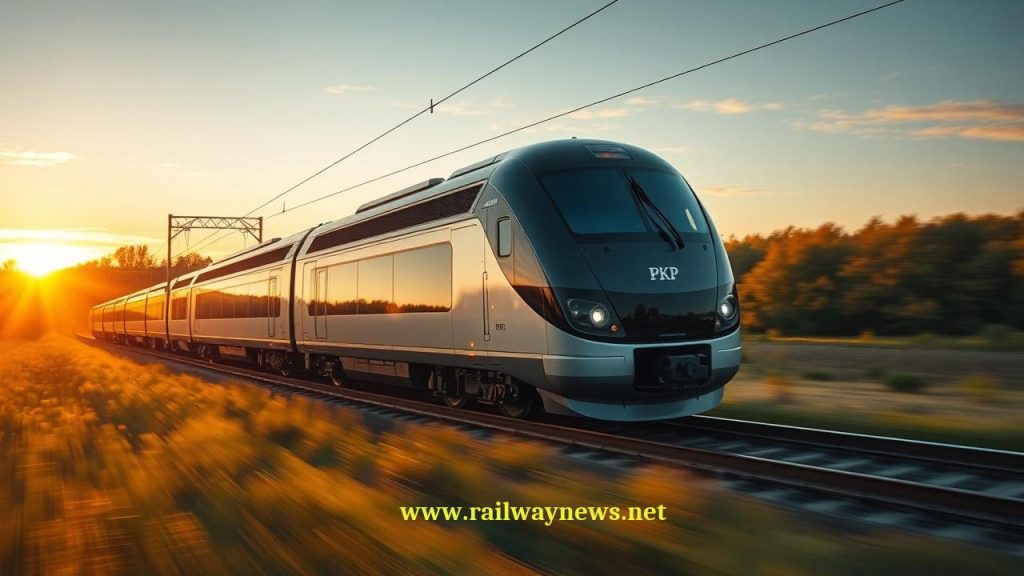
BERLIN/WARSAW – Deutsche Bahn (DB) and PKP Intercity (PKP IC) are launching a landmark expansion of services between Germany and Poland, introducing a direct EuroCity line connecting Leipzig with Wrocław and Kraków for the first time. This initiative is a cornerstone of a wider plan set to increase daily EuroCity connections between the two nations by 50% with the introduction of the 2026 timetable, signaling a major boost for the vital east-west European rail corridor.
| Category | Details |
|---|---|
| New Direct Route | Leipzig – Wrocław – Kraków (with extension to Przemyśl) |
| Operators | Deutsche Bahn (DB) & PKP Intercity (PKP IC) |
| Service Frequency | 4 trains per day (2 in each direction) |
| Rolling Stock | Modernized PKP Intercity EuroCity carriages (>300 seats) |
| Key Journey Times | Leipzig-Wrocław: ~3.5 hours; Leipzig-Kraków: ~7 hours |
| Target Implementation | Part of the 2026 pan-European timetable change |
Main Body:
In a significant enhancement of cross-border rail travel, German and Polish national operators have commenced a new direct service that eliminates the need for transfers between Central Germany and Southern Poland. The new line features four daily trains, two in each direction, jointly operated by DB and PKP IC. One of these daily services extends to Przemyśl, near the Polish-Ukrainian border, providing a critical, streamlined connection for onward travel to Ukrainian cities, including Kyiv. The service schedule is designed for convenience, with departures from Leipzig Hauptbahnhof at 10:55 and 14:55, and return arrivals at 13:04 and 17:04, making it a highly competitive and sustainable alternative to road or air transport.
The route will be served by modernized EuroCity carriages provided by PKP Intercity, each configured to offer over 300 seats. While specific locomotive and traction details have not been released, the focus on refurbished rolling stock aims to provide a comfortable passenger experience. This service expansion comes at a critical time for Deutsche Bahn, which has faced public and political scrutiny for operating one of Europe’s least punctual long-distance networks. The success of this high-profile international route will be a crucial test of DB’s operational reliability and its ability to execute complex, cross-border timetable integrations effectively.
The 50% increase in services planned for the 2026 timetable represents one of the most significant cross-border rail expansions in Europe in recent years. However, such ambitious timetable revamps are not without risk. Rail industry experts often point to the chaotic May 2018 timetable change in the UK, which led to weeks of disruption when operators attempted to maximize network capacity without sufficient preparation. The successful implementation of the Germany-Poland expansion will therefore be closely watched by the industry as a benchmark for how to manage large-scale, multinational service growth while maintaining network stability and passenger trust.
Key Takeaways
- New Connectivity: For the first time, a direct, transfer-free EuroCity service connects Leipzig and other cities in Saxony and Brandenburg with Wrocław, Kraków, and the Ukrainian border.
- Major Service Increase: The initiative is part of a broader strategy to boost Germany-Poland EuroCity connections by 50% by the 2026 timetable, creating a total of 34 daily trains.
- Strategic Importance: The line strengthens a key European east-west corridor, enhances sustainable travel options, and provides a resilient, strategic transport link to and from Ukraine.
Editor’s Analysis
This expansion is more than just a new timetable entry; it is a strategic geopolitical and economic move. By strengthening the rail artery between two of the EU’s largest economies, DB and PKP IC are betting on a modal shift away from cars and short-haul flights. The extension to Przemyśl underscores rail’s growing importance in providing stable, long-distance connections to conflict-adjacent regions. For Deutsche Bahn, this is a moment of truth. Amidst domestic criticism over performance, a flawlessly executed international expansion would be a powerful demonstration of its capabilities and a crucial step in rebuilding its reputation as a premier European rail operator. The success or failure of this ambitious project will resonate far beyond the Leipzig-Kraków line, influencing future investment and policy for international rail across the continent.
Frequently Asked Questions
- What is the new direct train route between Germany and Poland?
- The new route provides a direct EuroCity connection from Leipzig, Germany to Wrocław and Kraków in Poland. Two of the four daily trains continue on to Przemyśl, near the Ukrainian border.
- How much do tickets cost for the new Germany-Poland service?
- Tickets are available up to six months in advance, with promotional fares like the Super Sparpreis Europa starting from €18.99. A mandatory seat reservation on the international segment is included.
- Who operates the new Leipzig-Kraków trains?
- The service is a joint venture between Germany’s national operator, Deutsche Bahn (DB), and its Polish counterpart, PKP Intercity (PKP IC).

Railway infrastructure, rolling stock and transport technologies specialist focused on global rail industry developments, high-speed rail systems, signaling technologies and freight transportation. Covering railway investments, public transport modernization, rail operations and international mobility projects across Europe, Asia and North America.
RELATED POSTS

September 5, 2026 4:19 pm
CPK launched formal tender talks with four consortia to design...

September 5, 2026 7:14 pm
HS2 Ltd signed renegotiated civils contracts with EKFB and Align...
September 6, 2026 6:17 am
Hungary ordered a national ban on most freight trains from...
September 7, 2026 8:16 am
Midea, Gree and TCL shipped air conditioners via China Railway...
September 6, 2026 8:17 am
DB InfraGO reopened the Nuremberg-Regensburg line in Bavaria on 31...
September 5, 2026 6:17 pm
Universal Signalling won a deal to install its U-Cross system...