
AI Revolutionizes Rail Maintenance: Hitachi’s Smart OHL System
Introduction
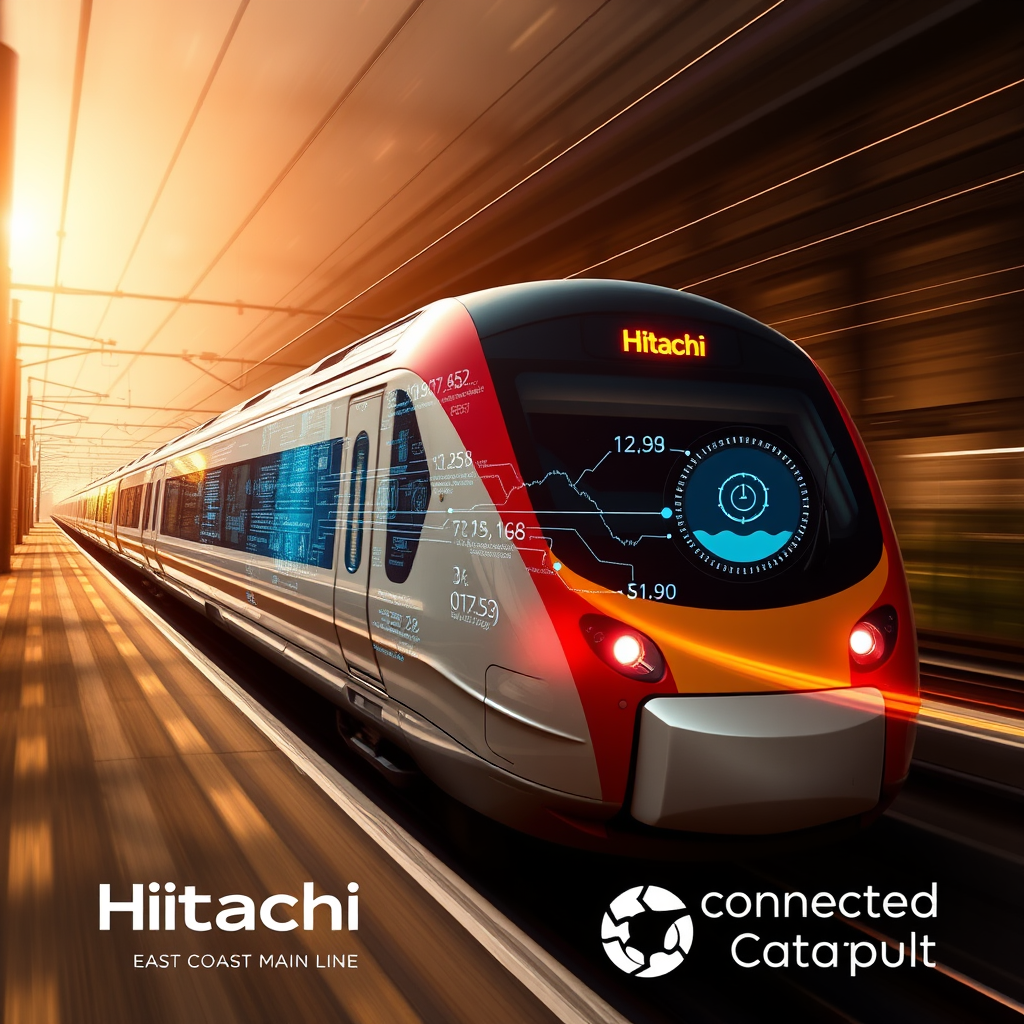
This article explores the advancements in AI-powered rail maintenance technology, specifically focusing on a successful collaboration between Hitachi Rail and the Connected Places Catapult (CPC). The partnership resulted in the development and commercialization of a digital overhead line monitoring system, a significant step towards enhancing railway safety, efficiency, and punctuality. The system leverages real-time data acquisition and machine learning algorithms to proactively identify potential faults in overhead lines (OHLs), thus enabling preventative maintenance and reducing the risk of costly delays and safety incidents. This initiative highlights the increasing importance of technological innovation within the railway sector and the effectiveness of collaborative partnerships in bridging the gap between research and practical application, overcoming the often-challenging “valley of death” that many new technologies face in their transition to commercial viability. The successful deployment on the East Coast Main Line (ECML), a high-traffic mainline in the UK, serves as a compelling case study for the potential of AI-driven solutions in modernizing railway infrastructure and operations globally.
Real-time Overhead Line Monitoring: A Paradigm Shift in Rail Maintenance
Traditional methods of overhead line inspection often rely on visual inspections by trained personnel, a process that can be time-consuming, labor-intensive, and inherently limited in its ability to detect subtle anomalies. The AI-powered system developed by Hitachi Rail, in collaboration with CPC, represents a significant departure from these traditional approaches. By utilizing cameras mounted on trains, the system captures real-time video footage of the OHLs. This data is then processed using sophisticated machine learning algorithms designed to identify potential defects such as broken wires, damaged insulators, or signs of wear and tear. The system’s ability to provide immediate alerts allows for proactive maintenance, preventing minor issues from escalating into major disruptions. This reduces operational downtime, enhances passenger satisfaction, and significantly improves the overall reliability of the railway network.
The Role of Collaboration and the “Valley of Death”
The success of this project underscores the critical role of collaboration in driving technological innovation within the rail industry. The partnership between Hitachi Rail, CPC, LNER (London North Eastern Railway), and Network Rail brought together diverse expertise and resources, facilitating the seamless transition of the technology from research and development to real-world implementation. CPC, in particular, played a crucial role in navigating the “valley of death”—the often-challenging period between research and commercialization—by fostering effective communication, managing stakeholder expectations, and ensuring that the technology met the real-world needs of railway operators. This collaborative model provides a valuable blueprint for other similar projects seeking to translate innovative ideas into commercially viable products.
Integration into HMAX: A Holistic Approach to Railway Management
Hitachi Rail’s integration of the AI-powered overhead line monitoring system into its HMAX (Hitachi Maximum Asset eXperience) digital asset management platform demonstrates a broader commitment to utilizing technology to enhance railway operations. HMAX consolidates operational data from various railway assets into a unified system, providing a holistic view of the entire infrastructure. This allows for more efficient resource allocation, improved decision-making, and ultimately, a more streamlined and cost-effective railway management system. The integration of the OHL monitoring system within HMAX further amplifies its value by providing a seamless flow of critical data, thus enhancing the overall effectiveness of the platform.
Conclusions
The successful collaboration between Hitachi Rail and the Connected Places Catapult has yielded a transformative AI-powered solution for rail maintenance. The digital overhead line monitoring system, now commercially available, represents a significant advancement in improving railway safety, efficiency, and punctuality. The project’s success is not merely attributed to technological innovation, but also to a carefully crafted collaborative model that successfully navigated the challenges of translating research into practical application. The integration of the system within the HMAX platform further demonstrates a forward-thinking approach to railway management, highlighting the increasing importance of data-driven decision-making and holistic asset management. This initiative serves as a compelling case study for the wider rail industry, showcasing the potential for AI and data analytics to revolutionize railway operations worldwide. The successful six-month trial on the ECML, a high-traffic and challenging environment, validated the technology’s effectiveness and reliability. The lessons learned from this collaborative venture should be adopted by other organizations seeking to develop and deploy similar cutting-edge technologies. The future of railway maintenance clearly lies in leveraging AI and real-time data analysis to achieve a safer, more efficient, and more sustainable rail network. The global applicability of this technology offers significant opportunities to enhance railway systems globally, improving both passenger experience and operational performance.
RELATED POSTS
April 1, 2026 6:21 pm
Federal Transit Administration awarded $20.6 billion in formula-based apportionments to...
April 1, 2026 8:40 pm
BNSF Railway expands Galesburg, Illinois, yard capacity, with second hump...
April 1, 2026 12:10 pm
Alstom secured a €410 million contract from CFR SA to...
April 1, 2026 4:31 pm
Network Rail upgraded Berrylands station platforms for £6 million, replacing...
April 2, 2026 8:35 am
Alstom secured a €22 million contract with Mazovia Railways for...
April 2, 2026 2:33 am
RTD Denver suspends D, H, L light-rail service from June...