
SMRT & CRRC: Digital Rail Revolution
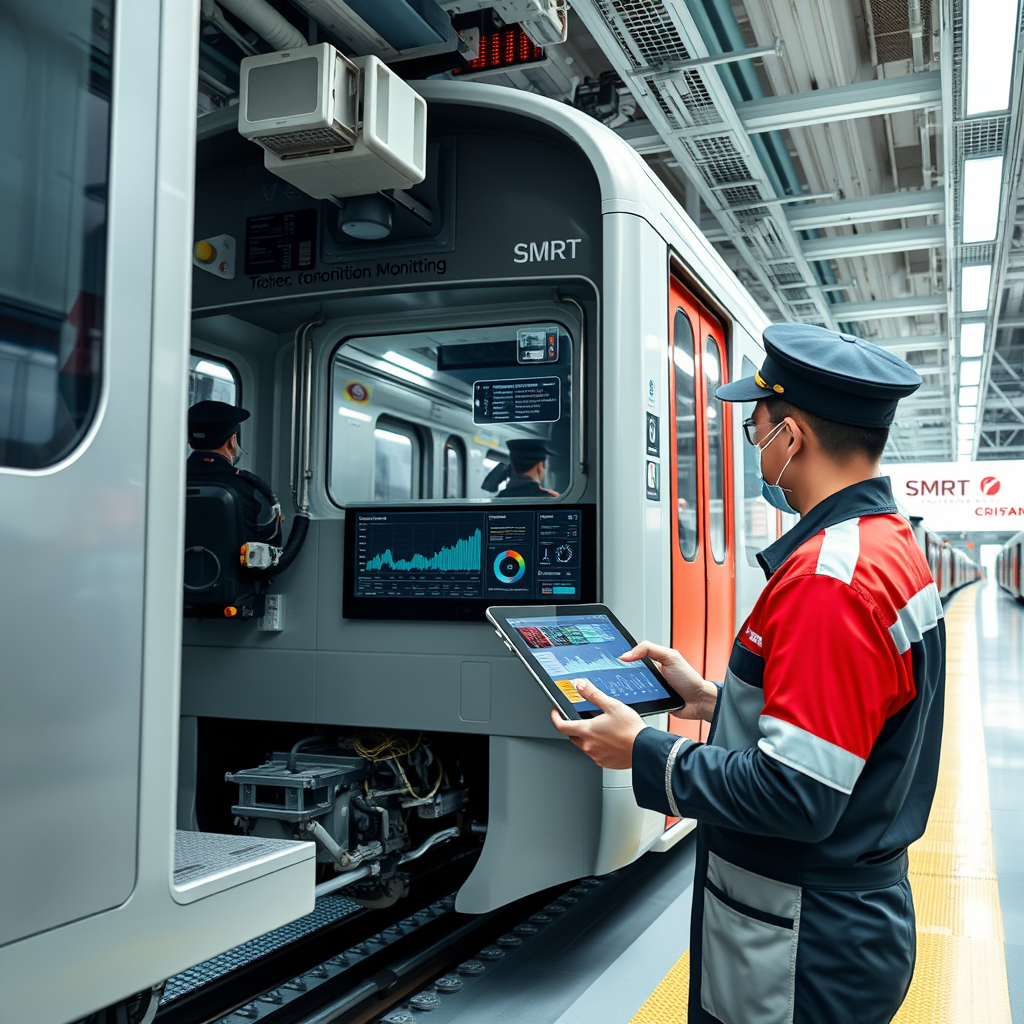
This article explores the collaborative effort between SMRT Corporation (Singapore Mass Rapid Transit) and CRRC Sifang (China Railway Rolling Stock Corporation Sifang) to significantly enhance the maintenance and operational efficiency of the C151B train fleet operating on Singapore’s North-South and East-West lines. This partnership, formalized through a Memorandum of Understanding (MoU) and a Proof of Concept (POC) agreement, marks a significant step towards integrating advanced digital technologies into railway maintenance. The introduction of advanced monitoring systems, predictive maintenance strategies, and eco-friendly upgrades demonstrates a commitment to both improving commuter experience and fostering environmental sustainability within the rail system. The collaboration showcases the increasing importance of integrating digitalization, advanced automation, and robotics into modern railway operations to improve safety, reliability, and overall passenger satisfaction. This detailed analysis will examine the technological advancements being implemented, the potential long-term benefits for SMRT, and the implications for the wider railway industry.
Digital Transformation in Rail Maintenance
The core of the SMRT-CRRC Sifang collaboration centers on the digital transformation of train maintenance. The POC agreement focuses on retrofitting a C151B train with a suite of advanced monitoring systems. A Condition Monitoring (CM) system will enable predictive maintenance, shifting from reactive repairs to proactive interventions based on real-time data analysis of the train’s components. This predictive approach promises to minimize unexpected failures, reduce downtime, and ultimately improve the reliability of the entire fleet. Structural Health Monitoring (SHM) will provide crucial data on the structural integrity of the train, identifying minute changes in stress and strain that could indicate potential issues before they escalate into major problems. The integration of advanced Train Information and Management Systems (TIMS) will further enhance the diagnostic capabilities, providing comprehensive and precise information on the health status of all critical train systems.
Enhancing Commuter Experience and Sustainability
Beyond the technological advancements aimed at improving reliability, the partnership also prioritizes enhancing the commuter experience. Upgrading the air conditioning system with eco-friendly technologies will deliver improved cooling performance and contribute to environmental sustainability. This demonstrates a holistic approach to rail operations, considering not only the technical aspects but also the environmental impact and the comfort of passengers. Further exploration into modernizing the propulsion and auxiliary power supply systems by replacing outdated components and increasing power capacity aims to future-proof the C151B trains, ensuring their continued efficient and reliable operation for years to come.
Strategic Partnership and Future Implications
The collaboration between SMRT and CRRC Sifang signifies a strategic alliance leveraging the expertise of both organizations. SMRT brings its extensive experience in rail operations and maintenance within the Singaporean context, while CRRC Sifang contributes its substantial knowledge in train manufacturing and cutting-edge technologies. This synergistic partnership underscores the growing trend towards collaborative innovation in the railway industry, where expertise sharing and technology transfer are key drivers of progress. The success of this POC project holds significant implications for other railway operators globally, highlighting the potential benefits of adopting similar strategies to improve their own maintenance regimes and passenger experience.
Expanding Collaboration and Technological Advancement
The MoU signed alongside the POC agreement further solidifies the commitment to long-term collaboration. This broader agreement extends beyond the immediate scope of the C151B train upgrades, encompassing a wider exploration of digitalization, advanced automation, and robotics in railway operations. This forward-looking approach positions both SMRT and CRRC Sifang at the forefront of technological advancements within the rail industry, paving the way for future innovations and further enhancing the efficiency and reliability of rail networks globally. The partnership’s focus extends beyond immediate improvements, laying the foundation for continuous innovation and technological advancement in railway systems.
Conclusions
The partnership between SMRT and CRRC Sifang represents a significant step forward in railway maintenance and operations. The implementation of advanced monitoring systems, predictive maintenance strategies, and eco-friendly upgrades showcases a commitment to both enhancing the commuter experience and promoting environmental sustainability. The successful execution of the Proof of Concept (POC) agreement, which includes the installation of Condition Monitoring (CM) systems, Structural Health Monitoring (SHM) technologies, and upgraded Train Information and Management Systems (TIMS), will undoubtedly lead to improved reliability and reduced service disruptions. The modernization of the air conditioning system and the exploration of future-proofing propulsion systems further contribute to the holistic improvement of the C151B train fleet. This collaboration transcends a simple technological upgrade; it signifies a broader strategic alliance focused on innovation and collaboration within the railway industry. The Memorandum of Understanding (MoU), covering digitalization, advanced automation, and robotics, reflects a long-term commitment to continuous improvement and technological advancement. The success of this initiative serves as a compelling example for other railway operators worldwide, highlighting the potential benefits of adopting similar strategies to optimize maintenance, improve reliability, and enhance the overall passenger experience. The future of railway systems lies in the integration of advanced technologies and collaborative partnerships, and this project serves as a potent illustration of this paradigm shift.
RELATED POSTS

September 20, 2022 1:03 pm
The ongoing conflict in Ukraine has profoundly impacted various sectors,...

August 13, 2025 11:33 pm
Rail logistics is evolving rapidly, driven by technology, intermodalism, and...
March 3, 2023 9:12 pm
Improving Accessibility for Passengers with Non-Visible Disabilities on the South...
November 8, 2019 12:50 am
This article analyzes the significant contract awarded to Stadler Rail...
October 10, 2016 4:49 am
Here's a voiceover-friendly excerpt:"Network Rail's first phase of the £73.4...
May 26, 2020 7:49 am
This article examines a significant infrastructure upgrade project undertaken by...