
Stadler Wins €300M Austrian Rail Deal: KISS Trains for WESTbahn

This article analyzes the significant contract awarded to Stadler Rail by Austrian Train Finance for the supply of fifteen double-decker KISS (KISS – Stadler’s signature train model) trains to WESTbahn, a prominent Austrian railway company. The €300 million ($333 million) deal encompasses not only the manufacturing and delivery of the state-of-the-art rolling stock but also a comprehensive maintenance and service agreement. This contract highlights several key aspects within the railway industry: the increasing demand for modern, high-capacity passenger trains; the importance of long-term maintenance contracts in securing profitability; and the competitive landscape of the global rail vehicle market, where Stadler successfully outcompeted a major Chinese competitor. The subsequent discussion will delve into the specifics of this contract, examining the technical specifications of the trains, the strategic implications for Stadler, and the wider context of the European rail market.
Technical Specifications and Passenger Amenities
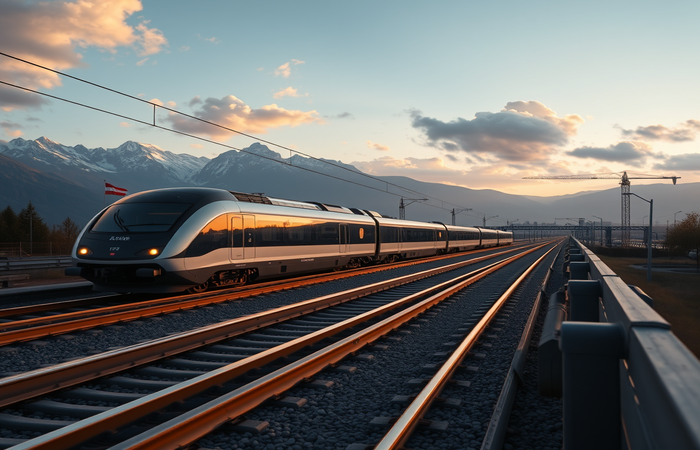
The 15 new double-decker KISS trains destined for the Vienna–Salzburg line represent a significant upgrade in passenger comfort and capacity. Each six-car train boasts a length of 150 meters, a width of 2.8 meters, and a height of 4.59 meters. With a total seating capacity of 526 passengers in first-class, these trains are designed for high-volume intercity service. Features include air conditioning, gender-separated toilets, wheelchair accessibility, a dedicated disabled toilet, and a wireless network. Further enhancing passenger experience, the four intermediate cars incorporate modern self-service cafés. The trains are capable of reaching a maximum speed of 200 km/h (124 mph), facilitating efficient and rapid transit between Vienna and Salzburg.
Strategic Implications for Stadler
This contract represents a substantial win for Stadler, solidifying their position as a leading supplier of high-quality rolling stock in Europe. The €300 million value underscores the significant financial impact, while the inclusion of a comprehensive maintenance agreement ensures a long-term revenue stream. This long-term maintenance component signifies Stadler’s strategic shift towards a service-oriented business model, reducing reliance solely on initial equipment sales. The victory over CRRC (China Railway Rolling Stock Corporation), a major competitor in the global rail market, highlights Stadler’s competitive advantage in offering a superior “total package” including rail vehicles, cost-effective maintenance and superior customer service.
Market Context and WESTbahn’s Fleet Renewal
This transaction takes place against the backdrop of WESTbahn’s broader fleet modernization. The company’s previous decision to sell its existing fleet of 17 trains to Deutsche Bahn (DB) further emphasizes the need for updated rolling stock that meets modern safety and operational standards. The replacement of the older fleet reflects the evolving demands of the Austrian rail market, with a focus on enhanced passenger amenities and increased operational efficiency. The contract also includes the conversion and approval of the existing trains for operation on the German railway network, highlighting the intricate process of international railway vehicle homologation.
Stadler’s Continued Success and Future Prospects
This WESTbahn contract represents Stadler’s third significant deal with the Austrian railway company, following previous deliveries of KISS trains in 2011 and 2014. This pattern demonstrates a strong and established partnership built on trust and mutual satisfaction. The consistent success underscores Stadler’s reputation for providing reliable, high-performance rolling stock tailored to specific customer needs. Furthermore, this contract, coupled with other recent wins such as the €115 million rescue locomotive contract with ADIF (Administrador de Infraestructuras Ferroviarias), demonstrates the company’s continued success in securing major contracts across Europe. This positions Stadler for further growth and expansion within the increasingly competitive global rail market. The focus on after-sales service and maintenance, demonstrated in this agreement, will likely be a key differentiator moving forward, ensuring a sustainable business model and securing Stadler’s place at the forefront of the railway industry. The continued success of Stadler in a globalized and competitive environment shows that quality, customer service, and complete solutions are paramount for success.
Conclusions
The €300 million contract awarded to Stadler for the supply of 15 double-decker KISS trains to WESTbahn signifies a significant development within the European rail industry. This deal highlights several crucial factors. Firstly, the technical specifications of the trains demonstrate the ongoing trend toward higher capacity, more comfortable, and technologically advanced rolling stock to meet growing passenger demands. Secondly, the inclusion of a comprehensive maintenance contract underlines the increasing importance of after-sales service in securing long-term contracts and revenue streams for manufacturers. Thirdly, Stadler’s success in securing the contract against a major Chinese competitor (CRRC) emphasizes the value of providing a comprehensive package including vehicle supply, maintenance, and cost-effective solutions. Finally, WESTbahn’s fleet renewal strategy demonstrates the ongoing evolution of the European rail landscape with the focus on replacing older rolling stock with modern, efficient, and passenger-friendly trains. Stadler’s continued success underscores the company’s strategic approach to the market, its focus on quality, and its ability to provide customized solutions that meet the specific needs of its clients. This contract positions Stadler favorably for future growth and expansion, and its emphasis on service contracts represents a shrewd move towards a more sustainable and profitable business model within the dynamic railway sector. The overall success underlines the importance of not only providing high quality railway vehicles but also securing long term partnerships through comprehensive maintenance agreements, strengthening Stadler’s position in the competitive European railway market.
RELATED POSTS
June 25, 2022 12:50 pm
The following article explores the innovative construction techniques employed in...
June 13, 2025 3:00 pm
ÖBB invests €19.7B in Austrian rail infrastructure expansion by 2030,...
December 5, 2019 3:34 am
This article explores the significant upgrade to the London North...

December 8, 2016 8:51 pm
Alstom is to supply 20 MP14 metros consisting of 6...

March 16, 2025 12:27 am
The Future of UK Rail Freight: Addressing Challenges and Opportunities...

February 5, 2017 10:09 am
In total, Tanzania wants to build a 2,561 km standard...