
São Paulo Metro Upgrade: ETCS Level 2 Boosts Safety & Efficiency
São Paulo’s metro leaps forward! Lines 8 & 9 are getting a game-changing **ETCS Level 2** signaling upgrade, promising safer, faster, and more efficient journeys for millions.
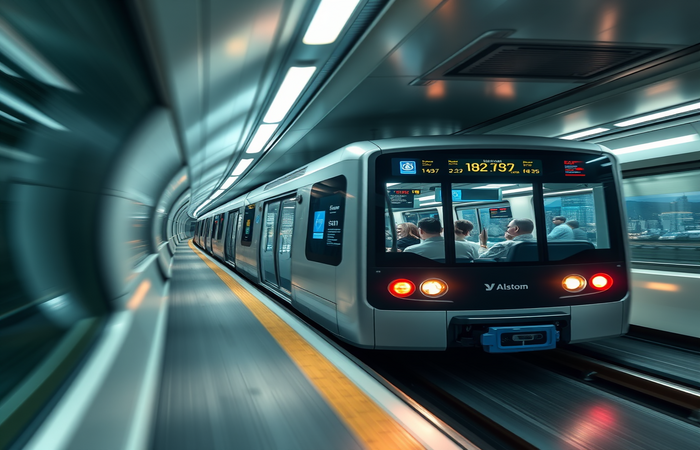
São Paulo Metro Network to Receive Cutting-Edge Signaling Upgrade
São Paulo, Brazil – June 14, 2024 – The modernization of São Paulo’s urban transport network is set to receive a significant boost with the implementation of a state-of-the-art signaling system on Lines 8-Diamond and 9-Emerald. Alstom has been awarded a contract by ViaMobilidade (the concessionaire responsible for operating these lines) and the Government of São Paulo to introduce the European Train Control System (ETCS) Level 2. This project marks a pivotal moment for Latin America, representing the first deployment of ETCS Level 2 in the region. With a planned six-year program commencing in June 2025, the BRL 1 billion (USD 174 million) investment underscores a commitment to enhancing the safety, reliability, and overall efficiency of the metro system for millions of daily passengers. This initiative promises to revolutionize the passenger experience, offering improved journey times, increased service frequency, and enhanced punctuality, all while leveraging proven technology to minimize operational risks and optimize train movement control.
The ETCS Level 2 Advantage
The core of this modernization effort lies in the adoption of ETCS Level 2, a cutting-edge train protection system. Unlike older signaling technologies, ETCS Level 2 provides continuous, real-time communication between the trackside equipment and the trains. This advanced communication is facilitated by radio-based data transmission, eliminating the need for trackside signals. Key benefits of ETCS Level 2 include: a) enhanced safety through constant monitoring of train movements and speed; b) optimized operational efficiency, allowing for shorter headways (the time between trains) and increased line capacity; c) improved punctuality due to the system’s ability to manage train movements more precisely, minimizing delays caused by signaling issues; d) reduced energy consumption as the system can optimize train speeds, leading to more efficient operation. The deployment of ETCS Level 2 in São Paulo represents a significant leap forward in railway technology, offering a safer, more efficient, and more reliable transportation experience for passengers. It also allows the line to accommodate a higher frequency of trains, helping reduce congestion.
Implementation and Integration
The six-year implementation plan encompasses a comprehensive overhaul of the signaling infrastructure across Lines 8 and 9. This involves the installation of new trackside equipment, the retrofitting of existing rolling stock with onboard ETCS Level 2 compatible systems, and the establishment of a central control system to manage and monitor train movements. The project will be executed in phases to minimize disruption to passenger services. The process requires meticulous planning, rigorous testing, and close collaboration between Alstom, ViaMobilidade, and the São Paulo government. The integration of the ETCS Level 2 system will be seamlessly integrated with the existing infrastructure, ensuring smooth operation and minimizing disruption to passengers. Training programs for maintenance staff and train operators are also planned to ensure the correct operation and maintenance of the new systems.
Boosting Passenger Experience and Network Capacity
Beyond the technological advancements, the upgrade will have a tangible impact on the passenger experience and the overall performance of the metro network. The implementation of ETCS Level 2 will facilitate shorter journey times, allowing for an increase in the line’s capacity, which can reduce passenger overcrowding. It will also increase service frequency and improved punctuality, reducing delays and providing a more predictable commuting experience. The increased capacity will be crucial in accommodating the growing ridership on Lines 8 and 9, which serve as essential links in São Paulo’s integrated transport system. Furthermore, the improved operational efficiency enabled by ETCS Level 2 is expected to lead to a reduction in energy consumption and operational costs, contributing to the sustainability of the metro system.
Looking Ahead: Sustainability and the Future of São Paulo’s Metro
The implementation of ETCS Level 2 marks a turning point in the modernization of São Paulo’s metro system, and will provide more efficient transport. The project will not only improve the travel experience for millions of commuters, but will also pave the way for future advancements in urban transport. The introduction of this new technology will improve safety, reliability, and operational efficiency across Lines 8 and 9. The project is aligned with ViaMobilidade’s recent acquisition of 36 Metropolis trains, also manufactured by Alstom. These trains offer enhanced energy efficiency, reduced weight, and a long service life, demonstrating a commitment to sustainable urban mobility solutions. The combined effect of these improvements will contribute to a more modern, sustainable, and user-friendly public transport network. The São Paulo project represents the commitment to the use of cutting-edge technology with a sustainable impact on the environment.
Company Summary
Alstom: A global leader in smart and sustainable mobility, Alstom provides a wide range of products and services, including trains, signaling systems, and infrastructure solutions. Alstom’s expertise in ETCS technology is demonstrated by its previous introduction of ETCS Level 1 in Mexico. The company’s presence in the Brazilian market will be further strengthened through this new project.
ViaMobilidade: Is a concessionaire responsible for operating São Paulo’s Lines 8 and 9. It will also work to modernize the network with sustainable and innovative solutions to improve the passengers’ experience.
RELATED POSTS

August 14, 2017 6:51 pm
Revolutionize railway operations with digitalization! Embrace real-time data, predictive...

July 27, 2016 11:12 am
A consortium comprising Alstom and its Chinese joint venture (JV)...

July 11, 2025 1:34 am
Wi-Fi 7 boosts rail passenger connectivity, offering faster speeds and...

July 8, 2025 8:33 am
Alstom wins €2B contract for new NY commuter rail cars....
November 20, 2018 11:42 am
Greater Anglia's new Stadler bi-mode trains: a game-changer for...

July 16, 2010 9:48 am
Brazil has opened bidding for a high-speed train linking Rio...