
North American Rail Traffic: Commodity Trends & Regional Insights
US rail traffic stable, despite commodity fluctuations. Grain, motor vehicles up; metals, coal down. Canadian, Mexican data show varied trends.
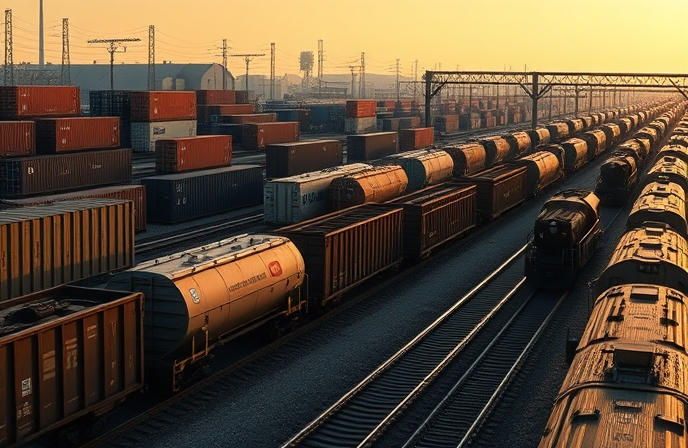
Rail Traffic Remains Steady Amidst Commodity Fluctuations
U.S. freight railroads experienced a relatively stable week of traffic, according to the Association of American Railroads (AAR). In the week ending June 28, the combined carload and intermodal traffic totaled 491,424 units, a marginal 0.2% decrease compared to the same period last year. This report analyzes the recent performance of the North American rail industry, including key commodity group variations, and examines the contrasting trends observed across the United States, Canada, and Mexico. Understanding these shifts provides critical insights into the broader economic landscape and the performance of various sectors relying on rail transport. The article explores specific commodity performance and contrasts regional performance, offering a comprehensive overview of the rail industry’s current state.
United States Traffic Performance: A Closer Look
The AAR data reveals a mixed bag for U.S. railroads. Carloads, a key indicator of demand for raw materials and industrial goods, saw a slight increase, rising to 225,227 units. However, intermodal traffic, encompassing containers and trailers, experienced a 0.3% decrease, reaching 266,197 units. This suggests a potential shift in shipping strategies or a slowdown in sectors heavily reliant on intermodal transport. This divergence highlights the complexity of interpreting overall rail traffic trends and the necessity of examining individual commodity performance.
Commodity Group Dynamics: Winners and Losers
A closer examination of specific commodity groups unveils significant variations. Notably, four of the ten tracked commodity groups registered gains. Grain led the pack with a substantial 15.9% increase, totaling 20,980 units, reflecting seasonal agricultural activity and strong export demand. Motor vehicles and parts also performed strongly, increasing by 9% to 17,324 units, pointing towards a resilient automotive sector. Farm products, excluding grain and food, saw a 7.6% increase, reaching 17,094 units. Conversely, several commodity groups encountered headwinds. Metallic ores and metals experienced a significant 12.5% decrease, possibly indicating a slowdown in manufacturing or construction. Coal traffic was down 2.5% and chemicals decreased by 3%, signaling challenges in the energy and chemical sectors.
Regional Contrasts: Canadian and Mexican Rail Performance
While U.S. rail traffic remained relatively stable, contrasting trends emerged in neighboring countries. Canadian railroads reported 89,060 carloads, representing a 4.9% decrease. However, they witnessed a substantial 17.4% surge in intermodal units, reaching 78,217, highlighting potential growth in containerized freight. Mexican railroads saw 15,884 carloads, up 2.9%, and 11,288 intermodal units, down 12.2%. These regional variances underscore the influence of diverse economic factors, trade relationships, and infrastructure investments on rail traffic performance. Understanding the nuances of these regional dynamics is vital for a holistic understanding of the North American rail industry.
Conclusion
The latest AAR data indicates a period of relative stability in the U.S. rail industry, juxtaposed with fluctuating trends among specific commodity groups and in Canada and Mexico. While overall traffic remained steady, increases in grain and motor vehicles and parts were offset by declines in metallic ores and metals, coal and chemicals. The differing trends observed across the three North American countries highlight the impact of varied economic pressures, trade agreements, and infrastructural investment on rail traffic. These regional variances and commodity performance fluctuations suggest that the rail industry faces a complex and potentially volatile operating environment.
Looking ahead, railroads must remain agile and adapt to shifting demands. The capacity to efficiently handle diverse commodities, invest in modern infrastructure, and cultivate robust partnerships is critical for the long-term success of the industry. Furthermore, the contrasting performance across the U.S., Canada, and Mexico indicates the need for constant monitoring of these diverse environments and adaptive strategies to capitalize on opportunities and mitigate challenges. The overall performance suggests cautious optimism for the rail industry, assuming the sector will adapt to these challenges and navigate these complex waters.