
Alstom’s €4B Cologne S-Bahn Deal: A Rail Revolution
Introduction
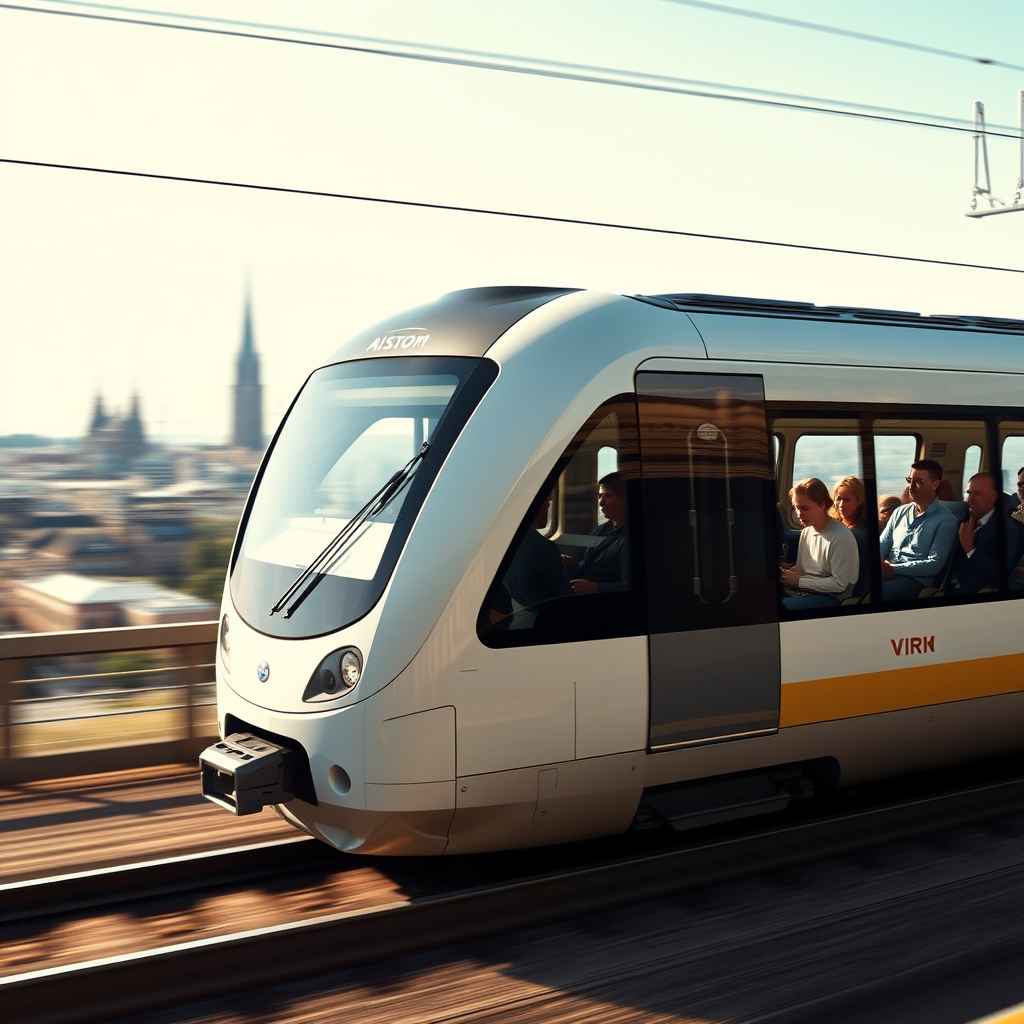
The global railway industry is experiencing a period of significant transformation, driven by the need for increased capacity, improved efficiency, and enhanced passenger experience. This article examines a landmark contract awarded to Alstom, a leading European rail manufacturer, highlighting the strategic implications of this substantial investment in modern rolling stock for the Cologne S-Bahn (commuter rail) network in Germany. The €4 billion ($4.3 billion USD) agreement encompasses not only the supply of 90 new Adessia Stream trains but also a comprehensive 34-year maintenance contract, underscoring the long-term commitment to sustainable and reliable rail transit. This substantial investment signifies a broader trend in the railway sector towards modernization and the integration of advanced technologies to improve operational efficiency, passenger comfort, and overall network performance. The deal’s scope and implications for the Cologne region, as well as the wider European rail market, will be analyzed in detail. Further, we will explore the technological advancements incorporated into the new trains and the broader context of Alstom’s recent successes in securing large-scale contracts globally.
Alstom’s Largest German Deal: The Cologne S-Bahn Contract
Alstom’s €4 billion contract with the Verkehrsverbund Rhein-Ruhr (VRR) (Rhine-Ruhr Transport Association) and go.Rheinland for the Cologne S-Bahn marks a significant milestone for the company. The contract involves the design, manufacture, and 34-year maintenance of 90 new electric multiple units (EMU) – a substantial undertaking representing a long-term commitment to the region’s transportation infrastructure. The EMUs will be delivered in two variants: a 9-car and an 11-car configuration, providing flexibility in deploying the fleet across different sections of the network. This adaptability showcases a strategic understanding of the operational requirements of a large metropolitan area and the need for scalability within the rail system.
Technological Advancements and Passenger Experience
The new Adessia Stream trains represent a significant upgrade for the Cologne S-Bahn. Key features include: a passenger capacity of 1,150 or 1,340, depending on the configuration; a maximum speed of 140 km/h; air conditioning; improved mobile phone reception thanks to specially treated windows; and – importantly – the inclusion of onboard toilets. The provision of toilets addresses a longstanding passenger concern and enhances overall comfort. Furthermore, the trains will incorporate gap-bridging devices at two entrances, ensuring seamless level boarding for passengers with wheelchairs or other mobility aids, reflecting a strong commitment to accessibility and inclusivity.
Manufacturing and Maintenance: A Holistic Approach
The contract’s scope extends beyond the mere supply of rolling stock. Alstom will handle the entire lifecycle of the fleet, including development at its Henningsdorf facility, production at the Bautzen factory, and ongoing maintenance at depots in the Cologne area. This holistic approach demonstrates a commitment to quality control, streamlined logistics, and a long-term partnership with VRR. The 34-year maintenance agreement guarantees operational reliability and minimizes potential disruptions to service, which is vital for a busy commuter rail system.
Alstom’s Strategic Growth and Market Position
The Cologne contract is part of a broader trend of Alstom securing substantial contracts globally. Recent examples include a €2.8 billion deal for rolling stock and signaling equipment in Hamburg and a $1.1 billion agreement for a signaling upgrade in Perth, Australia. These large-scale projects solidify Alstom’s position as a leading player in the global rail industry, demonstrating its capacity to manage complex, high-value projects and its ability to adapt its offerings to meet diverse market demands. The consistent securing of billion-dollar contracts signals strong market confidence in Alstom’s technological expertise, project management capabilities, and commitment to delivering innovative and sustainable rail solutions.
Conclusions
Alstom’s €4 billion contract to supply and maintain 90 new trains for the Cologne S-Bahn represents a significant achievement, not only for the company but also for the future of public transportation in the region. The contract highlights the increasing demand for modern, efficient, and accessible rail systems, reflecting a global shift towards sustainable transportation solutions. The investment in advanced technologies, such as gap-bridging devices for accessibility and improved mobile reception, underscores the commitment to enhance passenger comfort and satisfaction. The inclusion of a comprehensive 34-year maintenance agreement demonstrates a long-term perspective on infrastructure management and operational reliability. Moreover, this substantial deal, alongside other recent large-scale contracts secured by Alstom, underscores the company’s leading role in the global rail industry. The project’s success will not only provide a significant boost to the Cologne S-Bahn network but also serve as a model for future large-scale rail modernization projects worldwide, influencing standards of passenger experience and operational efficiency. The strategic implications for Alstom extend beyond this single contract, positioning them as a key player in the ongoing transformation of the global rail landscape and establishing a benchmark for future partnerships between manufacturers and public transport authorities.
RELATED POSTS

June 13, 2023 2:01 pm
The Restructuring of SBB Cargo: A Strategic Shift in Swiss...
October 15, 2025 8:54 am
Romania's **high-speed rail** development is feasible! EIB study reveals potential...

July 27, 2025 10:33 am
Sound Transit accelerates Federal Way Link light rail opening to...
April 14, 2025 12:17 am
The modernization of urban rail systems is a crucial aspect...
July 31, 2025 7:33 am
PATH ridership rebounds, hitting 75% of pre-pandemic levels in June...
July 28, 2016 1:10 am
Rail Baltica's track-laying is underway, with a focus on vibration...