
Camelon Station: Community Rail & Biodiversity in Scotland
Camelon Station gets a biodiversity makeover, led by youth art project. ScotRail partners for revitalized station, boosting community engagement.
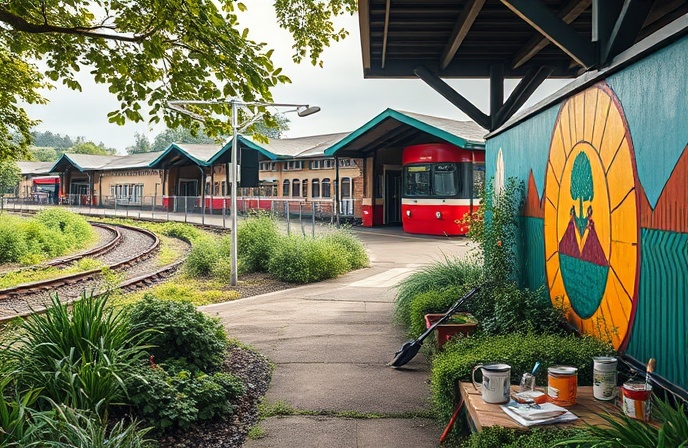
Camelon Station Transformed: A Community-Led Biodiversity and Art Project
Once plagued by litter and fly-tipping, Camelon Railway Station in Scotland has undergone a remarkable transformation. Led by the Safer Communities Youth Action Project (SCYAP), the station’s access path has been revitalized into a vibrant outdoor gallery and biodiversity corridor. This initiative, completed recently, saw local young people collaborate to create striking public art and environmental enhancements, improving the station’s appeal for all users. The project’s success highlights the power of community engagement and collaborative partnerships to revitalize public spaces and foster a sense of ownership. This article will delve into the project’s key components, showcasing the positive impacts on both the environment and the local community.
A Canvas of Collaboration: The Genesis of the Project
The Camelon Railway Station Biodiversity & Community Art Project began with a vision to transform a neglected area into a welcoming space. The project was executed through a collaborative effort involving over 40 local young people, ranging from primary school pupils to members of SCYAP’s Youth Action Group. This diverse group played a pivotal role in every stage, from initial design concepts to the final installation of the artwork and environmental improvements. Their involvement encompassed valuable skills development through recognized award programs like the Saltire and Dynamic Youth Awards. The project directly addressed environmental concerns by mitigating the impact of previous fly-tipping and litter accumulation, transforming the area into a more attractive route for station users.
Partnering for Progress: Key Stakeholders in the Transformation
The success of the Camelon project is a testament to the effectiveness of strategic partnerships. The initiative was supported by a consortium of key stakeholders, including ScotRail, Network Rail, Carmuirs Primary School, and Falkirk Council. These organizations provided critical resources, expertise, and logistical support. Tracy Stevenson, ScotRail Community Rail Executive, highlighted the project as an inspiring example of what can be accomplished through combined community and youth effort. She emphasized ScotRail’s pride in supporting initiatives that not only enhance stations but also promote biodiversity and create safer, more inviting environments. The collaborative approach ensured the project’s successful implementation, offering both tangible environmental benefits and skill-building opportunities for local youth.
Impact and Outcomes: Beyond Aesthetics
The project has delivered a wide array of benefits for the community and the local youth. Young people involved in the project have not only enhanced the station’s appearance but also developed essential life skills, earned valuable awards, and strengthened community connections. John R Hosie, SCYAP Youth & Community Development Worker, highlighted the project’s multiple benefits, noting that it exemplifies the Youth Action approach by generating community engagement, environmental improvement, and climate action. The involvement of Carmuirs Primary School’s P7 class in the design phase, combined with community consultations led by the Youth Action Group, ensured the project’s design reflected the needs and aspirations of the entire community. This inclusive approach significantly enhanced the project’s broader impact.
Conclusion
The Camelon Railway Station Biodiversity & Community Art Project serves as a compelling model for railway stations and community development. It successfully combines community engagement, environmental sustainability, and youth empowerment, resulting in an improved public space and positive outcomes for the participants. The project’s impact extends beyond aesthetics, offering valuable skills development, increased community engagement, and significant environmental benefits. The project’s collaborative nature and the support of partners like ScotRail and Network Rail were instrumental in its success. These efforts highlight the feasibility of community-driven projects in improving rail infrastructure and surrounding areas. Future projects could potentially replicate the Camelon model, improving biodiversity at other stations, creating safe spaces and providing opportunities for youth skill development. Such initiatives can foster stronger relationships between railways and the communities they serve, creating a more positive and sustainable future for the rail industry.
RELATED POSTS

January 2, 2018 3:15 am
High-speed rail: Mastering engineering, finance, and social impact is key....

December 5, 2025 11:01 am
Eurostar and Deutsche Bahn plan a direct high-speed rail link!...

December 4, 2025 2:42 pm
'Parcels as Passengers' project: Successful trial of **rail freight** on...

August 25, 2013 8:37 am
Slovenian Railways has selected IBM’s SmartCloud solution to centralise its...
September 8, 2017 8:25 pm
High-speed rail faces construction challenges, but innovative technologies are paving...
August 20, 2016 8:00 pm
In the French construction industry, Eiffage Métal completed a vital...