
Webuild Launches TBMs: Salerno-Reggio Calabria Line Gets Boost
Webuild activates four TBMs on the Salerno-Reggio Calabria high-speed line, including Europe’s largest, boosting the TEN-T network and Italy’s infrastructure.
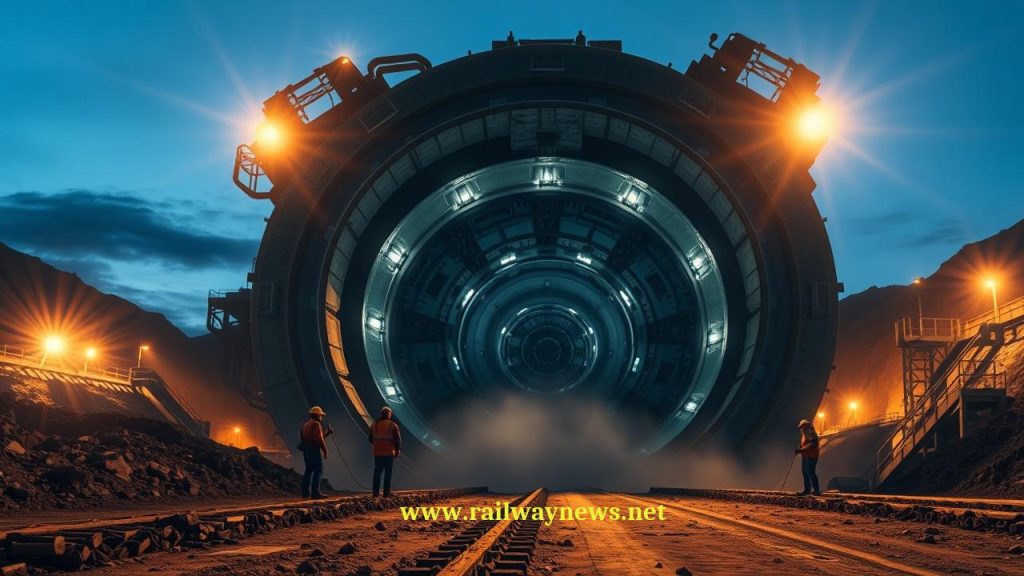
ROME, ITALY – Infrastructure giant Webuild has achieved a major milestone on the Salerno–Reggio Calabria high-speed railway, activating three new Tunnel Boring Machines (TBMs) to bring the total operational fleet to four on the critical Lot 1A section. The launch marks the start of full-scale mechanized excavation for the project’s eight tunnels, deploying some of the largest TBMs in Europe with diameters of up to 13 meters.
| Category | Details |
|---|---|
| Project | Salerno–Reggio Calabria High-Speed Line (Lot 1A) |
| Lead Contractor | Webuild (for Xenia Consortium) |
| Key Equipment | 4 Tunnel Boring Machines (TBMs), including 3 of the largest in Europe |
| TBM Max Diameter | 13 meters |
| Section Length | 35 kilometers (Battipaglia to Romagnano) |
| Strategic Importance | TEN-T Scandinavian-Mediterranean Corridor |
Main Body:
Webuild announced that excavation is now fully underway on the Battipaglia–Romagnano section (Lot 1A) of the Salerno–Reggio Calabria high-speed line. The newly launched TBMs—Leucosia, Ligea, and Mireille—join the previously activated Partenope TBM, completing the quartet of machines required to bore the section’s eight tunnels. The operation involves over 300 specialized technicians. Leucosia will excavate the 800-meter Serra Lunga tunnel, Ligea is tackling the 2.2-kilometer Piano Grasso tunnel, and Mireille has begun work on the 1-kilometer Caterina tunnel. The project, awarded to the Webuild-led Xenia Consortium, will create 35 kilometers of new high-speed track, employing over 1,000 people and involving 430 direct suppliers.
The technical scale of the project is immense, with the Leucosia and Ligea TBMs featuring a massive 13-meter drilling diameter, making them the largest Webuild operates in Europe. Such large-scale tunneling presents significant engineering challenges, a reality seen across major European infrastructure projects. For instance, on the UK’s HS2 project, contractors faced technical issues with concrete mixes to ensure a 120-year design life and complex backfilling processes to guarantee tunnel stability. While specific to HS2, these challenges highlight the precision required in modern tunneling. In a notable move towards sustainability, the ‘Mireille’ TBM, with a cutter over 10 meters in diameter, is the first machine to be fully reconditioned at Webuild’s dedicated factory in Terni, demonstrating a commitment to circular economy principles by reusing high-value assets.
The Salerno–Reggio Calabria line is a cornerstone of Italy’s infrastructure strategy and a priority project for the European Union. It forms a vital segment of the TEN-T Scandinavian-Mediterranean Corridor, which aims to create a seamless rail freight and passenger axis from Finland to Malta. By upgrading the connection to Italy’s south, the project will dramatically improve national and international transport logistics, integrating the region more closely with northern Italy and the wider European market. This single project is part of Webuild’s larger €15 billion portfolio in southern Italy, which collectively employs approximately 8,700 people and engages a supply chain of 7,600 companies, underscoring the profound economic impact of this strategic investment.
Key Takeaways
- Full-Scale Excavation Begins: With all four TBMs now operational on Lot 1A, the project enters a new phase of accelerated construction on its 20 kilometers of tunnels.
- Advanced Engineering and Sustainability: The project utilizes some of Europe’s largest TBMs and features the innovative use of a fully reconditioned machine, promoting a circular economy in heavy construction.
- Strategic European Connectivity: The new line is a critical link in the EU’s TEN-T network, set to boost economic development and transport efficiency in Southern Italy and beyond.
Editor’s Analysis
The full mobilization of Webuild’s TBM fleet on the Salerno-Reggio Calabria line is more than a construction update; it’s a powerful signal of Italy’s commitment to bridging its north-south economic divide through world-class infrastructure. This project’s integration into the TEN-T network elevates it from a national priority to a key enabler of European trade and cohesion. Furthermore, Webuild’s deployment of a reconditioned TBM from its own facility is a landmark move for the industry. It proves that resource-intensive mega-projects can pivot towards sustainability, setting a new benchmark for how the global construction sector can balance progress with environmental responsibility.
Frequently Asked Questions
What is the Salerno–Reggio Calabria high-speed line?
It is a major infrastructure project in Southern Italy designed to extend the country’s high-speed rail network to Reggio Calabria. The project is part of the European Union’s TEN-T Scandinavian-Mediterranean Corridor, aiming to improve rail connectivity between southern and northern Europe.
How many Tunnel Boring Machines (TBMs) are being used on Lot 1A?
A total of four TBMs are being used to excavate the eight tunnels on the 35-kilometer Lot 1A section between Battipaglia and Romagnano. Three of these machines have a cutting diameter of 13 meters, among the largest in Europe.
What is the significance of the ‘Mireille’ TBM?
The Mireille TBM is the first machine to be reconditioned at Webuild’s specialized facility in Terni, Italy. Its reuse in a new project is a significant example of applying circular economy principles to heavy construction machinery, reducing waste and the carbon footprint of the project.
RELATED POSTS
May 29, 2025 11:00 am
Chicago, USA – October 26, 2023 The intricate relationship between...

March 6, 2023 4:43 pm
The Impact of Fare Increases on the UK Rail Network...
December 20, 2021 9:05 am
The Strategic Partnership Between VR FleetCare and VR Group for...
September 12, 2021 8:51 pm
Enhancing Rail Passenger Experience Through Sustainable Infrastructure Improvements: A Case...

April 13, 2015 1:26 pm
Skanska has signed a contract with the MTA, New York...
February 3, 2019 8:05 am
Belarussian Railway's new Stadler FLIRT trains: Enhanced passenger comfort,...