
PKP Intercity: Record Passengers & Historic Alstom Fleet Deal
PKP Intercity soars with 23% passenger growth, carrying 7.6 million. Historic Alstom deal worth nearly PLN 6.9 billion fuels rail’s success.
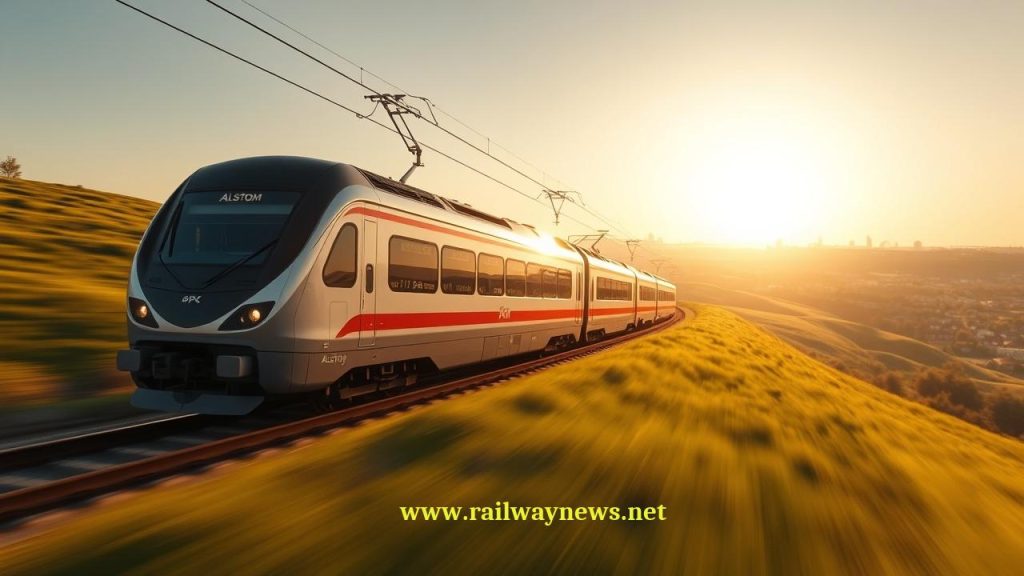
PKP Intercity Shatters Passenger Records with 23% Growth, Seals Historic Alstom Fleet Deal
WARSAW, POLAND – Polish national operator PKP Intercity has announced a record-breaking November, carrying 7.6 million passengers in a single month for a staggering 23% year-on-year increase that dramatically outpaces global transport growth projections. This operational triumph is backed by a landmark investment strategy, highlighted by the signing of the company’s largest-ever rolling stock contract with Alstom for a new fleet of high-capacity, double-decker trains.
| Category | Details |
|---|---|
| November 2025 Passenger Volume | 7.6 million passengers (+23% YoY) |
| Year-to-Date Traffic (Jan-Nov 2025) | 81.4 million passengers (exceeding full-year 2024) |
| Key Fleet Investment | Contract with Alstom Polska for 42 double-decker EMUs |
| Total Contract Value (Alstom) | ~ PLN 6.9 billion (PLN 4.1bn delivery + PLN 2.8bn maintenance) |
| Modernized Fleet Addition | 26 Z1B carriages, certified for 200 km/h operation |
Main Body:
PKP Intercity’s performance in November 2025 underscores a period of unprecedented growth for Poland’s railway sector. The 7.6 million passengers carried not only represents a 23% jump from November 2024 and a 40% increase from November 2023, but it also pushed the operator’s year-to-date total to 81.4 million. This figure has already surpassed the entire 2024 result of 78.4 million, with a full month of operations still to be counted. The demand surge was particularly acute during the national holiday period from November 7-11, when nearly 1.4 million people travelled by train. To meet this demand, the operator implemented a record number of operational supplements, adding over 2,190 extra carriages to 1,459 trains throughout the month.
Fueling this growth is a two-pronged fleet enhancement strategy combining new acquisitions and strategic modernizations. The centerpiece is a historic contract with Alstom Polska for 42 double-decker electric multiple units (EMUs), with an option for an additional 30 units. Valued at PLN 4.1 billion for delivery and nearly PLN 2.8 billion for a 30-year maintenance plan, it is the largest single rolling stock order in the company’s history by volume. These high-capacity trains, to be manufactured at Alstom’s Polish facilities, will primarily serve the economy segment. Simultaneously, PKP Intercity finalized the acceptance of 26 modernized Z1B carriages from H. Cegielski – Fabryka Pojazdów Szynowych. These carriages, approved for speeds up to 200 km/h, are now equipped with modern amenities including Wi-Fi, 230V and USB power sockets, improved sound insulation, and air conditioning, and are already in service on key domestic routes.
The operator’s remarkable 23% year-on-year growth places it in stark contrast with wider global travel trends. For comparison, the International Air Transport Association (IATA) projects the entire global airline industry will see passenger growth of just 4.4% in 2025. While millions of travelers in markets like the United States continue to rely on cars and planes for holiday travel, PKP Intercity’s success demonstrates a significant and accelerating modal shift towards rail in Poland. This trend is being driven by targeted investments in capacity, speed, and passenger comfort, positioning rail as an increasingly attractive and competitive alternative for domestic and long-distance travel.
Key Takeaways
- Record Traffic Growth: Passenger numbers surged 23% year-on-year in November, far outpacing the global air travel growth projection of 4.4% for 2025.
- Historic Fleet Expansion: A PLN 6.9 billion deal with Alstom for 42 double-decker EMUs marks the largest train order in the company’s history by volume, directly addressing capacity needs.
- Modernization Paying Off: The introduction of modernized 200 km/h carriages, funded by the National Recovery and Resilience Plan (KPO), is tangibly improving service quality and speed on critical routes.
Editor’s Analysis
PKP Intercity’s latest figures are more than just a national success story; they serve as a European benchmark for a successful railway renaissance. The company’s dual-track strategy of investing in high-capacity new builds for popular routes while simultaneously upgrading existing stock for higher speeds is a masterclass in balanced fleet management. This approach ensures both mass-market demand and expectations for faster journey times are met. For the global rail market, this proves that sustained, strategic investment in the passenger experience—from onboard amenities to sheer availability of seats—can generate growth that not only recovers pre-pandemic traffic but creates entirely new demand, positioning rail as the backbone of a modern, sustainable transport network.
Frequently Asked Questions
- How many passengers did PKP Intercity carry in November 2025?
- PKP Intercity transported a record 7.6 million passengers in November 2025, which is a 23% increase compared to November 2024.
- What is the largest new train order PKP Intercity has placed?
- The company signed its largest-ever rolling stock contract with Alstom Polska for 42 double-decker electric multiple units (EMUs), with an option for 30 more. The total value, including a 30-year maintenance agreement, is nearly PLN 6.9 billion.
- How is PKP Intercity modernizing its existing fleet?
- The operator recently accepted the last of 26 modernized Z1B carriages, upgraded by H. Cegielski. These carriages now feature modern amenities like Wi-Fi and power sockets and are approved for speeds up to 200 km/h on routes such as Warsaw–Łódź–Zakopane.
RELATED POSTS

February 20, 2019 9:36 pm
ABB's $42 million contract electrifies Indian Railways, boosting efficiency and...
September 19, 2025 1:55 am
“`html Introduction Washington State regulators have approved $25,000 in funding...
October 23, 2025 8:54 pm
Union Pacific's third-quarter results reveal positive news! The major **railroad**...
September 7, 2025 12:24 am
Georgia Ports Authority's (GPA) economic impact soars, creating 650,000+ jobs...
December 5, 2025 11:01 am
Eurostar and Deutsche Bahn plan a direct high-speed rail link!...
June 3, 2023 3:44 am
This article examines Alstom’s significant contract to provide a comprehensive...