
Haramain High Speed Rail Project: Saudi Arabia, Mecca, Medina, Jeddah
Saudi Arabia’s Haramain High Speed Rail project, connecting Mecca, Medina, Jeddah, and King Abdulaziz International Airport, is a major railway achievement. This high-speed rail line significantly improves regional connectivity and pilgrimage travel.
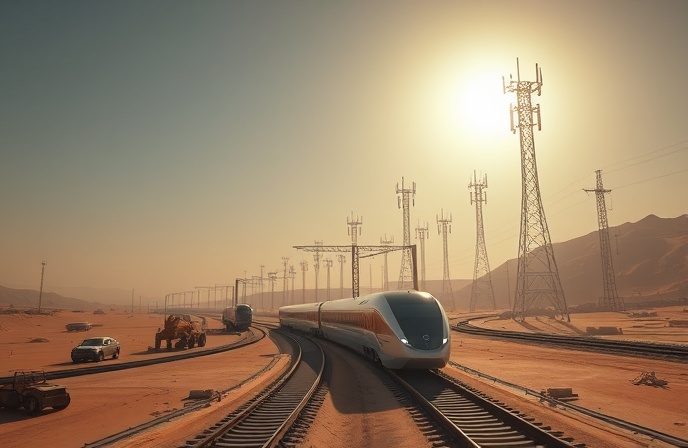
Haramain High Speed Rail Project
This article explores the Haramain High-Speed Railway (HHR), a significant infrastructure project in Saudi Arabia, focusing on its design, construction, and operational aspects. The project aimed to address the critical transportation needs of the burgeoning pilgrimage traffic to Mecca and Medina, while simultaneously stimulating economic growth and regional connectivity. The HHR, by providing a high-capacity, high-speed rail link between these holy cities and Jeddah, sought to alleviate the strain on existing road networks, enhance passenger comfort and safety, and significantly reduce travel times. This analysis will delve into the phased implementation, the key players involved, the technological challenges overcome, and the overall impact of this ambitious undertaking on the region’s transportation landscape and socio-economic development. The project’s success serves as a case study for future large-scale railway projects in challenging environments, highlighting best practices and lessons learned in project management, engineering, and international collaboration.
Project Overview and Phases
The Haramain High-Speed Rail project, spanning approximately 450 kilometers, connects the cities of Mecca, Medina, Jeddah, and King Abdulaziz International Airport. The project was executed in two phases. Phase I, commencing in 2009, focused primarily on civil works, including track construction, bridge building, station construction and land acquisition. Phase II encompassed the procurement and deployment of rolling stock (trains), the installation of signaling and communication systems, and the overall system integration and testing. The initial contract for Phase I, valued at $1.8 billion, was awarded to the Al Rajhi Alliance, a consortium of Chinese and Saudi companies (China Railway Engineering Corporation and Alstom Transport). The design of the five strategically located stations was overseen by a joint venture between Foster & Partners and Buro Happold.
Engineering and Technological Challenges
The project presented significant engineering challenges due to the diverse terrain and extreme climatic conditions of the region, with temperatures fluctuating between 0°C and 50°C. The track infrastructure was designed to withstand these temperature variations and ensure operational safety. Moreover, the high-speed operation necessitated the implementation of advanced signaling and communication systems, ensuring precise train control and communication. The modular design approach adopted by Foster & Partners for the stations enabled efficient prefabrication and rapid construction, critical given the project’s ambitious timeline.
Operational Aspects and Rolling Stock
The operational phase involved the integration of all systems, including the high-speed trains supplied by Renfe, a Spanish state-owned railway company. Renfe provided 35 Talgo 350 high-speed trains, each capable of exceeding 360 km/hr. Before the official launch, pilot operations were conducted for six months to test and optimize the systems under various conditions. The project aimed to provide a superior passenger experience with climate-controlled stations offering a wide array of amenities. The project also aimed to improve the transport experience during Hajj and Umrah periods, which traditionally were burdened with extremely high transit volumes.
Project Summary and Economic Impact
The Haramain High-Speed Rail project stands as a landmark achievement in railway infrastructure development, demonstrating the feasibility and effectiveness of high-speed rail in addressing the transport needs of a rapidly developing region. The project successfully connected key cities, boosting tourism, economic activity, and significantly improving the transportation infrastructure for millions of pilgrims. The strategic planning involved detailed consideration of passenger demand projections, and integrated technological solutions to overcome challenging environmental conditions.
| Project Parameter | Value |
|---|---|
| Project Length (km) | 450 |
| Project Budget (USD billion) | ~1.8 (Phase I) + unspecified (Phase II) |
| Project Type | High-Speed Rail |
| Cities Connected | Mecca, Medina, Jeddah, King Abdulaziz International Airport |
| Number of Stations | 5 |
| Rolling Stock Supplier | Renfe (Talgo 350 trains) |
Conclusions
The Haramain High-Speed Rail project successfully demonstrated the transformative power of high-speed rail infrastructure in addressing significant transportation challenges while stimulating economic growth. The project’s phased approach, coupled with a robust engineering design and the use of advanced technologies, successfully navigated various challenges, including extreme weather conditions and stringent deadlines. The meticulous project management, international collaborations, and efficient procurement processes contributed significantly to its timely completion. The project’s success lies not only in its technical achievements but also in its positive socio-economic impact. The improved connectivity has significantly enhanced access to religious sites for pilgrims, streamlined commercial activities, and fueled tourism. The project serves as a compelling case study for future high-speed rail projects globally, particularly in regions with challenging geographical and climatic conditions. The lessons learned in project planning, execution, and international collaboration offer valuable insights for similar endeavors. The seamless integration of advanced technologies, meticulous attention to detail, and a collaborative approach resulted in a high-quality, efficient, and safe railway system, setting a new standard for infrastructure development in the region. The long-term economic and social benefits of the Haramain HSR underscore the vital role of large-scale infrastructure projects in fostering sustainable development.
Company Information:
- Al Rajhi Alliance: A consortium of Chinese and Saudi companies. China Railway Engineering Corporation is a major Chinese state-owned construction and engineering company. Alstom Transport, now part of Alstom, is a global leader in rail infrastructure and rolling stock.
- Foster & Partners: A world-renowned architectural firm known for its innovative and sustainable designs.
- Buro Happold: A global engineering consulting firm specializing in various disciplines, including structural, civil, and transportation engineering.
- Dar Al-Handasa Consultants: A Saudi-based engineering and consultancy firm.
- Scott Wilson: A former international engineering and development consultancy company (now part of Atkins).
- Renfe: The Spanish state-owned railway company.
RELATED POSTS

June 8, 2018 5:36 am
China's Changsha-Zhuzhou-Xiangtan high-speed railway boosts regional connectivity, showcasing impressive engineering...

December 8, 2016 12:03 am
Thailand and China plan to extend their ambitious Bangkok-Nakhon Ratchasima...

Africa, Business, China, Djibouti, Ethiopia, Events, Freight, Future Projects, Infrastructure, News, Projects, Rolling Stock, Tenders, World
October 15, 2016 2:56 pm
The 752.7km Ethiopia-Djibouti railway modernisation project, also known as the...
January 30, 2020 11:56 pm
ÖBB Nightjet upgrades its sleeper train service across Europe, with...

June 13, 2007 6:47 pm
The Vietnamese government has approved the Vietnam Railway Corporation plans...

July 21, 2015 12:46 pm
A consortium led by Bechtel has begun tunneling on Line...