
Yonge North Subway Tunneling: Rail Tech & GTA Transit’s Future
Toronto’s Yonge North subway extension tunneling project, a key transit upgrade, faces geological challenges but leverages advanced tunnel boring machines.
Digging Deep: The Challenges and Triumphs of the Yonge North Subway Extension Tunneling Project
The expansion of Toronto’s public transit network is underway, with the highly anticipated Yonge North Subway extension tunneling project taking center stage. This ambitious undertaking, spearheaded by Metrolinx, will extend the existing Line 1 subway northwards, providing critical relief to overcrowded routes and connecting communities beyond the current terminus at Finch Station. The project involves the construction of new stations, significant infrastructure upgrades, and most significantly, the excavation of miles of new underground tunnels. This article explores the complexities of the Yonge North Subway extension tunneling, exploring the engineering feats, logistical hurdles, and the long-term benefits this project brings to the Greater Toronto Area (GTA). Our focus is on delivering detailed insights that are of value to railway professionals, project stakeholders, and industry experts alike, and detailing the impacts of such a momentous project.
Advancements in Tunnel Boring Technology: A Deep Dive
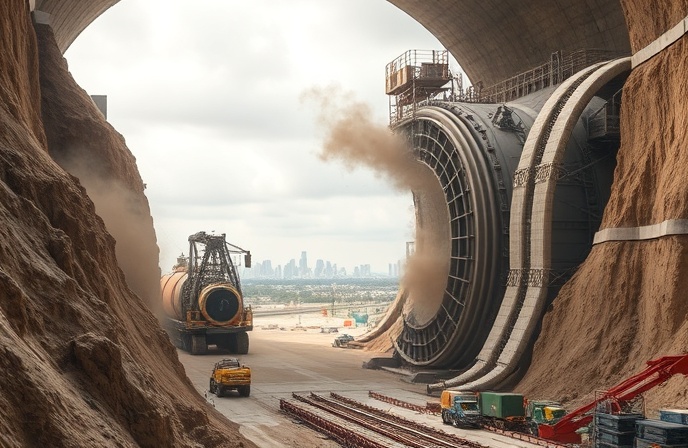
The Yonge North Subway extension tunneling project leverages some of the most advanced tunnel boring machines (TBMs) in the world. These massive, self-propelled machines are specifically designed to excavate tunnels through various geological conditions, while simultaneously installing lining systems to support the newly created underground space. The project is utilizing Earth Pressure Balance (EPB) TBMs, which are ideally suited for the mixed ground conditions prevalent in the GTA. EPB TBMs use a rotating cutterhead to excavate the soil, which is then mixed with additives to create a pressurized slurry. This slurry stabilizes the tunnel face, preventing ground collapse and reducing the risk of surface settlement. The spoil (excavated material) is then transported via conveyor systems to the surface for disposal. These sophisticated machines represent a significant step forward in efficient and sustainable tunneling, allowing for the rapid creation of tunnels with minimal disruption to above-ground activities. The use of such advanced TBM technology ensures that the tunneling process is completed safely and efficiently.
Navigating Geological Complexities: Ground Conditions and Engineering Solutions
The geological makeup of the route poses a unique set of challenges for the Yonge North Subway extension tunneling. The route traverses through a mix of soil types, including clay, sand, and bedrock, which require careful consideration during the design and construction phases. Engineering teams must anticipate potential issues such as water ingress, ground settlement, and variations in soil strength. Solutions include pre-grouting the ground to stabilize it before the TBM passes through, employing advanced monitoring techniques to detect any ground movement, and implementing robust tunnel lining systems to prevent water leakage. The selection of appropriate tunnel lining materials is also a critical factor. Segmental concrete linings, often precast offsite and assembled inside the tunnel, are commonly used because of their durability and ability to withstand the pressures of the surrounding ground. This approach necessitates precise planning and logistics, but ultimately ensures the long-term integrity and safety of the new subway line.
Logistical Mastery: Coordinating Complex Operations and Minimizing Disruptions
The Yonge North Subway extension tunneling project involves a multitude of moving parts, requiring meticulous coordination to ensure smooth and efficient progress. This includes the transportation of materials, management of spoil removal, and the intricate scheduling of various construction activities. The project teams have established detailed traffic management plans to minimize disruptions to surface roadways, and noise mitigation measures are in place to minimize disturbance to nearby residents. Additionally, the implementation of stringent safety protocols is paramount, ensuring that the tunneling operations are conducted safely, without compromising the wellbeing of the workers or the public. The success of the project hinges on the seamless integration of all these elements, from the selection of tunnel boring machines to the implementation of environmental protection measures, demonstrating the project’s scope.
Stakeholder Collaboration and Public Engagement: A Key to Success
Effective communication and collaboration with stakeholders are crucial for the success of the Yonge North Subway extension tunneling. Regular updates and transparent communication with the public, local businesses, and government agencies are critical to maintaining support for the project. Addressing public concerns, such as noise levels, traffic disruptions, and potential environmental impacts, is a key component of the project’s social license. Project managers employ various methods for public outreach, including town hall meetings, online information sessions, and direct communications to address questions and provide updates. Building and maintaining a positive relationship with the local community is essential for minimizing disruptions and ensuring the long-term viability of the extension.
Conclusion
The Yonge North Subway extension tunneling project represents a significant investment in Toronto’s transit infrastructure and offers significant benefits to the region. The project will ease congestion, connect communities, and contribute to economic growth. The sophisticated use of cutting-edge tunnel boring technology, combined with meticulous planning and a commitment to stakeholder engagement, is laying the groundwork for a transit network that supports decades of growth. As the project progresses, the railway industry will observe the lessons learned from this undertaking, informing future infrastructure projects across the province and beyond. Looking ahead, we anticipate continued innovations in tunnel construction, including the greater use of automation and digital technologies, further enhancing the efficiency and safety of underground projects. This project serves as a prime example of the railway industry’s evolving sophistication and capacity for innovation.

Railway infrastructure, rolling stock and transport technologies specialist focused on global rail industry developments, high-speed rail systems, signaling technologies and freight transportation. Covering railway investments, public transport modernization, rail operations and international mobility projects across Europe, Asia and North America.
BENZER KONULAR
July 4, 2026 9:18 am
Intramotev deployed its TugVolt autonomous railcar in March 2025 at...
July 4, 2026 11:41 pm
Eurostar cancelled all direct London–Amsterdam trains through July 2 after...
July 1, 2026 1:37 pm
NRHS awarded $187K to 34 U.S. rail heritage projects in...
July 1, 2026 1:42 am
UK government launched a £30bn Better Connected plan, allocating £15.6bn...
July 1, 2026 6:37 am
Amtrak launched a small-plate dining program for Acela First Class...
July 4, 2026 11:02 pm
Eurostar suspends all direct London–Dutch trains through 2 July after...