
Sydney’s Epping-Chatswood Rail Project: A Case Study
Sydney’s Epping-Chatswood rail line, part of a larger expansion, successfully integrated advanced technology, boosting capacity. Railway sector news highlights its impact on commuters.
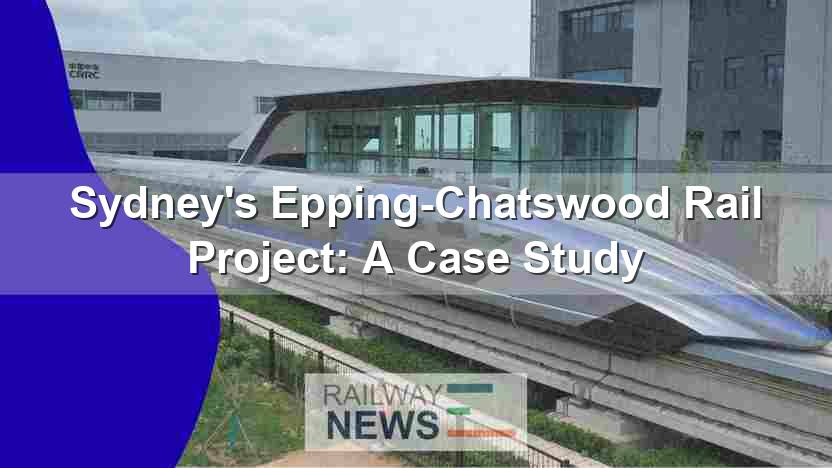
This article related with the evolution of Sydney’s rail infrastructure, focusing on the ambitious Parramatta-Chatswood Rail Link project and its impact on the broader Metropolitan Rail Expansion Program. The project’s initial conception, subsequent postponement, and ultimate realization as the Epping-Chatswood line highlight the complex interplay of political priorities, budgetary constraints, and technological advancements in large-scale infrastructure development. We will examine the technological solutions employed, the organizational structure behind the project, and the long-term implications for Sydney’s commuter rail network. The analysis will delve into the challenges and successes encountered, offering valuable insights into the planning and execution of major railway projects and the importance of adaptable strategies in the face of evolving circumstances. The ultimate aim is to understand the lessons learned from this specific project and how they contribute to best practices in contemporary railway engineering and management. This analysis will provide a detailed overview of the technological advancements, logistical planning and economic considerations involved in such large-scale endeavors, ultimately informing future rail infrastructure development strategies.
The Epping-Chatswood Line: A Realized Vision
Initially envisioned as the Parramatta-Chatswood Rail Link, the project, launched in 1998 with a projected budget of A$1.4 billion, was ultimately shelved in 2001 due to various factors. However, the need for improved rail connectivity in Sydney’s northern suburbs remained. This led to the development of the Epping-Chatswood Rail Link, a 12.5km underground heavy rail line, as a key component of the broader NSW Government’s A$8 billion Metropolitan Rail Expansion Program. This new approach demonstrates the ability to adapt and prioritize infrastructure projects based on changing needs and economic realities. The Epping-Chatswood line, though a modified vision, showcases the successful implementation of advanced rail technology and its significant impact on passenger capacity.
Technological Advancements and Infrastructure Development
The Epping-Chatswood line incorporated cutting-edge technology, including twin underground tunnels, three new state-of-the-art stations (North Ryde, Macquarie Park, and Epping), and a redeveloped Chatswood Transport Interchange. The project’s success hinged on careful planning and execution, incorporating sophisticated signaling systems (including the standard absolute block system and conventional multiple-aspect colour-light signalling) to ensure efficient and safe train operations. The line’s construction also demonstrated significant advancements in urban tunneling techniques, minimizing disruption to existing infrastructure and the surrounding environment. The integration of the new line with the existing CityRail network, seamlessly incorporating it into the broader system, showcases the importance of efficient system integration and the planning process involved.
Rolling Stock and Network Integration
The successful operation of the Epping-Chatswood line, and the broader expansion of Sydney’s rail network, depends heavily on reliable rolling stock. The introduction of the “Millennium Trains,” despite initial setbacks requiring modifications, marked a significant improvement in passenger comfort and accessibility. The subsequent order of 626 new double-deck EMU (Electric Multiple Unit) cars, a collaborative effort involving Downer EDI (Australia), Changchun Railway Corporation (China), and Hitachi (Japan), further enhanced the network’s capacity and modernized the fleet. This international collaboration illustrates the global nature of modern rail infrastructure projects, emphasizing the importance of efficient international supply chains.
Future Expansion and Network Sustainability
The success of the Epping-Chatswood line and the broader Metropolitan Rail Expansion Program, including the South West Rail Link and North West Rail Link, points towards a continuing commitment to expand and improve Sydney’s public transportation infrastructure. Further upgrades, such as the A$58 million refurbishment of North Sydney Station, demonstrate the ongoing investment required to maintain and improve existing infrastructure to meet future passenger demand. The integration of safety features like automatic train protection and in-cab signaling highlight a commitment to both passenger safety and operational efficiency. This focus on long-term planning and sustainable development strategies ensures the ongoing success and relevance of Sydney’s rail system.
Conclusion
The journey of the Parramatta-Chatswood Rail Link, culminating in the Epping-Chatswood Line, demonstrates the dynamic nature of large-scale infrastructure projects. The initial setbacks highlighted the importance of adaptable planning, while the project’s ultimate success showcased the effective implementation of advanced technologies and integrated project management. The Epping-Chatswood Line not only increased passenger capacity by 12,000 passengers daily but also served as a crucial catalyst for broader economic development in Sydney’s northern suburbs. The project’s success also highlights the importance of international collaboration in modern rail infrastructure projects. The integration of the new line into the existing CityRail system, showcasing the seamless integration of advanced technologies within a pre-existing infrastructure demonstrates a crucial component for effective railway expansion. The ongoing investments in infrastructure upgrades and safety features underscore a commitment to sustainable and efficient public transportation, shaping Sydney’s future and serving as a model for other large-scale railway developments worldwide. The lessons learned from the planning and execution of this project underscore the critical need for robust financial planning, flexible project management, and a clear understanding of evolving technological solutions in the development of future railway networks. The successful integration of international collaborations highlights a global perspective in infrastructure development for improved quality, and efficiency.
| Project Name | Project Length (km) | Project Budget (A$) | Connection | Number of Stations |
|---|---|---|---|---|
| Epping-Chatswood Rail Link | 12.5 | (Part of A$8 billion Metropolitan Rail Expansion Program) | Epping to Chatswood | 3 new stations + Chatswood Interchange redevelopment |
| South West Rail Link | (Variable, depending on extension) | (Part of A$8 billion Metropolitan Rail Expansion Program) | Glenfield to Leppington (potential extension to Bringelly) | (Details not specified in the source) |
| North West Rail Link | (Variable, depending on extension) | (Part of A$8 billion Metropolitan Rail Expansion Program) | Cheltenham to Rouse Hill (potential extension to Vineyard and Richmond Lines) | (Details not specified in the source) |
Company Information:
- RailCorp (NSW): A former state-owned corporation responsible for passenger train services in NSW.
- Transport Infrastructure Development Corporation (NSW): Responsible for expanding NSW’s rail system.
- Downer EDI: An Australian infrastructure and services company, played a major role in rolling stock manufacturing and maintenance.
- Changchun Railway Corporation: A Chinese company involved in the construction of train bodies for the new EMU cars.
- Hitachi: A Japanese multinational conglomerate that supplied electrical equipment for the new EMU cars.
- Reliance Rail: A consortium led by Downer EDI, awarded the contract to design, build, and maintain new EMU trains.

Transport and railway industry editor covering global rail infrastructure, sustainable mobility, urban transit systems and next-generation railway technologies with a focus on accessible and industry-focused reporting.
RELATED POSTS

June 3, 2026 12:45 am
Alstom secured a €214 million contract to install ETCS Level...