
U.S. Navy Seeks New Missile Railcars: Modernizing Fleet
U.S. Navy seeks new missile transport railcars, replacing aging fleet. This strategic procurement ensures continued logistical support for the Fleet Ballistic Missile program.
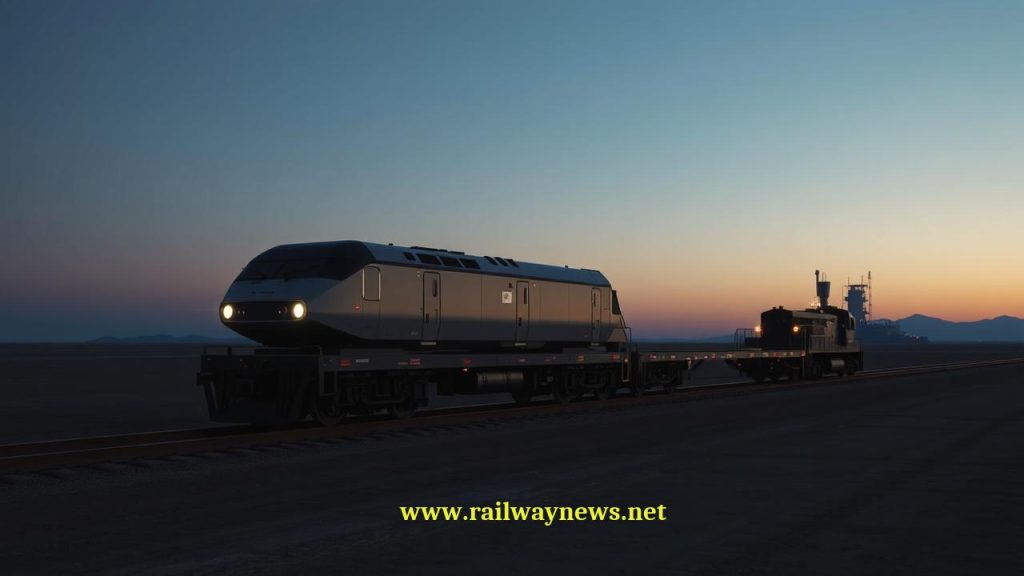
U.S. Navy Initiates Procurement for New Fleet of Missile Transport Railcars
The United States Navy has launched a formal procurement process for a new generation of specialized flat railcars, critical for transporting Active Inert Missiles for its Fleet Ballistic Missile program. This move to replace its aging, 1980s-era rolling stock is a key part of a broader Department of Defense initiative to modernize its entire supply chain, which has recently seen major investments in high-tech AI and logistics platforms.
| Category | Details |
|---|---|
| Procuring Entity | United States Navy / Department of Defense |
| Requirement | Custom Design & Production of Flat Railcars for Active Inert Missiles |
| Fleet to be Replaced | DODX 40000 Series (Originally built in 1981) |
| Retirement Deadline | July 1, 2031 |
| Governing Standard | American Association of Railroads (AAR) compliance mandatory |
| Contract Type | Fixed Price, Firm Order |
The U.S. Department of Defense, on behalf of the Navy, has issued a Request for Information (RFI) to conduct market research and identify companies capable of designing and manufacturing a new fleet of flatcars. The winning bidder will be awarded a firm, fixed-price contract to deliver a complete technical data package and produce the new rolling stock. The contract specifies that delivery will be FOB Destination, meaning the supplier assumes all transport risks and responsibilities until the railcars are delivered to the Navy’s designated final location.
The new railcars are a strategic necessity, as the current DODX 40000 series is set to reach the end of its operational life. Originally built by the U.S. Army in 1981, this fleet’s outdated 3-axle, 6-wheel design is a primary factor in its retirement. The American Association of Railroads (AAR) has determined it will not grant a further service life extension, making their replacement imperative to ensure the continuity of the Fleet Ballistic Missile (FBM) program’s logistical capabilities. Demilitarization of the old fleet is scheduled to commence around January 1, 2031, setting a clear deadline for the new assets to be in service.
This railcar procurement, while a conventional hardware acquisition, is part of a much larger, technologically advanced push by the Navy to overhaul its entire industrial base and supply chain. The initiative includes recent high-value contracts, such as a $448 million award to Palantir Technologies to deploy “ShipOS,” an AI-powered operating system designed to resolve production bottlenecks in submarine construction. By investing in both foundational assets like railcars and cutting-edge software, the Navy is building a more resilient and efficient logistics network to support its strategic defense posture.
Key Takeaways
- Fleet Modernization is Non-Negotiable: The current missile transport fleet, over 40 years old, will not have its service life extended by the AAR, forcing the Navy to procure a modern, compliant replacement.
- End-to-End Responsibility: The chosen supplier will be responsible for the entire lifecycle of the project, from initial design and engineering to manufacturing and final delivery.
- Part of a Broader Logistics Overhaul: This contract fits within the Navy’s wider strategy to strengthen its supply chain, which includes significant investments in both physical infrastructure and advanced AI-driven management systems.
Editor’s Analysis
This U.S. Navy tender represents a significant opportunity for rolling stock manufacturers specializing in high-specification, defense-grade equipment. While the unit volume may be modest compared to commercial freight orders, the contract’s prestige and the technical challenges involved offer a unique platform for a company to showcase its engineering prowess. For the global rail market, it underscores the continued relevance and critical importance of rail transport in national security logistics. The stringent AAR and military specifications will demand cutting-edge design and manufacturing, pushing the boundaries of what is possible for heavy-duty, specialized freight cars. The winner will not only secure a valuable contract but also solidify its reputation as a trusted partner for defense agencies worldwide—a niche but highly lucrative sector of the industry.
Frequently Asked Questions
- Why is the U.S. Navy replacing its current flatcar fleet?
- The existing DODX 40000 series, built in 1981, is reaching the end of its mandated service life on July 1, 2031. Its outdated design no longer meets current standards, and the American Association of Railroads (AAR) will not approve a further operational extension.
- What will the new railcars be used for?
- They are being custom-designed and engineered for the specific purpose of transporting Active Inert Missiles between military facilities as part of the Navy’s Fleet Ballistic Missile (FBM) program.
- What are the key requirements for the supplier?
- The supplier must provide a new design, develop the technical data package, and manufacture the railcars. Critically, the final product must be fully compliant with the standards of the American Association of Railroads (AAR) and meet all system requirements specified by the Navy.
RELATED POSTS

April 28, 2023 12:32 pm
The Acquisition of Blume Global by WiseTech Global: A Strategic...

July 10, 2012 6:15 pm
Acceptance tests of 61-4472 double deck staff compartment passenger car...

September 20, 2023 10:03 pm
Understanding UIC 544-1 braking performance standards. A technical guide to...

April 11, 2025 12:20 pm
This article examines the controversial £62.3 million ($79 million) dividend...

March 17, 2025 9:33 pm
This article explores the significant railway infrastructure project currently underway...

September 6, 2025 4:49 am
Honolulu's Skyline rail project breaks ground, commencing construction of the...