
Schleswig-Holstein Rail: EIB Funding for Alstom Coradia Max EMUs
Schleswig-Holstein’s regional rail gets EUR 250M EIB loan for new EMUs, boosting capacity and cross-border links.
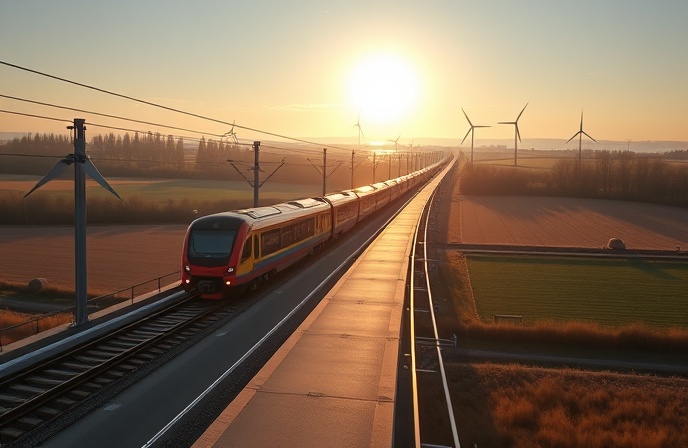
Schleswig-Holstein Boosts Regional Rail with EUR 250 Million EIB Loan for Modern EMUs
Schleswig-Holstein, Germany’s northernmost state, is poised for a significant upgrade to its regional rail network. The public railway authority, ZUG.SH, has secured a EUR 250 million loan agreement from the European Investment Bank (EIB) to finance the purchase of state-of-the-art electric multiple units (EMUs). This strategic investment, announced recently, marks a decisive step towards enhancing passenger transport, increasing capacity, and fostering competition in the sector. The new trains, scheduled to begin operating in late 2027, will service key regional routes connecting Kiel, Hamburg, Flensburg, and, crucially, extending into Southern Denmark, modernizing transportation for over 21.9 million projected passengers annually. This article delves into the specifics of the investment, the features of the new EMUs, and the broader implications for the rail network and its users.
Modernizing the Fleet: Key Features of the Coradia Max EMUs
At the heart of this investment is the acquisition of 40 new Coradia Max EMUs from Alstom. The contract, awarded in July 2023, also includes comprehensive maintenance services for a 30-year period. The Coradia Max model is engineered to accommodate a significantly increased passenger load, boasting 390 seats compared to the 70 seats found on existing models. These next-generation trains are designed with passenger comfort and accessibility in mind. Each carriage incorporates step-free, multi-purpose areas, specifically catering to passengers with reduced mobility and facilitating the convenient transport of strollers, up to 24 bicycles, and ample luggage space. Furthermore, the EMUs are equipped with the European Train Control System (ETCS), a crucial component for interoperability, facilitating seamless cross-border traffic, thereby optimizing efficiency across regional lines.
Expanded Routes and Enhanced Connectivity
The deployment of these new EMUs will revolutionize passenger travel across key regional routes. The modernized fleet will operate on the main lines, including the RE 7 and RE 70 lines connecting Hamburg with Kiel and Tinglev respectively, and RB 61 (Hamburg – Heide route) and RB 71 railways (Hamburg – Wrist route, via Itzehoe). The inclusion of Tinglev, in Southern Denmark, underscores the cross-border impact of this investment, creating enhanced connectivity between the region. This route expansion signifies a major step towards integrating Schleswig-Holstein’s rail network with both Hamburg and Denmark, facilitating increased mobility for both commuters and tourists.
Financing and the Role of the EIB
The European Investment Bank’s financial contribution is vital to realize this project, and represents a long-term investment in the region’s transport infrastructure. The EIB’s support, providing the long-term financing, is crucial to the ability to deliver state-of-the-art trains and the targeted cost savings for the region, as confirmed by Bernhard Wewers from the Board of ZUG.SH. This financial backing supports the adoption of modern rolling stock, enhances the passenger experience, and promotes a more sustainable and competitive regional rail network. The long-term agreement ensures a stable financial foundation for the project, minimizing financial risk and guaranteeing a consistent flow of resources for maintenance and operational efficiency.
Conclusion
The EUR 250 million investment, supported by the EIB, represents a significant stride in modernizing Schleswig-Holstein’s regional rail network. The procurement of the new Coradia Max EMUs from Alstom will improve passenger capacity and comfort, enhance accessibility, and seamlessly integrate cross-border services. The strategic focus on connectivity, particularly with Denmark, reflects a commitment to fostering a more integrated transport system. This investment has wide-reaching implications, enhancing passenger transport and spurring competition. The project’s successful execution will serve as a model for other regions seeking to modernize their railway networks, highlighting the benefits of investing in modern rolling stock and European cooperation. The modern fleet and route expansion promise greater efficiency, reliability, and passenger satisfaction, ultimately contributing to a more sustainable and connected future for the region’s rail travel. The impact of the investment will be most clearly visible from December 2027 when the new trains will be put into operation.
Company Summary
Alstom is a global leader in rail transport solutions, specializing in rolling stock, signaling, and infrastructure. With a history dating back to 1928, Alstom has a strong track record of delivering cutting-edge technology. Its Coradia Max series, for example, has been designed to meet the ever-increasing demands of modern rail networks with its emphasis on high capacity, accessibility, and sustainability. Alstom’s emphasis on continuous innovation, coupled with long-term maintenance services, guarantees the optimal operation and longevity of its rolling stock, delivering reliable and sustainable transport solutions to railway operators worldwide.
RELATED POSTS

June 17, 2019 2:40 am
Extend your LRV fleet's lifespan and save millions! TriMet's...
September 30, 2025 4:54 pm
Siemens Mobility invests €35M in a new German facility, boosting...

July 21, 2015 6:42 am
MÁV-START Zrt, passenger operation unit of Hungarian State Railways, and...
July 1, 2018 11:07 pm
London's Piccadilly line gets a £1.5 billion upgrade with new...

January 8, 2010 6:06 am
The first of 60 monorail cars has been delivered to...

October 7, 2011 6:37 pm
Alcatel-Lucent in partnership with Transtelecom JSC has completed the communication...