
Siemens Germany Battery Factory: Rail Innovation & Sustainability
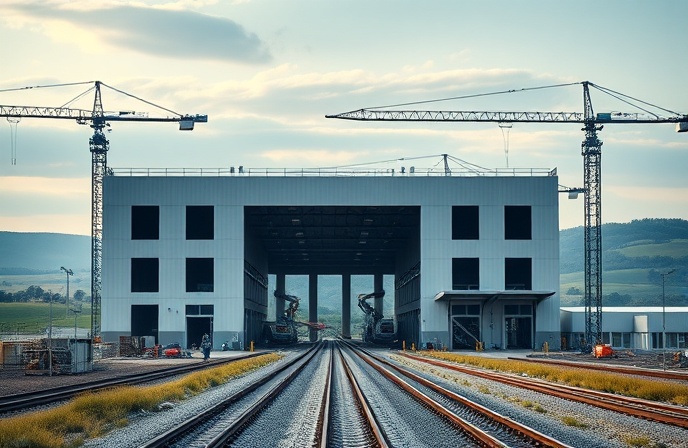
Siemens Mobility invests €35M in a new German facility, boosting **battery systems** production for **rail** applications. The factory aims for completion by Spring 2027.
“`html
Introduction
Siemens Mobility has commenced construction of a new facility in Luhe-Wildenau, Bavaria, Germany, with a total investment of approximately €35 million ($41 million) to manufacture battery systems for rail vehicles.
Construction and Investment
Siemens Mobility is investing around €22 million in the new facility in Luhe-Wildenau. The Free State of Bavaria is contributing €2.7 million through state funding programs. The facility will occupy approximately 20,000 m².
Battery System Development
Siemens Mobility’s investment will support the development of a modular battery family and a new battery management system (BMS). The BMS is being built in collaboration with Stercom, a Munich-based company. Additional funds are directed toward production and automation technologies, including welding processes. The factory is scheduled to be completed in spring 2027, with series production planned to begin in October 2027. The facility is planned to employ up to 200 people.
Production and Capacity
The facility will produce battery systems for Siemens Mobility’s regional trains, locomotives, and external customers. Upon full operation, the factory aims to reach an annual output of up to 120MW of battery capacity with three-shift operations. Battery cells for the systems will be supplied by external companies such as Toshiba. Siemens Mobility will integrate these cells into the final systems. Pre-assembly of battery systems already occurs at the Luhe-Wildenau location.
Project Collaboration and Additional Projects
The development of the site involves cooperation with Dirnberger Real Estate and DIMONDA Projektbau, who are responsible for site management and project delivery. In August this year, Siemens Mobility secured a contract with the Regie Autonome des Transports Parisiens (RATP) to fully automate Paris Metro Line 13 using its advanced CBTC GoA4 technology.
Conclusion
The new Siemens Mobility facility in Luhe-Wildenau, Germany, represents a €35 million investment aimed at producing battery systems for rail vehicles. The factory is scheduled for completion in spring 2027 and will have a capacity of up to 120MW annually.
Last June 2025, we published an article about Renfe’s Aranjuez maintenance hub. Click here to read – Future of Rail: Renfe’s Railway Technology Hub, Aranjuez: Essential Guide
Company Summary
Siemens Mobility: Siemens Mobility is constructing a new facility in Luhe-Wildenau, Germany, for the production of battery systems for rail vehicles. The company is also involved in projects like the automation of Paris Metro Line 13.
Stercom: A company based in Munich, collaborating with Siemens Mobility on the development of a battery management system (BMS).
Toshiba: A supplier of battery cells for the Siemens Mobility battery systems.
Regie Autonome des Transports Parisiens (RATP): A transportation authority that awarded Siemens Mobility a contract to automate Paris Metro Line 13.
Dirnberger Real Estate: A company involved in the site management of the new Siemens Mobility facility.
DIMONDA Projektbau: A company involved in project delivery for the new Siemens Mobility facility.
Technology
BMS (Battery Management System): A system designed to monitor and control batteries.
CBTC GoA4: Advanced technology used by Siemens Mobility for the automation of Paris Metro Line 13.
“`
RELATED POSTS
July 29, 2025 12:33 am
EGF Energy Partners invests in rail-served terminal at Gulf Inland...

May 30, 2010 3:06 am
The largest railways rolling stock manufacturer in Russia, Transmashholidng (TMH),...
November 24, 2025 9:42 pm
Angola and Alstom partner for the Luanda Blue Line Commuter...

January 17, 2026 1:39 am
Transdev wins over €4 billion in Dutch public transport contracts,...

November 18, 2015 1:34 pm
Alstom has delivered the latest batch of eight X’Trapolis for...
January 6, 2026 9:39 pm
Trinity Industries restructures, boosting 2025 EPS by $1.50. Gaining control...