
Poland-South Korea Rail Pact: CPK’s High-Speed Future
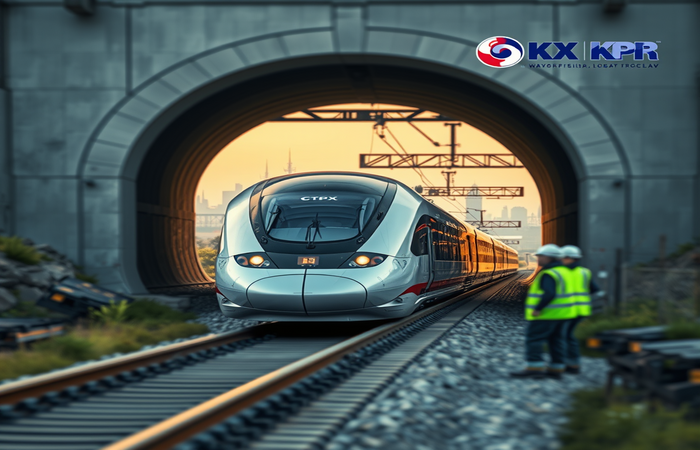
Poland, October 26, 2024 – In a significant step towards modernizing its transportation infrastructure, Centralny Port Komunikacyjny (CPK), the Polish government’s strategic project for a new central airport and high-speed rail network, has entered into a cooperation agreement with Korea National Railway (KNR), the South Korean railway infrastructure manager. This partnership underscores Poland’s commitment to developing a state-of-the-art high-speed rail system. The agreement focuses on the exchange of knowledge and expertise, specifically in areas such as tunnel and turnout maintenance, and railway diagnostics. This collaboration leverages KNR’s extensive experience in operating high-speed rail lines and aims to incorporate cutting-edge solutions into Poland’s ambitious “Y” line project, connecting Warsaw, CPK, Łódź, and Wrocław/Poznań. This initiative is pivotal in transforming Poland into a major European transport hub, promising enhanced connectivity and economic growth.
High-Speed Rail: A Catalyst for Transformation
The cooperation agreement between CPK and KNR is particularly focused on the exchange of specialized knowledge crucial for the efficient operation and maintenance of high-speed rail systems. This includes expertise in tunnel engineering, turnout maintenance, and advanced railway diagnostics. KNR’s experience, derived from operating over 650 kilometers of high-speed rail lines, provides a valuable resource for CPK. The Polish side, in turn, will share the technical solutions planned for implementation on the “Y” line. This knowledge-sharing approach will ensure the highest standards of safety and operational efficiency for the planned high-speed rail network. The “Y” line, a key component of CPK’s infrastructure, is designed to significantly reduce travel times between major Polish cities, fostering greater economic integration and accessibility. The development of this line aligns with Poland’s broader strategy to modernize its transport infrastructure and enhance its position within the European Union.
Deepening Polish-Korean Collaboration
The agreement builds on a growing history of collaboration between Poland and South Korea in the realm of infrastructure development. In 2021, CPK signed an advisory agreement with the operator of Incheon Airport, a leading international aviation hub. Building on this collaboration, a Korean consortium, led by Korea National Railway and Dohwa Engineering, secured a contract in mid-2023 to design a 70-kilometer section of high-speed rail connecting Katowice to Poland’s southern border. These partnerships highlight the strategic importance of CPK within the framework of Polish-Korean cooperation. The involvement of Korean companies demonstrates their confidence in the project’s viability and their expertise in delivering world-class infrastructure. This collaboration goes beyond financial investment; it brings invaluable technical expertise and innovative solutions to the development of Poland’s transport network.
CPK’s Vision for a Multimodal Transport Hub
CPK is slated to open in 2032, and it’s conceived as a modern, integrated transport system. It encompasses a state-of-the-art airport, a high-speed rail network, and supporting road infrastructure. CPK’s strategic location in Central and Eastern Europe positions it to become a major global transfer hub. This strategic positioning will enhance connectivity, facilitating smooth connections between Polish cities, European capitals, and the rest of the world. The integration of multimodal transport will be a key feature, with optimized flight routes and shorter transfer times designed to provide travelers with a seamless experience. The project aims to drive economic growth by improving logistics, attracting investment, and creating new employment opportunities. The vision is not only to upgrade Poland’s transport capabilities but also to position the nation as a vital player in the European and global transport landscape.
Conclusions: A Future of Connectivity and Growth
The collaboration between CPK and KNR marks a significant stride towards realizing Poland’s ambitious plans for high-speed rail and a modern transport hub. This partnership brings together invaluable technical expertise and a shared vision for the future of transportation. The agreement facilitates a vital exchange of knowledge in critical areas such as tunnel and turnout maintenance and railway diagnostics, ensuring the highest standards of safety and efficiency. The ongoing collaboration underscores Poland’s strategic commitment to modernizing its infrastructure, with the “Y” line as a centerpiece of this transformation. The project’s strategic location within Central and Eastern Europe will enable the country to strengthen its role as a significant player in the global transport landscape. The CPK project, set to open in 2032, promises to transform Poland’s connectivity, drive economic growth, and position the nation as a vital hub for transportation in the heart of Europe. This ambitious venture is a testament to Poland’s vision for a connected, modern future.
***
Summary of Companies:
* **Centralny Port Komunikacyjny (CPK):** The Polish government’s strategic project to develop a new central airport and high-speed rail network.
* **Korea National Railway (KNR):** The South Korean railway infrastructure manager, responsible for operating high-speed rail lines.
* **Dohwa Engineering:** A Korean company involved in designing a section of the high-speed rail line in Poland.
RELATED POSTS

December 1, 2021 1:43 am
Introduction This article explores the significant enhancements undertaken by KiwiRail...
July 18, 2019 4:18 am
The Montréal Metro Blue Line Extension: A Case Study in...

January 13, 2025 4:36 pm
Unlocking Greater Manchester’s Rail Freight Potential: A Strategic Imperative The...

July 12, 2018 2:20 am
Southeast Asia's first high-speed rail, the Jakarta-Bandung line, is a...
June 25, 2022 12:24 pm
This article examines the significant contract extension awarded to Stantec...