
Melbourne-Sydney HSR: Challenges and Future Rail Projects in Australia
High-speed rail link between Melbourne and Sydney faces significant financial and logistical hurdles, according to industry expert. Expert questions feasibility, citing cost and land acquisition challenges.
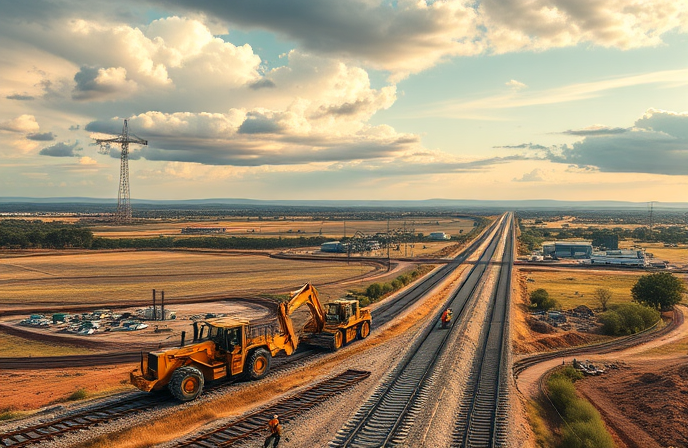
High-Speed Rail Dreams Delayed: Industry Expert Questions Feasibility of Melbourne-Sydney Link
Sean Bonham, Executive General Manager of ACCIONA’s Specialist Businesses, has cast significant doubt on the prospect of a high-speed rail (HSR) network connecting Melbourne and Sydney materializing within the foreseeable future. Speaking at the Civil Contractors Federation Victoria Road and Rail Sector Outlook Breakfast on June 24, Bonham shared his skepticism despite acknowledging the benefits of such infrastructure. This article explores Bonham’s concerns, analyzes the financial and logistical hurdles facing HSR implementation in Australia, and examines the implications for future rail infrastructure projects.
Bonham’s perspective, rooted in his 40 years of railway industry experience, highlights the fundamental challenges underpinning the viability of this ambitious project. The core issue, as identified by Bonham, revolves around financial constraints and the substantial investment required, potentially running into hundreds of billions of dollars. Further concerns stem from the required acquisition of land and the potential for societal friction and opposition from private landowners.
The Billion-Dollar Question: Financial Viability of High-Speed Rail
The primary obstacle identified by Bonham is the colossal financial commitment required for HSR. The construction of a high-speed rail network demands immense capital investment in track infrastructure, rolling stock, and associated technologies such as signalling and communications systems. These projects are often financed through a combination of government funding, private investment, and debt, with complex financial models designed to manage risk and ensure project viability. Bonham’s hesitations reflect the substantial economic risk associated with a project of this magnitude, particularly in a fiscal environment with competing infrastructure priorities. The potential for cost overruns, a common challenge in large-scale infrastructure projects, further exacerbates these concerns, potentially increasing the overall financial burden.
Land Acquisition and Community Impact: A Critical Consideration
Beyond the financial aspects, Bonham correctly observes that significant land acquisition is another major hurdle. High-speed rail requires dedicated corridors, often necessitating the purchase of private land and potential displacement of communities. The selection of routes must carefully consider environmental impacts and minimize disruption to existing settlements. The process of land acquisition can be lengthy and contentious, subject to legal challenges and community opposition. The need to secure multiple approvals from local, state, and federal government bodies adds another layer of complexity to this process. This is not to be underestimated, as the perceived fairness, the community buy-in and the compensation are all key factors for any project like this to succeed.
The Suburban Rail Loop: A Competing Priority?
Bonham also discusses the impact of the Suburban Rail Loop (SRL), an ongoing project in Melbourne, suggesting that it might divert resources from other, potentially more critical, infrastructure initiatives. The SRL, designed to encircle Melbourne with a new railway line, represents a significant investment in urban transport. While Bonham supports the SRL, he expresses concern that its scale and cost could potentially impede the progress of other projects, including potentially, future HSR ambitions. The prioritization of infrastructure spending often requires difficult trade-offs, and balancing competing priorities becomes a key task for government planners. Bonham believes that the SRL takes a short-term view.
Sydney-Newcastle: A More Realistic Prospect?
Bonham offers a more optimistic outlook regarding the Sydney-Newcastle HSR link, suggesting it might materialize within his lifetime. This project, being of a shorter distance, may potentially offer a quicker return on investment and fewer logistical complications compared to the Melbourne-Sydney route. The relative feasibility of the Sydney-Newcastle line underscores the significant impact of project scope and scale on the practicalities of construction and operation. These factors, which directly influence the financial and logistical complexities, therefore represent critical aspects for government policymakers.
Conclusion
Sean Bonham’s assessment provides a realistic perspective on the challenges confronting Australia’s ambition for high-speed rail. While the desire for HSR remains, Bonham’s insights highlight the significant financial, logistical, and social hurdles that must be overcome. The need for substantial investment, land acquisition difficulties, and potential resource competition with other crucial infrastructure projects, like the SRL, demand a cautious approach. The viability of such infrastructure requires meticulous planning, political will, and robust financial models. The Sydney-Newcastle corridor, a potentially simpler project, might serve as a testing ground, offering valuable experience and establishing a blueprint for future HSR initiatives. For the immediate future, a pragmatic approach focusing on shorter, more manageable projects, rather than the grand Melbourne-Sydney vision, appears more likely, but the long-term goals remain. The industry will continue to watch closely for the success of the SRL project as it will undoubtedly influence all other future transport initiatives.
Company Summary
ACCIONA is a global infrastructure, renewable energy, and water management company. Through its specialist businesses, the company offers railway track and maintenance services, construction and engineering expertise, and rail systems integration capabilities. These services are critical components of railway projects globally.
RELATED POSTS

March 6, 2025 12:03 am
The Urgent Need for Railway Infrastructure Renewal: A Case Study...


October 31, 2025 12:54 pm
Cargounit and Siemens Mobility partner on a service agreement for...

February 16, 2025 9:30 pm
This article delves into the significant advancements in the Estonian...
September 7, 2025 11:00 am
FlatironDragados wins $10.5M Southeast Gateway Line preconstruction contract, boosting Los...
