
Hefei-Fuzhou High-Speed Rail Project: China
Hefei-Fuzhou high-speed rail: 850km 300km/h line through Anhui,Jiangxi,Fujian. 86% bridges/tunnels, cuts 14h→4h. Boosts regional tourism and trade.
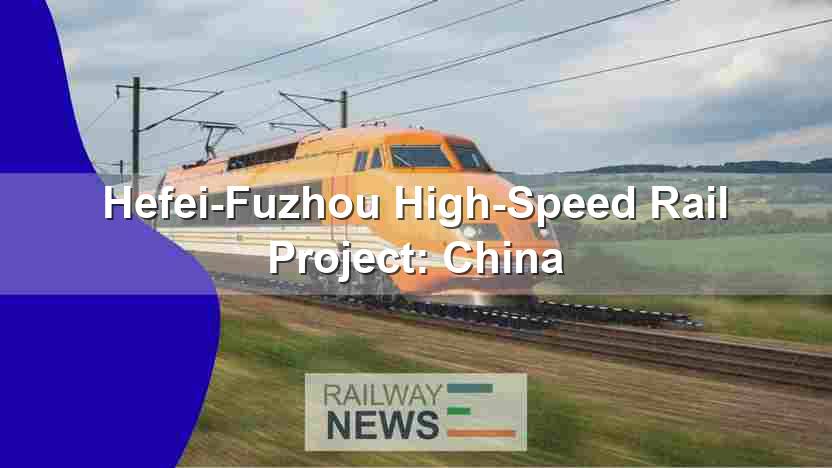
This article explores the Hefei-Fuzhou High-Speed Railway (HFR), a significant component of China’s expanding high-speed rail network. The project aimed to dramatically reduce travel times between Hefei and Fuzhou, stimulating economic growth and tourism in the region. The HFR exemplifies China’s commitment to advanced railway technology and its integration into national development strategies. This analysis will delve into the project’s planning, construction, technological aspects, economic impact, and its role within the broader context of China’s high-speed rail infrastructure. Specific attention will be given to the engineering challenges overcome during construction, the types of rolling stock deployed, and the lasting effects on connectivity and regional development. Ultimately, this study seeks to provide a detailed understanding of the HFR’s successes, challenges, and lasting contributions to the Chinese railway system.
Project Overview and Planning
The Hefei-Fuzhou High-Speed Railway, approved in July 2009 and launched in April 2010, represents a substantial investment in China’s infrastructure. The project’s approval by the State Development and Planning Commission and subsequent announcement by the Ministry of Railways solidified its national significance. The line’s construction, completed in June 2015, involved overcoming considerable geographical hurdles, traversing mountainous terrain and requiring extensive bridge and tunnel construction. This section will detail the project’s planning phases, including route selection, environmental impact assessments, and the logistical challenges of coordinating such a large-scale undertaking across multiple provinces.
Engineering Challenges and Technological Solutions
The construction of the HFR presented several significant engineering challenges. The route’s passage through mountainous regions necessitated the construction of numerous bridges and tunnels, representing a considerable undertaking in terms of both engineering and logistics. The 52km Tongling Yangtze River Rail Road Bridge, the longest bridge on the route, exemplifies the scale of the engineering feats required. This section examines the specific technological solutions employed to overcome these challenges, including advanced tunneling techniques, bridge design considerations, and the integration of sustainable practices into the construction process. The integration of sophisticated signaling and communication systems to ensure safe and efficient train operation will also be highlighted. The line’s design, incorporating a 250 km/h speed capacity on a 1,435mm standard gauge electrified double track, demonstrates a commitment to advanced railway technology.
Rolling Stock and Operations
The HFR utilizes a fleet of high-speed trains, primarily operated by China Railway High-Speed (CRH). The trains employed include various CRH models (CRH1, CRH2, CRH3, and CRH5), each showcasing different technological collaborations, with some based on designs from Bombardier, Siemens, and Alstom. This section will analyze the specific characteristics of these trains, including passenger capacity, speed capabilities, and technological advancements incorporated into their design. The operational aspects of the line, including scheduling, maintenance, and safety protocols, will also be discussed. The introduction of new rolling stock and the ongoing commitment to train maintenance are crucial elements in ensuring the line’s long-term efficiency and safety.
Economic Impact and Regional Development
The HFR has significantly impacted the economic development of the regions it connects. The reduction in travel time between Hefei and Fuzhou, from 14 hours to 4 hours, has facilitated increased trade, tourism, and improved connectivity. This section examines the economic benefits of the HFR, focusing on the stimulation of regional growth, increased tourism revenue, and the facilitation of inter-provincial trade and commerce. The line’s integration into the broader national railway network, including its connection to the Beijing-Shanghai High-Speed Railway, further enhances its economic impact by promoting trade and facilitating movement of goods and services across a wider geographical area. The positive impact on the flow of human capital will also be assessed.
Project Summary Table
| Parameter | Value |
|---|---|
| Project Name | Hefei-Fuzhou High-Speed Railway |
| Type of Project | High-Speed Rail Line |
| Connecting Cities | Hefei and Fuzhou |
| Total Length | ~700km (Approximate, includes various sections mentioned) |
| Anhui Section Length | 343km |
| Total Estimated Cost | CNY 109.8 billion ($16.9 billion USD, approximate at time of construction) |
| Anhui Section Estimated Cost | CNY 26.45 billion |
| Design Speed | 250 km/h |
| Gauge | 1,435 mm standard gauge |
| Electrification | 2-wire |
| Number of Bridges | 170+ |
| Number of Tunnels | 54+ |
| Main Operator | China Railway High-Speed (CRH) |
Conclusions
The Hefei-Fuzhou High-Speed Railway stands as a testament to China’s ambitious infrastructure development and its mastery of high-speed rail technology. The project’s successful completion, despite significant engineering challenges, showcases the country’s capacity to undertake large-scale infrastructure projects efficiently and effectively. The substantial reduction in travel times between Hefei and Fuzhou, along with the integration into the broader national network, has undeniably stimulated economic growth and regional development, boosting trade, tourism, and connectivity between central and southeastern China. The utilization of advanced technology, evident in the various CRH train models and sophisticated signaling systems, highlights the commitment to improving safety, efficiency, and passenger comfort. The economic benefits have extended far beyond the immediate region, influencing the national economy through improved logistics and trade.
However, a detailed assessment should also consider the environmental impact of such large-scale projects and the potential for future improvements. While the benefits are considerable, a balanced perspective must incorporate analyses of the long-term environmental sustainability of the project and strategies for mitigating any negative consequences. Future research could focus on the project’s lifecycle environmental impact, the social implications of increased regional connectivity, and the potential for further advancements in high-speed rail technology to improve efficiency, reduce environmental impact and enhance passenger experience.
To summarize, the Hefei-Fuzhou High-Speed Railway serves as a compelling case study in large-scale infrastructure development. Its success highlights the potential for high-speed rail to transform regional economies and improve connectivity. By learning from both the successes and challenges of this project, we can gain valuable insights for future high-speed rail initiatives globally. The lessons learned from the HFR can inform future projects, contributing to advancements in engineering, sustainability, and the overall economic and social benefits of high-speed rail systems.
Company Information:
- China Railway High-Speed (CRH): China’s main operator of high-speed trains.
- Bombardier: A global transportation company involved in the development of CRH1 trains.
- Siemens: A global technology company involved in the development of CRH3 trains.
- Alstom: A global transportation company involved in the development of CRH5 trains.
- Shanghai Xianxing: Local railway construction supervision company involved in the Hefei-Fuzhou project.
- Pöyry: Engineering consultant involved in the Hefei-Fuzhou project.

Transport and railway industry editor covering global rail infrastructure, sustainable mobility, urban transit systems and next-generation railway technologies with a focus on accessible and industry-focused reporting.