
Future of Rail: PANYNJ’s $160M Newark Airport Access Project
PANYNJ starts $160M Newark Airport rail project, boosting accessibility to AirTrain, Amtrak, and NJ Transit.
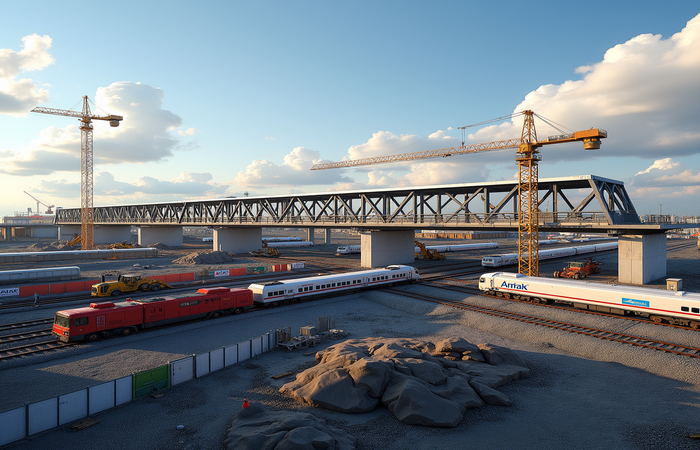
PANYNJ Breaks Ground on $160 Million Newark Airport Rail Access Project
The roar of progress is once again echoing through the rails. Last week, the Port Authority of New York and New Jersey (PANYNJ) commenced construction on a significant $160 million project at Newark Liberty International Airport Train Station. This ambitious undertaking, slated for completion in 2026, aims to enhance accessibility to the airport via public transportation, including the AirTrain Newark, Amtrak, and New Jersey Transit. The project directly addresses the needs of underserved communities in Newark and Elizabeth, offering a critical infrastructure upgrade to improve connectivity. This article will examine the details of this endeavor, exploring the project’s scope, the technical aspects of the construction, and the positive implications for the surrounding communities and the broader rail network.
Expanding Accessibility: The Project’s Core
The core of the project lies in establishing a new public access point off Frelinghuysen Avenue. This will be achieved by extending an existing pedestrian bridge over the railway platforms and tracks. This approach directly addresses the current challenges faced by residents of Newark’s South Ward and North Elizabeth, who currently endure lengthy and complex routes to reach the airport. The new entry point will feature a dedicated area for vehicle drop-off and pick-up, as well as improved bicycle and pedestrian access, facilitating a more seamless and integrated multi-modal transportation experience.
Impact on Travel Times and Community Connectivity
The most immediate benefit will be a substantial reduction in travel times for local residents. Currently, a bus trip to the airport can take up to 40 minutes. The new rail connection is projected to dramatically decrease this to a mere 10 minutes by train. This dramatic improvement will not only save commuters valuable time but will also make the airport far more accessible for employment, leisure, and travel needs. This enhanced connectivity aligns with broader goals of promoting economic opportunity and social equity within the region. The project’s strategic placement will also provide a direct route to major transit hubs.
Technical Aspects: Infrastructure Improvements
The project’s design emphasizes a long-term vision for accessibility and modern infrastructure. The extension of the pedestrian bridge is a key engineering feat, requiring careful planning to minimize disruption to ongoing rail operations. The construction will involve advanced techniques to ensure structural integrity and minimize any negative impacts on the environment. Furthermore, the integration of the new access point will require coordination with existing AirTrain, Amtrak, and New Jersey Transit schedules and infrastructure to ensure seamless transfers and operational efficiency. This project serves as a crucial addition to the larger PANYNJ infrastructure projects that are in place in New Jersey.
Looking Ahead: Regional Benefits and Future Outlook
This $160 million investment represents a critical step towards improving transportation infrastructure and connectivity in the Newark and Elizabeth area. By prioritizing accessibility and reducing travel times, PANYNJ is fostering economic growth and social equity. The enhanced rail access will encourage ridership on existing and potential future public transport offerings, reducing traffic congestion, air pollution, and promoting sustainable transportation. The project is expected to have a positive ripple effect throughout the region. It is likely to be a pilot for future infrastructure upgrades in the metropolitan area. As the project nears completion in 2026, the benefits will become tangible to the residents of the local communities and the broader traveling public, ultimately contributing to a more efficient and accessible transportation ecosystem in the NY/NJ metropolitan area.
RELATED POSTS

February 3, 2021 3:49 am
This article examines the significant contribution of the P.P. O’Connor...
July 4, 2017 2:17 pm
Here's a voiceover-friendly excerpt, tailored for railway professionals:**Light rail expansion**...
June 2, 2025 1:01 am
Melbourne's Metro Tunnel Project is testing on June 21st, integrating...
February 2, 2022 11:18 pm
This article explores the critical role of advanced technology in...
November 1, 2015 6:10 pm
Singapore's Downtown Line Stage 1 railway project successfully utilized advanced...

February 27, 2025 10:18 am
Introduction This article analyzes the substantial investment by the World...