
Eurostar & St Pancras Expansion: High-Speed Rail’s Future in Europe
Eurostar and St. Pancras International announce major expansion, tripling projected passenger numbers to 35 million by 2040. The project aims to double station capacity, boosting passenger flow.
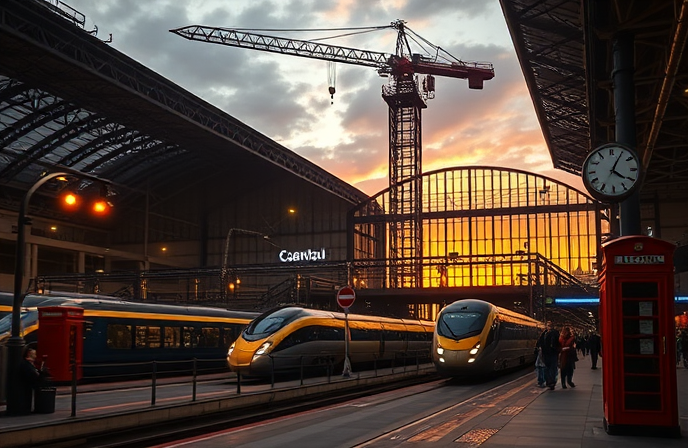
Eurostar and St. Pancras International Announce Major Expansion to Meet Soaring Demand
Eurostar and London St. Pancras International are embarking on a significant expansion project, signaling a pivotal moment for sustainable European travel. The ambitious undertaking, announced on July 3rd, 2025, aims to more than double the station’s capacity, reflecting the rapidly escalating demand for high-speed rail journeys. The project, encompassing a multi-phased approach, seeks to transform the passenger experience and operational efficiency at one of Europe’s busiest international rail hubs. The impetus for this expansion stems from an anticipated tripling of cross-border rail travel, projected to surge from 11 million to 35 million passengers annually by 2040, underscoring the growing appeal of eco-friendly transport. Architectural firm Hawkins\Brown has been commissioned to conduct the design and feasibility study, ensuring the preservation of the station’s heritage while accommodating future growth. The expansion highlights the commitment of both Eurostar and St. Pancras Highspeed to accommodate this growth sustainably and efficiently.
Capacity Enhancement and Passenger Flow Optimization
The core objective of the expansion is to dramatically enhance St. Pancras International’s passenger handling capacity. The initial operational capacity has already been boosted from 1,800 to 2,000 passengers per hour. This figure is slated to rise to nearly 5,000 per hour upon completion of phase two. This substantial increase will be achieved through a series of strategic improvements, including streamlining security and border control processes, which will enable an additional 2,700 passengers to be processed per hour within the next three to four years. This emphasis on passenger flow efficiency reflects a fundamental understanding of the importance of reducing congestion and enhancing the overall customer experience. The design and feasibility study will investigate how existing space can be reconfigured to improve passenger flows, including a potential relocation of the arrivals flow upstairs in the 2030s.
Phased Implementation Strategy
The expansion will be implemented in three distinct phases, each designed to address specific operational needs and enhance the passenger experience. Phase one, targeting short-term improvements within the current station footprint, will focus on optimizing security and border control processes. Phase two, slated for completion by 2028, will involve a comprehensive redesign of the international area’s layout and its integration with the main concourse. This phase is critical for smoothing passenger journeys and enhancing overall comfort. Phase three, planned for the 2030s, introduces the potential of relocating the arrivals flow and further growth potential. This phased approach allows for continuous improvements and minimizes disruption to ongoing operations, ensuring that St. Pancras International remains fully functional throughout the expansion.
Design and Feasibility Study Insights
The architectural firm Hawkins\Brown will be responsible for conducting a comprehensive design and feasibility study, scheduled to conclude by the end of 2025. The study will evaluate options for reconfiguring the existing space to improve passenger flow, operational efficiency, and enhanced customer experience. The focus will be on maintaining the station’s iconic heritage. The firm’s brief extends beyond mere functionality; it also includes the creation of a welcoming new landmark for London. The project will navigate complex operational requirements and ensure the station can accommodate the projected surge in passenger numbers. This meticulous approach reflects a commitment to creating a more efficient, and customer-friendly travel hub.
Industry Leadership and Future-Proofing
The project’s overarching goal is to ensure that St. Pancras International is future-proofed, catering to the increasing demand for international train travel. Richard Thorp, Chief Operating Officer at London St. Pancras Highspeed, emphasizes the importance of optimizing the station to accommodate this growth. Simon Lejeune, Chief Safety and Stations Officer at Eurostar, highlights Eurostar’s position as a “green gateway to Europe,” and the rising demand the operator is experiencing. This initiative is a critical response to the growing popularity of high-speed rail and signifies a decisive step toward sustainable transportation. The concerted effort to enhance passenger capacity, improve operational efficiency, and preserve the station’s heritage positions St. Pancras International for sustained growth.
Conclusion
The expansion of St. Pancras International, a pivotal project spearheaded by Eurostar and London St. Pancras Highspeed, represents a significant investment in the future of high-speed rail travel. The multi-phased approach, from streamlining security to redesigning passenger areas, will dramatically enhance the station’s capacity and operational efficiency. The initiative is essential in meeting the projected surge in cross-border rail travel, reflecting a broader trend towards sustainable transport across Europe. The involvement of Hawkins\Brown, with a focus on design and feasibility, underscores the commitment to preserving the iconic station’s heritage while creating a welcoming landmark. This project is strategically positioned to improve passenger experiences. The expansion’s projected timelines, with a conclusion to the feasibility study by the end of 2025 and construction plans to follow, highlights the urgency and the scale of the undertaking. With the anticipation of an enhanced capacity and an improved customer experience, St. Pancras International is poised to play a key role in the sustainable transport landscape.
Company Summary
Eurostar, a high-speed passenger rail service linking London with cities in France, Belgium, and the Netherlands, has been pivotal in promoting sustainable transport across the continent. London St. Pancras Highspeed, manages the operation and infrastructure of St. Pancras International, a core transport hub. Hawkins\Brown, a leading architectural firm, specializes in designing sustainable and efficient transportation infrastructure. The combined expertise and commitment of these organizations will ensure the success of the expansion project.
RELATED POSTS

November 11, 2009 10:16 am
Kazakhstan National Railways (KTZ) has signed a memorandum of understanding...

June 13, 2022 1:44 am
CAF’s Expansion in the German Light Rail Market: A Case...
November 18, 2016 7:11 am
Here's an excerpt tailored for railway professionals:"Rail freight volume is...
October 19, 2016 1:11 pm
Greenbrier expands its European footprint! The acquisition of Astra Rail...
October 10, 2020 2:58 pm
The Impact of COVID-19 on the Western Rail Link to...

August 14, 2025 9:34 pm
Turkish freight wagons are modernizing, boosted by infrastructure investments and...