
Alstom’s RER NG: Modernising Paris Rail, Boosting Passenger Experience
Alstom wins €1.7B order for 96 new Paris RER trains, boosting regional rail capacity.
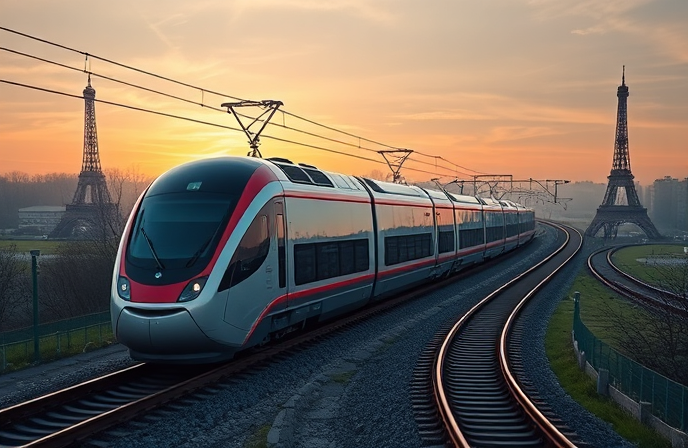
Alstom Secures €1.7 Billion Order for Additional RER NG Trainsets in Paris Region
Alstom has secured a substantial order from SNCF Voyageurs, valued at approximately €1.7 billion ($1.9 billion), to supply an additional 96 RER NG (New Generation) trainsets. This significant deal, announced on June 24, 2025, will see the new trains deployed on the heavily-utilised RER D line in the Île-de-France region of Paris. The project is fully financed by Île-de-France Mobilités, underscoring the commitment to modernising and enhancing the regional rail network. This article will delve into the key features of the RER NG, the strategic importance of this order, and its implications for passenger experience and the rail industry’s push for sustainability. The order, formalized following approval on April 10, 2025, by the Île-de-France Mobilités Board of Directors, is part of a framework agreement established in 2017, reflecting a sustained partnership between Alstom and SNCF Voyageurs.
Boosting Capacity and Passenger Experience
The RER NG, a double-decker train designed for the RER D and E lines, represents a significant upgrade in terms of passenger comfort and capacity. The innovative “boa architecture” integrates both single- and double-deck cars, optimizing space utilisation and facilitating smoother passenger flow. Wide doors are a key feature, contributing to quicker boarding and alighting, reducing dwell times at stations. Each 130-meter-long, seven-car trainset is designed to accommodate 606 seated passengers. To enhance the passenger experience, the trains will be equipped with modern amenities including air conditioning, adaptive LED lighting, USB sockets, and comprehensive information screens. Accessibility is also a core design principle, with level platforms in the single-deck end cars providing direct access for wheelchair users, catering to a wider range of passenger needs.
Operational Efficiency and Technical Advancements
The RER NG trains are engineered for high-performance operation on the dense commuter lines. They are capable of operating at a maximum speed of 140 km/h. Furthermore, the modern traction components integrated into the design of the RER NG contribute to improved acceleration and deceleration capabilities. This efficiency is crucial in managing the high-volume traffic characteristic of the RER D line, helping to improve overall punctuality. The initial deployment of the RER NG on the RER D line, which began in December 2024, demonstrated the viability and performance of the new trainsets within the existing infrastructure. The order reinforces the existing investment in improving the infrastructure.
Sustainability Initiatives in Rolling Stock Manufacturing
Alstom’s commitment to environmental sustainability is a central aspect of the RER NG project. The company is actively pursuing eco-design strategies to minimise the carbon footprint of its manufacturing processes. A notable initiative involves a partnership with Outokumpu to source stainless steel with a reduced carbon footprint for metro car production. The partnership aims to reduce carbon emissions from purchased goods and services by 30% by 2030, supporting the company’s wider goals for sustainable practices. As demand for rail transport grows, innovative technologies and material sourcing are becoming increasingly important.
Strategic Significance of the Order
This latest order for 96 RER NG trainsets significantly increases the total number of ordered units under the 2017 framework agreement. With the addition of these trainsets, the total number of RER NG trains ordered reaches 262, with 130 allocated for the RER E line and 132 for the RER D line. The order underscores the confidence of Île-de-France Mobilités and SNCF Voyageurs in Alstom’s technology and production capabilities. The trains are designed and assembled at Alstom’s Valenciennes and Crespin sites in Northern France, supporting local jobs and strengthening the regional economy. The project also demonstrates the growing investment in regional rail transport as a sustainable and efficient mode of transport for urban and suburban areas.
Conclusion
The €1.7 billion order from SNCF Voyageurs for additional RER NG trainsets marks a significant milestone in modernising the Île-de-France rail network, signifying continued commitment to passenger experience and operational efficiency. The RER NG trainsets incorporate advanced features such as improved accessibility, increased seating capacity, and modern amenities. The emphasis on sustainability, through partnerships and eco-design, highlights Alstom’s dedication to environmentally responsible practices in the rail industry. This investment promises to deliver significant benefits to commuters by improving the speed and comfort of their journeys. The widespread adoption of advanced technologies, coupled with a sustainable approach to manufacturing, will play a crucial role in shaping the future of commuter rail services across the globe.
RELATED POSTS
July 31, 2025 7:33 am
PATH ridership rebounds, hitting 75% of pre-pandemic levels in June...

December 15, 2017 11:49 am
Maximize railway performance. Optimize track maintenance, signaling, and train...
April 3, 2019 4:02 am
India's railway electrification gets a massive boost! A $750...

September 13, 2025 2:00 pm
Hitachi Rail opens $100M digital factory, creating jobs and boosting...
March 21, 2018 8:26 pm
Addiewell station's new footbridge: A case study in efficient...

February 14, 2017 6:06 pm
Alstom and The CoSMo Company, a global technology company...