
Network Rail’s Addiewell Footbridge: UK Rail Upgrade Insights
Addiewell station’s new footbridge: A case study in efficient railway infrastructure upgrades, seamlessly integrating accessibility and future-proofing. Discover how Network Rail achieved it!
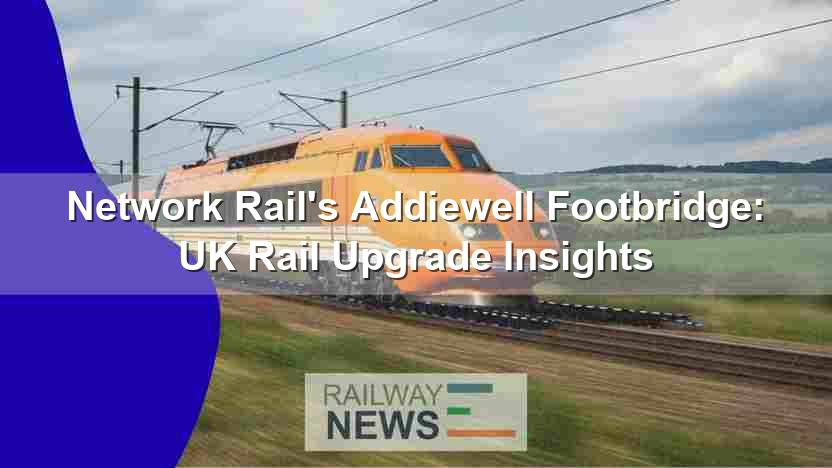
This article examines the recent replacement of the footbridge at Addiewell train station in West Lothian, Scotland, by Network Rail. This project serves as a microcosm of larger challenges and successes within the UK railway modernization program. The construction of this seemingly modest structure highlights several key aspects of modern railway infrastructure development: the integration of accessibility considerations into design, the logistical complexities of working within an operational railway environment, and the critical role such projects play within broader electrification and capacity improvement schemes. The Addiewell footbridge replacement, therefore, provides valuable insight into the ongoing efforts to enhance the safety, efficiency, and accessibility of the UK’s railway network. We will explore the project’s specifics, its integration with wider electrification plans, and the long-term implications for passenger experience and the overall rail network’s performance.
Project Scope and Execution
Network Rail commissioned BAM Nuttall to construct an 11.7m-long footbridge, situated 5.6m above the tracks at Addiewell station. This height is crucial for providing the necessary clearance for the overhead line equipment (OLE) required for the electrification of the Shotts line. Construction took place adjacent to the station car park, minimizing disruption to existing railway operations. The project’s eight-month timeframe highlights the efficiency achievable through careful planning and execution within a constrained environment. The proximity of the new bridge to the old one also ensured minimal disruption to passenger flow during the construction phase. This efficient approach represents best practices in minimizing the impact of railway infrastructure upgrades on passenger services.
Accessibility and Future-Proofing
The new footbridge’s design incorporates future accessibility features. While currently accessed via stairs, the structure’s design allows for the future installation of lifts, ensuring compliance with accessibility regulations and catering to the needs of passengers with disabilities. This forward-thinking approach underscores Network Rail’s commitment to providing equitable access across its network and demonstrates a responsible approach to long-term infrastructure planning. Investing in designs that can be adapted to meet future accessibility needs saves both time and resources in the long run.
Integration with the Railway Upgrade Plan
The Addiewell footbridge project is integral to Network Rail’s broader Railway Upgrade Plan (RUP). This ambitious £40bn, five-year plan aims to increase capacity, alleviate overcrowding, and enhance the overall performance of the UK’s railway lines. The electrification of the Shotts line, of which this project is a part, directly contributes to these objectives by allowing for the introduction of more efficient electric trains, increasing capacity and reducing reliance on diesel locomotives. The bridge replacement, therefore, is a vital component of a much larger scheme focused on improving the national rail network.
The Wider Context of Railway Modernization
The Addiewell project is a small but significant part of the larger ongoing modernization of the UK rail network. It showcases the importance of addressing seemingly minor aspects of infrastructure while strategically integrating them with wider improvements. The successful completion of the project demonstrates a commitment to operational efficiency and attention to detail which are essential for the effective management of large-scale infrastructure projects. The successful integration of the project with other infrastructure upgrades demonstrates the increasing focus on coordinating rail development to maximize benefit to the traveling public.
Conclusions
The replacement of the footbridge at Addiewell station stands as a compelling example of effective railway infrastructure management. The project successfully combined efficient execution within a tight timeframe with forward-thinking design that prioritizes accessibility. The project’s seamless integration within Network Rail’s Railway Upgrade Plan (RUP) highlights the importance of holistic planning and the interconnectedness of individual projects within a larger modernization strategy. The careful planning that minimized disruption to existing services and passenger flow during the construction phase demonstrated excellent project management, a vital consideration in managing upgrades to a live operational railway. Additionally, the inherent future-proofing through the design’s adaptability for lift installation demonstrates a commitment to long-term accessibility and sustainability. The success of the Addiewell project offers a valuable blueprint for future infrastructure upgrades, emphasizing the crucial interplay between individual enhancements and the overall goal of a safer, more efficient, and inclusive railway system for the UK.
The Addiewell footbridge, although a relatively small-scale project, effectively showcases many key principles involved in modern railway infrastructure development. It underlines the importance of detailed planning, attention to detail, efficient project management, and a forward-thinking approach to design that accommodates future needs. The success of this project can serve as a model for future infrastructure upgrades across the UK rail network, leading to a more efficient, accessible, and sustainable system.

Railway infrastructure, rolling stock and transport technologies specialist focused on global rail industry developments, high-speed rail systems, signaling technologies and freight transportation. Covering railway investments, public transport modernization, rail operations and international mobility projects across Europe, Asia and North America.
RELATED POSTS
September 6, 2026 5:19 am
Hitachi delivered Taiwan's first N700ST high-speed train from Japan in...

September 5, 2026 4:19 pm
CPK launched formal tender talks with four consortia to design...

September 6, 2026 4:12 am
Alstom delivered the first of 100 new G Class trams...

September 5, 2026 7:14 pm
HS2 Ltd signed renegotiated civils contracts with EKFB and Align...
September 6, 2026 6:17 am
Hungary ordered a national ban on most freight trains from...
September 6, 2026 1:17 am
Hitachi Toshiba Supreme Consortium confirmed the first of 12 N700ST...