
UK’s Deighton Station: Bridge Works Prep for Electrification & More
Deighton station modernizes with bridge upgrades, paving the way for track quadrupling and electrification, backed by an £871M investment in North Yorkshire.
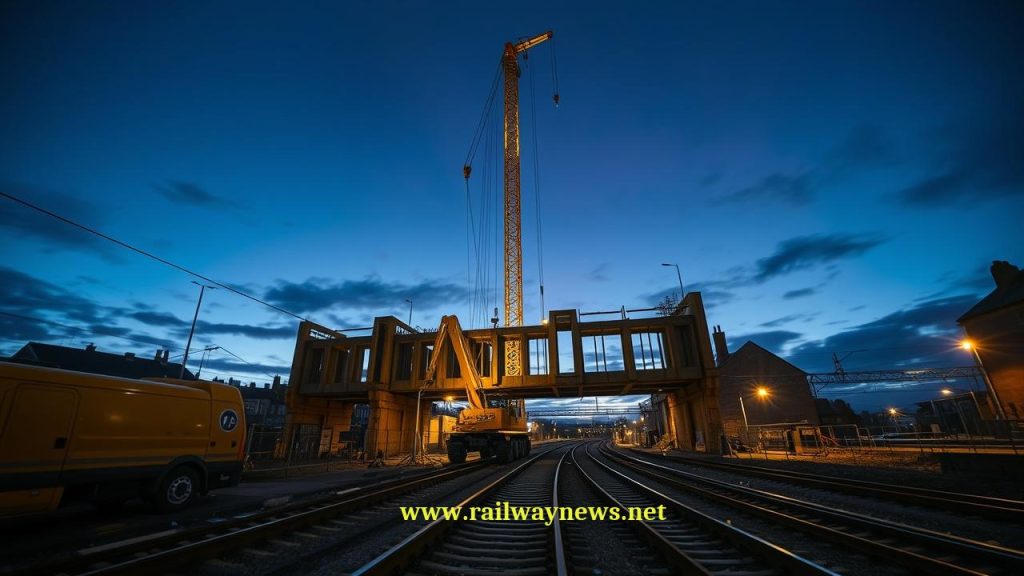
Major bridge demolition and upgrades are underway at Deighton station as part of the multi-billion-pound Transpennine Route Upgrade (TRU), a critical step towards quadrupling track capacity and introducing electric services. These works are situated within a massive regional investment strategy, highlighted by a related £871m construction framework for North Yorkshire set for tender in 2026.
| Category | Details |
|---|---|
| Project | Deighton Station Modernisation (Transpennine Route Upgrade) |
| Key Works | Demolition of Whitacre Street overbridge; Parapet installation on A62 Leeds Road bridge |
| Station Status | Closed for transformation until 2027 |
| Strategic Goal | Enable track quadrupling (2 to 4 tracks) and future electrification |
| Financial Context | Part of a wider £871m North Yorkshire construction framework (Tender: March 2026) |
Main Body:
Engineers are leveraging the quieter Christmas period to advance the comprehensive modernisation of Deighton station, a key node in the Transpennine network. The programme includes the complete demolition of the Whitacre Street overbridge and the installation of new pre-cast concrete parapets on the A62 Leeds Road bridge using a large-scale crane. These civil engineering works are foundational to the station’s complete transformation, which has necessitated its full closure until 2027. Sophie Leishman, TRU sponsor, commented on the timing, stating, “The Christmas period is always a good opportunity for work to be completed as there is minimum disruption to services. The work on both bridges during this time will take us a step closer to a much-improved Deighton station and improved rail services through the area and beyond.”
The technical objective behind the disruptive bridge works is to create the necessary clearance and footprint for a significant expansion of the railway corridor. By reconfiguring the local infrastructure, TRU will enable a track realignment project next year that will double the number of tracks from two to four. This quadrupling is a game-changer for the route’s capacity, allowing faster, direct inter-city services to overtake slower, local stopping services. This operational flexibility is projected to significantly reduce journey times and improve reliability. Furthermore, the works are designed to facilitate the future installation of Overhead Line Equipment (OLE), the critical infrastructure required to power a new fleet of faster, quieter, and greener electric trains.
These site-specific upgrades at Deighton are a microcosm of a much larger strategic investment in Northern England’s infrastructure. The project costs are encompassed within a sweeping £871 million framework designated for major construction works across North Yorkshire. This substantial financial commitment underscores the long-term vision for enhancing the region’s transport connectivity. According to procurement documents, this framework is scheduled to go to tender in March 2026, signalling a pipeline of further construction and engineering opportunities aimed at modernising the county’s building and infrastructure assets, with the Deighton station project being a flagship example of its rail component.
Key Takeaways
- Capacity Expansion: The primary goal is to double the tracks from two to four, allowing express trains to overtake local services and boosting network efficiency.
- Electrification-Ready: All current civil engineering works are designed to accommodate future overhead lines, paving the way for a fully electric, decarbonised railway.
- Major Regional Investment: The project is part of a wider strategic plan, linked to an £871m regional construction framework that highlights the scale of public investment in Northern infrastructure.
Editor’s Analysis
The work at Deighton station is more than just a local upgrade; it’s a textbook case of the complex, long-term “brownfield” engineering required to modernise a 19th-century railway for 21st-century demands. Globally, network operators face the same challenge: how to increase capacity and decarbonise on a live, heavily-used network. The TRU’s strategy of targeted, intensive interventions during closures, like the full rebuild of Deighton, demonstrates a pragmatic acceptance of short-term disruption for long-term transformation. For the international rail market, this project serves as a key indicator of the UK’s commitment to rail and highlights the immense opportunities for contractors and supply chains in large-scale, integrated civil and systems engineering programmes designed to make rail the backbone of a modern, low-carbon economy.
Frequently Asked Questions
Why is Deighton station closed until 2027?
Deighton station is closed to allow for a complete transformation, including major track and bridge work that will double the number of lines from two to four and prepare the route for electrification. The scale of the engineering requires a long-term closure to be completed safely and efficiently.
What are the main benefits of the bridge demolition and upgrades?
The bridge works create the physical space needed for track realignment. This enables the expansion to four tracks, which will reduce journey times by allowing faster trains to pass stopping services, and facilitates the future installation of overhead power lines for electric trains.
What is the Transpennine Route Upgrade (TRU)?
The Transpennine Route Upgrade is a major, multi-billion-pound programme of railway improvements aimed at delivering faster, more reliable, and greener transport services between Manchester, Huddersfield, Leeds, and York. It involves track upgrades, full electrification, station improvements, and digital signalling.
RELATED POSTS

September 21, 2020 6:04 am
The following article explores the impact of the COVID-19 pandemic...
April 2, 2025 2:28 pm
Introduction This article delves into the recent inauguration of Mumbai’s...
November 26, 2021 11:41 am
This article examines the export of high-powered Cape Gauge locomotives...
December 1, 2021 1:43 am
Introduction This article explores the significant enhancements undertaken by KiwiRail...

June 30, 2025 4:33 am
GB Railfreight restarts Horton Quarry rail freight, boosting UK sustainability....
September 26, 2020 8:10 pm
This article analyzes the European Commission’s (EC) conditional approval of...