
DB’s 2026 Overhaul: Radical Plan to Fix Punctuality Crisis
Deutsche Bahn launches the 2026 plan, investing over €140M, to overhaul operations and boost punctuality amid declining passenger satisfaction.
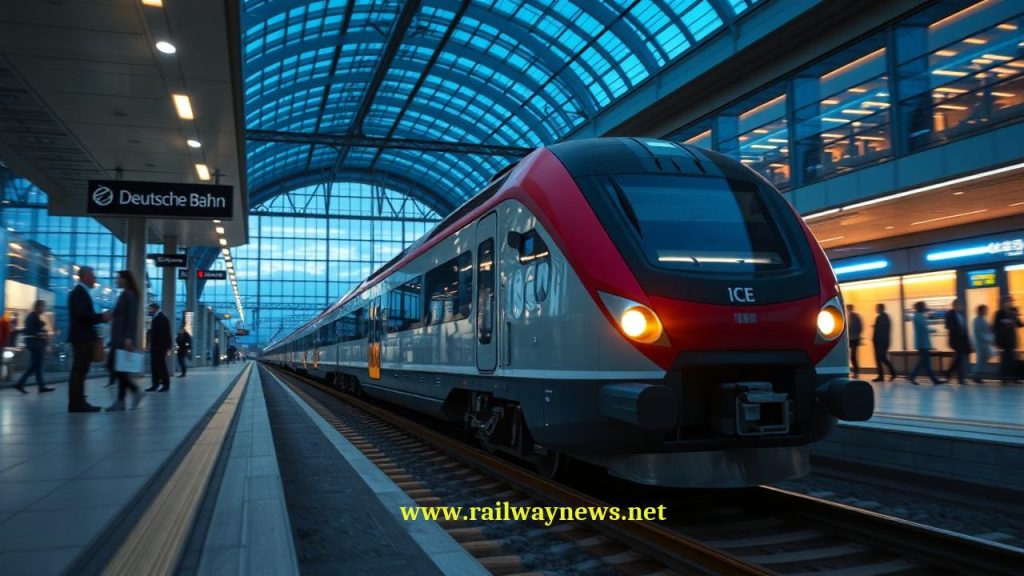
Deutsche Bahn Unveils Radical ‘2026’ Overhaul to Tackle Punctuality and Efficiency Crisis
BERLIN – Deutsche Bahn (DB) CEO Evelyn Palla has launched a sweeping corporate restructuring plan, approved by the Supervisory Board on December 10, aimed at transforming the beleaguered state-owned operator into a more efficient and customer-centric organization. The move comes as DB faces intense public and political pressure over its status as one of Europe’s least punctual rail networks, plagued by operational losses and declining passenger satisfaction.
| Category | Details |
|---|---|
| Plan Name | Deutsche Bahn 2026 Restructuring Plan |
| Effective Date | January 1, 2026 |
| Key Goal | Improve agility, customer-friendliness, and operational efficiency |
| Initial Funding (2026) | Over €140 Million for immediate passenger experience programs |
| Key Structural Change | Reduction of first-line management units from 43 to 22 |
Main Body:
Just ten weeks into her tenure, CEO Evelyn Palla is initiating a fundamental shake-up of Deutsche Bahn’s corporate structure, set to commence on January 1, 2026. The plan, which received board approval, promises fewer departments, a streamlined management hierarchy, and decentralized decision-making. The core objective is to make DB “more agile, faster, and more customer-oriented,” with Palla promising that “customers will feel that things are starting to move at DB” as early as 2026 through a series of immediate, high-impact programs. This initiative directly addresses the agenda for improving rail travel announced by Federal Transport Minister Patrick Schnieder in September 2025, signaling a coordinated effort between the operator and the government to restore public confidence.
The restructuring is a direct response to years of declining performance that has seen Germany’s once-vaunted rail system become a source of national frustration. Recent reports highlight DB’s long-distance trains as among the least punctual in Europe, a stark contrast to its high-speed branding. Passengers frequently encounter a litany of issues, from poor Wi-Fi and seat reservation errors to “technical problems” and outright cancellations. This operational disarray has contributed to significant financial losses for the state-owned company, creating an urgent mandate for Palla’s new leadership team to implement drastic changes rather than incremental fixes.
The overhaul will be comprehensive. At the highest level, the group’s Management Board will shrink to six portfolios, eliminating the dedicated Technology/Digitalization and Infrastructure roles. Below this, an entire intermediate management level will be completely removed, and the number of first-line organizational units will be nearly halved from 43 to 22. The infrastructure arm, DB InfraGO AG, will see its board cut from eight to six members and will recombine its operations and construction divisions to better coordinate line closures. Critically, a new “quality management” function will be established, reporting directly to the CEO, to enforce a new standard of service and efficiency across all levels of the revamped organization.
Key Takeaways
- Drastic Management Overhaul: Deutsche Bahn is eliminating an entire management layer and cutting first-line management units by nearly 50% to shorten decision-making processes and increase agility.
- Immediate Customer Focus: More than €140 million in additional funding is allocated for 2026 to launch programs targeting immediate improvements in passenger information, on-board cleanliness, and station safety.
- Structural Separation and Accountability: The plan reinforces the separation of the public-interest infrastructure company, DB InfraGO AG, from commercial activities and creates a new quality control function reporting directly to the CEO to drive accountability.
Editor’s Analysis
Evelyn Palla’s ‘2026’ plan represents a critical, high-stakes attempt to reverse a decade of decline at one of Europe’s most important transport operators. This is more than a standard corporate reshuffle; it is a fundamental attack on the bureaucratic inertia and siloed thinking that has hampered DB’s performance. By decentralizing authority and flattening the hierarchy, the plan aims to empower local, operational teams to respond faster to the needs of passengers. The creation of a direct-to-CEO quality management role is a clear signal that past excuses for poor service will no longer be tolerated. For the global rail market, this is a landmark case study: if a state-owned giant like Deutsche Bahn can successfully transform into an agile, customer-focused entity, it could provide a powerful blueprint for other legacy national railways grappling with similar challenges in an increasingly competitive landscape.
Frequently Asked Questions
- What is the main goal of Deutsche Bahn’s 2026 restructuring plan?
- The primary goal is to create a much more efficient, agile, and customer-friendly company by simplifying the corporate structure, reducing bureaucracy, and decentralizing decision-making to be closer to operational activities and passengers.
- How will passengers be affected in the short term?
- DB has committed over €140 million in 2026 for “immediate programs” to visibly improve the travel experience. These include better passenger information, enhanced cleanliness through mobile cleaning teams on trains and in stations, and improved reliability of on-board services like catering and toilets.
- Why is this restructuring happening now?
- The restructuring is a response to long-standing and severe issues, including poor punctuality that ranks among the worst in Europe, operational losses, and widespread customer dissatisfaction. The plan was launched by new CEO Evelyn Palla shortly after taking office, under pressure from both the public and the German federal government to enact major reforms.
RELATED POSTS

May 2, 2021 8:02 pm
The Cross Island Line (CRL) in Singapore: A Deep Dive...

ISR published an international tender for the supply of 62...
February 24, 2019 2:15 am
The Turin-Lyon high-speed rail faces a projected €7 billion loss....
October 17, 2025 4:54 am
Railway Metrics and Dynamics secures a contract for a **railway**...

Freight Rail Traffic Shows Mixed Signals in North America **Washington...
April 12, 2025 6:40 pm
Electrification and Modernization of the Caltrain System: A Comprehensive Overview...