
Great Central Railway Reunification: East Midlands Heritage Line to Resume Construction
The Great Central Railway’s heritage railway project reunites sections, forming an 18-mile line. Construction resumes Summer 2026, boosting tourism and economic growth.
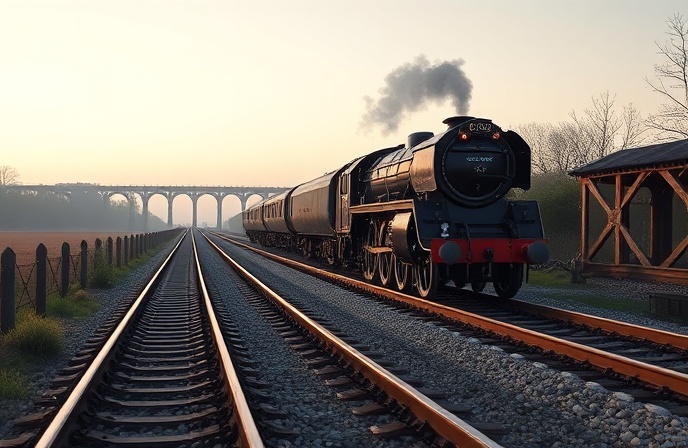
The Great Central Railway is set to undergo a significant reunification, linking its Leicestershire and Nottinghamshire sections to create an 18-mile heritage line. This ambitious project, slated for construction to resume in Summer 2026, promises to connect local attractions and stimulate economic growth across the East Midlands.
| Key Entity | Critical Detail |
|---|---|
| Organisation | Great Central Railway |
| Core Action | Reunification Project: Linking Leicestershire and Nottinghamshire heritage lines. |
| Projected Timeline | Construction workers return to site in Summer 2026. |
| Investment Raised (Latest Work) | More than £2.5 million. |
| Economic Impact | Stimulate economic growth and increase tourism in the East Midlands. |
Main Body:
The Great Central Railway (GCR) has officially announced its intentions to recommence building efforts for its landmark Reunification project. This initiative aims to bridge the existing heritage lines in Leicestershire and Nottinghamshire, ultimately forging an 18-mile heritage railway. Malcolm Holmes, General Manager of the Great Central Railway, expressed enthusiasm for the project’s advancement, noting that three segments of the build are already complete, supported by millions of pounds in investment. With planning permission secured for the remaining phases, ground investigations finalized, and final designs in progress, construction is anticipated to resume on-site in Summer 2026. The GCR forecasts a substantial boost in regional tourism, transitioning day-trippers into longer-stay visitors, a development seen as beneficial for the entire East Midlands economy.
Strategic Impact
The reunification is poised to create a significant heritage tourism asset for the East Midlands. By connecting existing attractions and offering a unique heritage railway experience, the project aims to enhance the region’s appeal for both domestic and international tourists. The GCR’s business forecast anticipates a notable uplift in visitor numbers and an extension of average visitor stays, directly contributing to local economies through increased spending on accommodation, dining, and other services. This strategic enhancement of the region’s heritage infrastructure aligns with broader economic development goals for the East Midlands.
Operational Details
The immediate focus of the next construction phases will be to complete another sixty metres of the five-hundred-metre gap in the railway line, a section famously removed by British Rail in the 1970s. This segment’s reconstruction is a critical step towards achieving the full 18-mile heritage line. The GCR has highlighted previous achievements, including the construction of a new bridge over the Midland Main Line at Loughborough. To date, more than £2.5 million has been raised for the ongoing construction efforts, with contributions received from across the United Kingdom and internationally. Seventy-five percent of the required funds for the upcoming two sections are reportedly in place, underscoring the strong public and stakeholder support for the project.
Andy Fillingham of Great Central Railway (Nottingham) echoed the sentiment, stating, “We know there’s a huge appetite to see Reunification completed. The next sections can’t come soon enough, though we still need to raise some more money before we can definitely press ahead.” The GCR is actively appealing for further donations, emphasizing that “every pound will help us build more railway.” The organization has expressed gratitude for the public’s faith in their ability to deliver this transformative project.
Industry Context
The Great Central Railway’s Reunification project represents a significant investment in heritage railway infrastructure, a sector that consistently demonstrates its ability to drive tourism and local economic development. For railway operators and destination marketers, this project serves as a compelling case study for the potential of ambitious heritage projects to create substantial regional economic impact. The successful completion of such an undertaking can inspire similar initiatives, bolstering the wider heritage railway industry and its contribution to cultural tourism and regional regeneration. CEOs in the transport and tourism sectors should monitor this project’s progress as an indicator of evolving consumer interest in authentic heritage experiences and their economic multiplier effects.
Last June 2025, we published an article about Renfe’s cutting-edge Aranjuez maintenance hub. Click here to read – Future of Rail: Renfe’s Railway Technology Hub, Aranjuez: Essential Guide
The Great Central Railway’s Reunification project represents a significant investment in heritage railway infrastructure, a sector that consistently demonstrates its ability to drive tourism and local economic development. For railway operators and destination marketers, this project serves as a compelling case study for the potential of ambitious heritage projects to create substantial regional economic impact. The successful completion of such an undertaking can inspire similar initiatives, bolstering the wider heritage railway industry and its contribution to cultural tourism and regional regeneration. CEOs in the transport and tourism sectors should monitor this project’s progress as an indicator of evolving consumer interest in authentic heritage experiences and their economic multiplier effects.
RELATED POSTS

July 10, 2025 11:34 pm
ScotRail partners with OptimiseAI to deploy digital twin tech, optimizing...

March 19, 2025 2:20 pm
The Inaugural Passenger Journey on Etihad Rail: A Milestone for...

November 28, 2012 12:15 pm
South Korea's Uijeongbu LRT, a successful railway project, boosts...
August 14, 2021 2:05 am
Maintaining the Operational Integrity of SkyTrain’s SkyBridge: A Case Study...
February 23, 2019 12:44 am
Newcastle's light rail: a catenary-free success story! Learn how...

August 5, 2025 7:33 am
Alstom wins contract to upgrade Singapore's East West Line stations...