
Siemens Wins German Battery Train Order: 61 Trains for NWL
Siemens’ Mireo Plus B trains will revolutionize Westphalia-Lippe’s rail, creating Germany’s second-largest battery fleet via a leasing model, boosting sustainable transport.
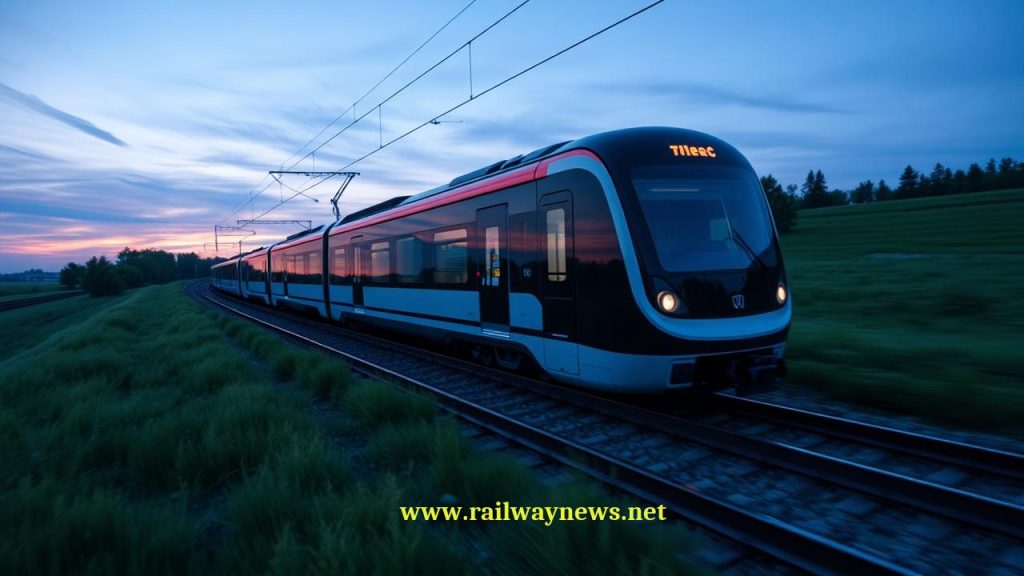
Siemens Mobility has secured a landmark order from the Westphalia-Lippe transport authority (NWL) for 61 Mireo Plus B battery-electric trains, marking a significant step in decarbonizing Germany’s regional rail network. The deal, facilitated by an innovative leasing model, will create the second-largest fleet of battery-powered trains in the country and is set to revolutionize passenger transport in the region upon its launch in December 2029.
| Category | Details |
|---|---|
| Project | Westphalia-Lippe Regional Fleet Modernization |
| Client | Zweckverband Nahverkehr Westfalen-Lippe (NWL) |
| Supplier | Siemens Mobility |
| Rolling Stock | 61 x Mireo Plus B (Battery Electric Multiple Unit – BEMU) |
| Service Entry | Starting December 2029 |
| Financing Model | Leasing-based provision |
| Annual Operation | Approx. 7.1 million train-kilometers |
The Westphalia-Lippe transport authority (NWL) has officially announced the most extensive modernization of its regional passenger rail services, placing a substantial order with Siemens Mobility for 61 Mireo Plus B trains. This move signals a decisive shift away from diesel traction, aligning with broader decarbonization strategies. The entire fleet will be financed and provided through a leasing model, a solution gaining traction in the German market. This approach allows public authorities like NWL to accelerate the adoption of modern, eco-friendly rolling stock without incurring massive direct capital investment, demonstrating a pragmatic path toward sustainable public transport.
The Mireo Plus B is a state-of-the-art Battery Electric Multiple Unit (BEMU) designed for operational flexibility on networks with mixed electrification. The trains charge their batteries via pantograph on electrified sections of track and seamlessly switch to battery power on non-electrified lines. This dual-mode capability, managed by an intelligent energy system, ensures zero local emissions in sensitive rural areas. Each two-car, 25-meter-long unit is equipped with a regenerative braking system that captures energy during deceleration and feeds it back into the batteries, significantly enhancing energy efficiency and reducing operational costs. Passenger experience is also central to the design, with features including Wi-Fi, power sockets, USB ports, ergonomic seating, and fully step-free access for enhanced accessibility.
According to NWL’s CEO, battery trains represent the optimal solution for regions like Westphalia-Lippe, which feature a mix of electrified main lines and non-electrified rural branches. The introduction of these 61 vehicles will establish the NWL area as the operator of Germany’s second-largest BEMU fleet, solidifying its commitment to sustainable mobility. The new fleet is projected to cover an annual operating volume of approximately 7.1 million train-kilometers over a planned service life of at least 15 years, offering a quiet, comfortable, and environmentally friendly alternative to legacy diesel railcars.
Key Takeaways
- Major Fleet Modernization: The order for 61 Mireo Plus B trains represents a transformative investment in the region’s rail infrastructure, creating Germany’s second-largest battery train fleet.
- Innovative Financing: The use of a leasing model enables a large-scale fleet renewal without prohibitive upfront costs for the public authority, setting a precedent for other regions.
- Decarbonization in Action: The trains will operate with zero local emissions on non-electrified routes, directly contributing to transport decarbonization and improved air quality in rural communities.
Editor’s Analysis
This order is more than just a rolling stock procurement; it’s a strategic endorsement of battery-electric technology as a mainstream solution for regional rail. While hydrogen has captured headlines, BEMUs offer a more direct and efficient path to decarbonizing partially electrified networks by leveraging existing infrastructure. The Westphalia-Lippe deal, notable for its scale and its reliance on a leasing model, provides a powerful blueprint for transport authorities across Europe. It effectively de-risks the transition away from diesel by shifting the financial burden from a capital expenditure to a predictable operational cost, accelerating the adoption of clean technology and proving that environmental responsibility can be achieved in a fiscally sustainable manner.
Frequently Asked Questions
- What is a Mireo Plus B battery train?
- The Mireo Plus B is a Battery Electric Multiple Unit (BEMU) manufactured by Siemens Mobility. It operates as a standard electric train on lines with overhead wires, using the electricity to power the train and charge its onboard batteries. On non-electrified sections, it switches to battery power, allowing for seamless, zero-emission travel.
- Why is the leasing model significant for this project?
- The leasing model allows the public transport authority, NWL, to acquire a large, modern fleet of trains without the immense upfront capital investment typically required. This financial arrangement spreads the cost over the operational lifespan of the trains, making large-scale modernization projects more accessible and faster to implement.
- When will these new trains enter service in Westphalia-Lippe?
- The new fleet of 61 Mireo Plus B trains is scheduled to begin entering service on the region’s routes starting in December 2029.

Railway infrastructure, rolling stock and transport technologies specialist focused on global rail industry developments, high-speed rail systems, signaling technologies and freight transportation. Covering railway investments, public transport modernization, rail operations and international mobility projects across Europe, Asia and North America.
RELATED POSTS

October 1, 2026 7:09 am
United States regulators confirmed a September 30 deadline for the...

October 8, 2026 1:15 pm
Alstom secured a €1bn contract to build 13 automated trains,...

October 4, 2026 5:14 pm
Alstom secured a CA$4.7 billion order from VIA Rail Canada...

October 1, 2026 12:13 am
Illinois approved $1.5 billion annually for the Northern Illinois Transit...

October 6, 2026 2:14 am
Union Pacific launched export rail shipments with Ferromex to deliver...

October 1, 2026 6:10 am
Amtrak approved a System Expansion Committee on July 30 to...