
UK’s Royal Train Retirement: Impact on Rail Operations & Future
Royal Train to be Retired: King Charles III ends era of royal rail travel, focusing on cost-cutting and modern travel.
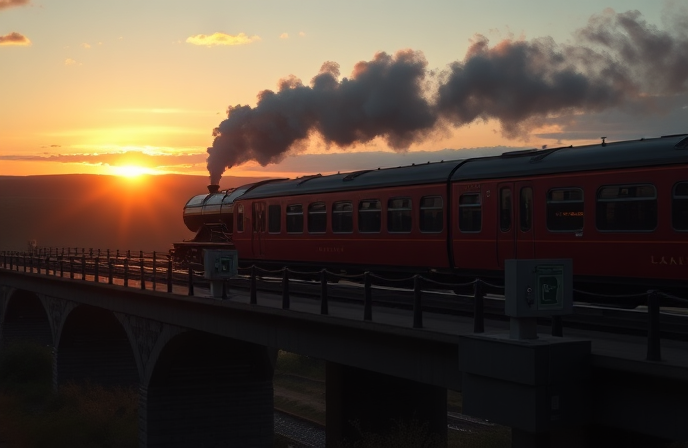
Royal Train to be Retired: End of an Era for the British Monarchy
King Charles III has made the decision to retire the Royal Train, a move that signals a significant shift in the British monarchy’s approach to travel and expenditure. This decision, impacting a core element of royal infrastructure, was announced amidst a wider effort to modernise the institution and reduce operational costs. The burgundy-painted carriages, a familiar sight across the UK for decades, will cease operation once the current rolling stock reaches the end of its serviceable life. This strategic decision marks the culmination of internal reviews on royal finances, with the aim of streamlining spending and presenting a modern image to the public. This article delves into the implications of this decision, examining the factors that led to the train’s retirement, its impact on the monarchy’s operations, and the potential future of this iconic piece of railway history.
Cost-Cutting and Modernisation: The Rationale Behind the Decision
The primary driver behind the Royal Train’s impending retirement is King Charles’s commitment to a cost-conscious monarchy. The annual cost of maintaining and operating the train reached £900,000 in the 2023-2024 financial year, according to the Royal Household’s latest report. This figure, combined with the need for costly upgrades to the ageing fleet, prompted a re-evaluation of its long-term viability. The King’s strategic vision emphasizes efficient use of public funds, aligning with a broader push for modernisation across royal operations. The decision aligns with a larger programme of measures aimed at streamlining household spending and promoting sustainability. This shift also reflects a move away from certain traditions to align with modern expectations.
Historical Significance and Operational Decline: A Shift in Royal Travel
Introduced in its current form in 1977 for Queen Elizabeth II’s Silver Jubilee, the Royal Train has played a significant role in state and ceremonial visits. The nine-carriage train, equipped with modest royal sleeping quarters, an office, and staff accommodation, offered secure and private travel for royal engagements. However, its usage has declined significantly in recent years. The train only undertook a handful of trips in the past year, and the King himself has increasingly opted for alternative modes of transport, including scheduled rail services and electric vehicles, to demonstrate environmental responsibility. This shift reflects a move away from what some critics viewed as an unnecessary luxury to a more public-friendly approach to travel.
Infrastructure and Maintenance: Technical Considerations
The Royal Train’s infrastructure includes locomotives and carriages designed for comfort and security, built to maintain a high standard of safety. The carriages have required constant and costly maintenance, particularly as the fleet ages. The train operates on the standard gauge track (1435 mm or 4 ft 8 1⁄2 in) across the UK. The train’s rolling stock is not being immediately scrapped, but will be phased out over the next few years. This transition period is expected to allow for a smooth integration of alternative travel arrangements and minimize disruption to the royal schedule. The replacement of the Royal Train is expected to see the use of privately contracted chartered trains and increased use of commercially operated trains to fulfil the Royal Family’s travel needs. This shift is expected to have minimal impact on the wider rail network.
The Future of Royal Travel and Heritage
As the Royal Train approaches its retirement, the focus shifts to what will happen to the iconic carriages. While the immediate plan is to phase out the train over the next few years, the Palace has not ruled out the possibility of preserving the carriages, potentially displaying them as part of future exhibitions. Working members of the Royal Family will continue to rely on a mix of scheduled flights, standard rail services, and other official transport for engagements across the UK. The impact on the railway industry will be minimal, except where private charter companies will be called on to provide transportation services. The shift to more conventional travel methods aligns with the King’s broader goals of environmental responsibility and cost efficiency.
Conclusion
The decision to retire the Royal Train represents a significant turning point in the monarchy’s history, signaling a commitment to modernisation, fiscal responsibility, and environmental consciousness. This move underscores King Charles III’s determination to reshape the monarchy to reflect modern expectations while remaining relevant in an evolving world. The shift away from a bespoke, albeit expensive, mode of transport highlights a focus on efficiency and sustainability. While the loss of the Royal Train marks the end of an era, it paves the way for a more streamlined and public-friendly approach to royal travel. The industry will observe whether the move signifies any larger shifts across other royal operations. The transition is a reflection of modern expectations and a response to the current financial environment.
RELATED POSTS

June 8, 2022 7:37 am
This article examines the significant contract awarded to Siemens Mobility...
August 12, 2025 1:33 pm
Amtrak's NextGen Acela high-speed rail project, featuring new Alstom trains,...
August 6, 2016 4:00 pm
Alstom's acquisition of Bombardier Transportation strengthens its position, especially in...

March 18, 2025 1:25 am
The burgeoning need for sustainable and efficient transportation networks in...

September 28, 2023 8:17 pm
UIC 513 establishes the global methodology for quantifying "Ride Quality"...
Here's a voiceover-friendly excerpt:"The Maharashtra Maritime Board is auditing the...