
North American Rail: Trends, U.S., Canada, Mexico Freight Insights
North American freight rail traffic dipped slightly in mid-June, despite some commodities showing gains. Coal, farm products, and grain saw increases, while petroleum and miscellaneous goods declined.
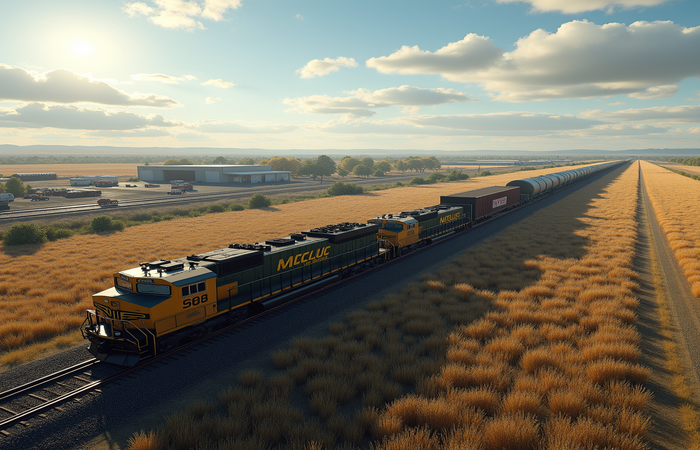
Freight Rail Traffic Shows Mixed Signals in Mid-June
The North American freight rail industry experienced a week of fluctuating fortunes in mid-June, with overall traffic slightly down despite gains in specific commodity sectors. According to data released by the Association of American Railroads (AAR), the week ending June 14th saw a 1.5% decrease in combined carload and intermodal units compared to the same period last year. This analysis examines the key performance indicators (KPIs) of U.S., Canadian, and Mexican railways, providing insights into the evolving freight landscape. The figures highlight both positive trends and areas of concern, offering a snapshot of the industry’s current health. This report explores the contributing factors behind these shifts and their potential implications for the remainder of the year.
U.S. Rail Performance: A Closer Look
U.S. freight railroads hauled a total of 485,810 carloads and intermodal units during the week under review. While this represents a modest overall decline, the underlying data reveals a more complex picture. Carloads, which predominantly transport single commodity shipments in dedicated railcars, saw a 1% increase, reaching 224,851. Conversely, intermodal volume, consisting of containers and trailers moved primarily by rail, experienced a 3.5% decrease, totaling 260,959 units. This divergence suggests shifting dynamics in freight transportation strategies, potentially reflecting changes in supply chain management and consumer demand. Understanding these trends is crucial for stakeholders, including railroad operators, shippers, and industry analysts, in making informed decisions.
Commodity-Specific Trends: Winners and Losers
Several key commodity groups displayed noteworthy performance variations. Out of the ten tracked by the AAR, five saw traffic increases. Coal, a significant contributor to rail freight, led the way with a robust 5.3% surge, reaching 59,027 carloads. Other strong performers included farm products (excluding grain) and food, up 3.8% to 16,817 carloads, and grain, with a 3.2% increase to 19,767 carloads. However, not all sectors thrived. Petroleum and petroleum products witnessed a substantial 6.8% decrease, totaling 10,294 carloads, which may reflect lower demand or alternative transportation methods. The “miscellaneous” category, encompassing a broad range of goods, fell by 7.8% to 8,714 carloads, and metallic ores and metals dipped 2.6% to 20,668 carloads. These disparate trends highlight the sensitivity of rail traffic to economic fluctuations and commodity-specific market forces.
Cross-Border Comparisons: Canadian and Mexican Rail Performance
Canadian railroads showed more stability than their U.S. counterparts. They reported 90,981 carloads for the week, a 0.6% increase, and 74,753 intermodal units, up 0.2%. This suggests a more consistent level of activity in the Canadian rail sector. Mexican railroads, meanwhile, experienced mixed results. Carloads rose by 0.9% to 16,529, while intermodal units declined by 7.3% to 10,517. The fluctuations in Mexican intermodal traffic could be attributed to various factors, including cross-border trade dynamics, infrastructure limitations, or shifts in shipping patterns. Analyzing these regional variations offers a broader perspective on the North American freight rail market, underscoring the interconnectedness of the rail networks across the continent.
Conclusion
The mid-June freight rail data reveals a mixed bag of results, characterized by both growth and decline across different commodity groups and geographical regions. While the overall U.S. figures indicate a slight softening of the market, the positive performance in key areas like coal and grains offers a measure of resilience. The contrasting performance of carloads and intermodal units warrants further investigation, potentially pointing to changes in supply chain strategies or shifting consumer demands. The Canadian rail sector demonstrates relative stability, while the Mexican data highlights specific challenges within that market. Looking ahead, the industry’s ability to adapt to evolving economic conditions and supply chain complexities will be critical. Factors such as fuel prices, labor costs, infrastructure investments, and regulatory changes will undoubtedly influence future performance. Monitoring these trends and proactively responding to emerging challenges will be paramount to ensuring the continued health and competitiveness of the freight rail sector in North America.
RELATED POSTS

Here are a few options for the 18-22 word news...

June 10, 2012 12:50 pm
BMZ Received Certificate for Gondola Car Serial Manufacturing Bryansk Engineering...

November 26, 2025 7:01 pm
MTA unveils new rail-car facility, a vital step in its...

September 1, 2016 8:11 am
The USDOT is investing over $1.5 billion in infrastructure, including...

Africa, Business, China, Djibouti, Ethiopia, Events, Freight, Future Projects, Infrastructure, News, Projects, Rolling Stock, Tenders, World
October 15, 2016 2:56 pm
The 752.7km Ethiopia-Djibouti railway modernisation project, also known as the...
May 26, 2025 6:27 pm
Rail Infrastructure Investment: CN’s Commitment to Western Canadian Expansion Canadian...