
Mpumalanga to Richards Bay Coal Line Project: South Africa
Mpumalanga-Richards Bay coal line boosts South Africa’s coal exports via efficient rail transport, ensuring economic growth. Railway modernization and investment secures future competitiveness.

Mpumalanga to Richards Bay Freight Coal Line: A Critical Infrastructure Analysis
South Africa’s robust coal export industry relies heavily on efficient and reliable transportation infrastructure. This article delves into the crucial role played by the dedicated railway line connecting the Mpumalanga coalfields to the Richards Bay Coal Terminal (RBCT), a lifeline for the nation’s economy. The project’s success hinges on several key factors, including the strategic location of the port, the capacity of the rail network, robust security measures, modern rolling stock, and forward-looking investment strategies. We will examine each of these aspects to understand the complexities and achievements of this vital transport corridor, concluding with a perspective on its future role in South Africa’s economic growth and its global competitiveness within the freight rail industry.
The project aims to analyze the effectiveness of the Mpumalanga to Richards Bay coal transport system, evaluate its contribution to South Africa’s economy, and propose strategies for future improvements and expansion. By focusing on operational efficiency, security protocols, rolling stock management, and long-term investment plans, this analysis aims to provide a comprehensive understanding of the entire logistics chain, from mine to export vessel. This analysis is crucial for identifying areas for optimization and ensuring the continued success and competitiveness of the South African coal industry.
Richards Bay Coal Terminal: A Strategic Hub
The selection of Richards Bay as the primary coal export terminal was a strategic masterstroke. Its natural deep-water harbor, easily dredged and directly linked to the national rail network, provided a significant advantage over alternative locations. The proximity to Empangeni, a nearby town, facilitated initial infrastructure development. With an annual throughput exceeding 80 million tonnes (representing 55% of South Africa’s seaborne cargo), RBCT stands as the country’s largest port by volume, underlining the scale and importance of this infrastructure. The terminal’s significant land and water area, coupled with its expansion potential, positions it as a potential global leader in bulk handling.
The Railway Network: Capacity and Efficiency
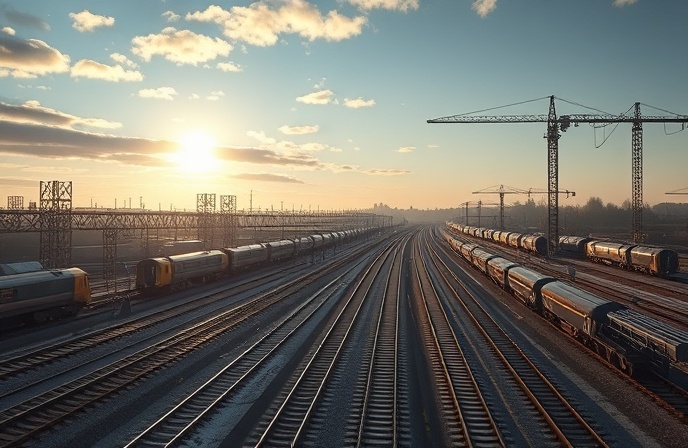
The 580km railway line linking Mpumalanga’s coal mines to RBCT is a remarkable feat of engineering. Its double-track design, bi-directional signaling, and full electrification significantly enhance operational efficiency and capacity. The line’s ability to handle both domestic and export coal, using various transportation modes including open-topped wagons and containers, demonstrates its adaptability and flexibility. The use of 2.5km long trains, loaded to 20,800t, is indicative of the large scale operations on this line, highlighting the importance of efficient train management and scheduling.
Security and Asset Protection
Given the high value of the transported goods and the extensive geographical reach of the railway network, security is paramount. Transnet’s multi-million dollar investment in NICE’s end-to-end IP video security solution (NiceVision Net) demonstrates a commitment to protecting its assets. This comprehensive system monitors and records images from cameras across 670 sites, ensuring the safe movement of coal and other freight. The scalability and adaptability of the NICE system, allowing for tailored solutions at individual sites, demonstrates a forward-thinking approach to security management.
Rolling Stock and Future Investments
The substantial size of the Coaline wagon fleet (8,012, with 7,327 operational) and locomotive fleet (310, with 285 operational) highlights the scale of operations. Transnet’s commitment to future investment, including plans for over 1,000 new wagons and the procurement of new locomotives, is crucial for accommodating anticipated growth in coal exports. This commitment, part of a R34.822 billion (approximately US$ 2.3 billion at the time of writing) five-year capital expenditure plan (2007-2012) allocated to freight rail, underpins the ongoing modernization and expansion of the system. These investments also include improvements to signaling systems and track reinforcement.
Project Summary
| Project Parameter | Value |
|---|---|
| Project Name | Mpumalanga to Richards Bay Freight Coal Line |
| Line Length | 580 km |
| Track Type | Double Line, Bi-directionally Signalled, Fully Electrified |
| Connection | Mpumalanga Coalfields to Richards Bay Coal Terminal (RBCT) |
| Rolling Stock (Wagons) | Fleet size: 8,012; Operational: 7,327 |
| Rolling Stock (Locomotives) | Fleet size: 310; Operational: 285 |
| 5-Year Capex (2007-2012) | R34.822 billion (Freight Rail) |
Conclusions
The Mpumalanga to Richards Bay coal line stands as a testament to South Africa’s commitment to developing its crucial export infrastructure. The strategic location of Richards Bay Coal Terminal, the efficient design of the railway network, the robust security measures implemented, the substantial rolling stock fleet, and the ambitious investment plans all combine to create a powerful engine for economic growth. The project’s success highlights the importance of integrated planning, leveraging both natural advantages and technological advancements. The focus on security and efficient operations ensures not only the safe and reliable transport of coal but also the protection of significant assets. The ambitious investment plans further solidify the system’s position as a vital contributor to South Africa’s economic landscape for decades to come. The consistent modernization and expansion of the system, including the procurement of new rolling stock and upgrades to signaling systems, are crucial for adapting to future demands and maintaining a competitive edge within the global freight rail market. The project’s success can serve as a model for other developing nations seeking to improve their transport infrastructure and boost their export capabilities.
Looking ahead, continued investment in infrastructure maintenance, technological upgrades, and workforce development will be essential to sustain the railway’s efficiency and capacity. Further research into optimizing train scheduling, exploring alternative fuels for locomotives (to reduce emissions), and enhancing the overall sustainability of the operations is vital for long-term success. The efficient operation of this coal line significantly contributes to the economic viability of South Africa’s coal industry and its global competitiveness in the energy markets, proving a vital link between resource extraction, transport, and international trade. The line’s continuous improvement and modernization ensure its ongoing relevance and effectiveness as a vital part of the South African and global economy. The ongoing investments by Transnet demonstrate a long-term commitment to the future prosperity of the project and the economic strength of the country.
Company Information:
Transnet: A state-owned freight transport company in South Africa, with Transnet Freight Rail as one of its core divisions.
COALlink: A specialist business unit within Transnet responsible for the transport of South Africa’s export coal.
NICE: A technology company providing intelligent video security solutions, including the NiceVision Net system implemented by Transnet.
RELATED POSTS
November 28, 2025 3:42 pm
Network Rail launches a 32-day rail upgrades program over Christmas,...
October 25, 2010 12:54 pm
London's Victoria Underground Station underwent a £700 million upgrade, boosting...
February 15, 2018 7:55 am
Paris's automated Line 14 Metro, a railway sector marvel, boosts...

July 18, 2015 10:30 am
According t Malawi24 website; Government almost declined plans by investors...
January 31, 2014 1:21 am
Xiamen-Shenzhen High-Speed Railway opens, boosting China's rail network and regional...
October 10, 2006 12:33 am
Marseille's railway network expands! New tram and metro lines...