
VR Revolutionizes Railway Training for Disabilities
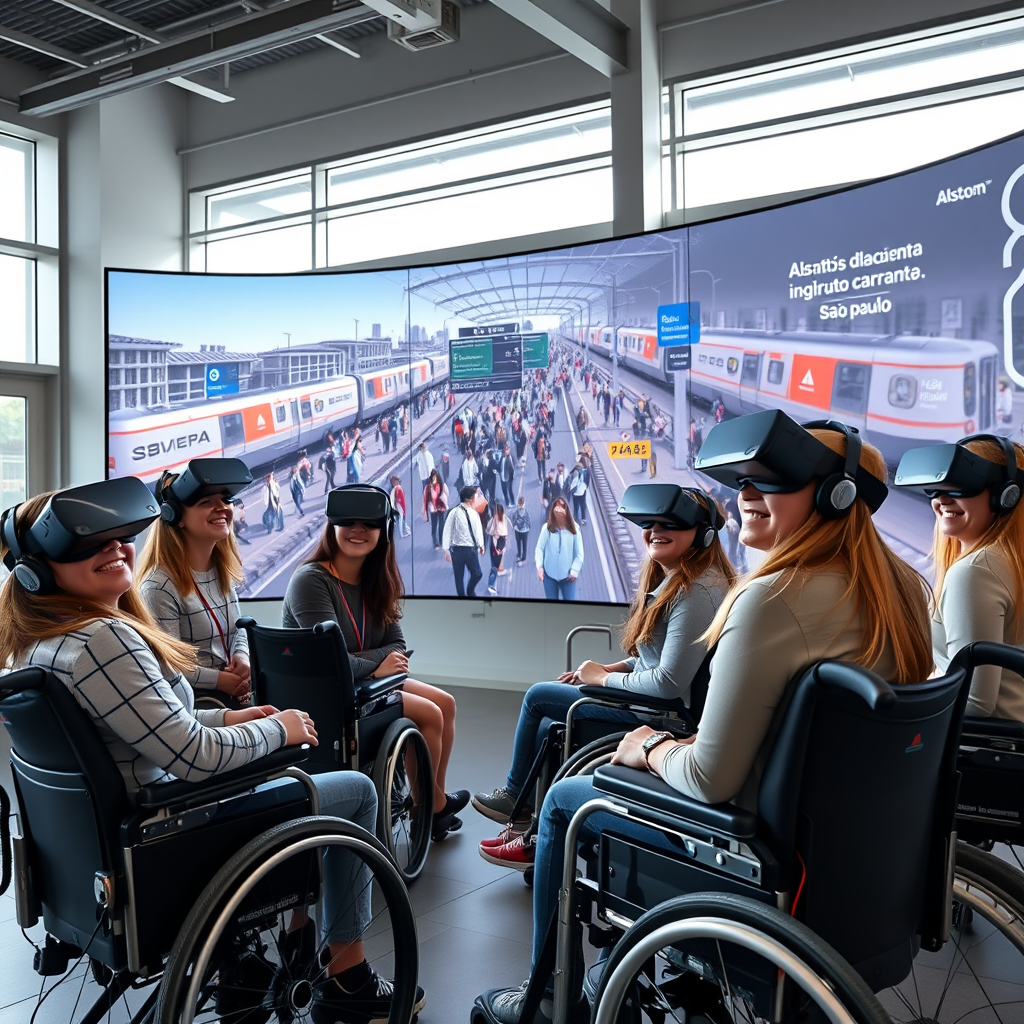
This article explores the innovative application of virtual reality (VR) technology in railway education, specifically focusing on a program developed by the Alstom Foundation in partnership with Instituto Jô Clemente (IJC) in São Paulo, Brazil. The initiative aims to improve accessibility and inclusivity within the railway system for individuals with developmental disabilities, including learning disabilities, cognitive conditions, and autism spectrum disorder (ASD). The program leverages the immersive capabilities of VR to create simulated railway environments, allowing participants to practice navigating real-world scenarios in a safe and controlled setting. This approach addresses a critical need for accessible and effective training methods tailored to the specific challenges faced by individuals with these disabilities. The subsequent sections will delve into the project’s design, implementation, impact, and potential for broader application within the railway industry and beyond.
A Novel Approach to Railway Training
The Alstom Foundation’s VR training program represents a significant departure from traditional railway education methods. Instead of relying solely on lectures and on-site demonstrations, which can be overwhelming or inaccessible for individuals with certain disabilities, this program utilizes VR to create highly personalized and engaging learning experiences. Participants can explore virtual railway stations, board and alight trains, and interact with simulated elements of the railway environment in a safe and controlled virtual space. The interactive nature of VR allows for repeated practice and immediate feedback, fostering confidence and improving the participants’ ability to navigate the railway system independently.
Curriculum Design and Implementation
The VR curriculum is meticulously designed to address specific challenges faced by individuals with developmental disabilities in navigating public transportation. Modules include:
- Train routes and maps: Familiarization with railway networks and route planning.
- Boarding and alighting trains: Practice in safely entering and exiting trains, including navigating platform gaps and navigating busy stations.
- Visual and auditory communication tools: Training in understanding visual cues (e.g., signage, announcements) and auditory signals (e.g., train announcements, platform warnings).
The program also incorporates supported VR sessions, providing individualized assistance and guidance from trained instructors. This blended approach combines the benefits of immersive technology with the personalized support needed to ensure effective learning.
Impact and Outcomes
The program aims to empower 900 individuals with intellectual disabilities and autism, preparing them for independent travel and enhancing their overall quality of life. By reducing anxiety and improving confidence, the VR training significantly increases the accessibility of railway systems for this population. The success of the program will be measured not only by the number of individuals trained but also by their increased ability to navigate the railway system independently and confidently, promoting greater social inclusion. This approach also enhances safety by allowing participants to familiarize themselves with complex urban environments in a virtual, controlled setting before facing these challenges in the real world.
Broader Implications and Future Directions
The success of the Alstom Foundation’s initiative in São Paulo showcases the transformative potential of VR technology in enhancing accessibility and inclusivity within the railway sector. This innovative approach can be replicated and adapted for diverse populations and geographical locations. The program demonstrates that the application of VR can create more inclusive and accessible environments, promoting safer and more equitable access to public transportation. Furthermore, the program demonstrates the value of strategic partnerships between industry leaders (such as Alstom), disability support organizations (such as IJC), and academic institutions (such as the University of São Paulo) in developing and implementing effective solutions for social inclusion. Future developments could incorporate more sophisticated simulations, personalized learning pathways, and data-driven evaluations to further refine the program’s effectiveness and broaden its reach. The integration of VR into railway training is not just a technological advancement but a significant step towards building a more inclusive and accessible transportation system for all.
Conclusions
In summary, the Alstom Foundation’s VR-based railway training program in Brazil represents a pioneering effort in leveraging technology to enhance accessibility and inclusivity within the railway sector. By employing virtual reality, the program effectively addresses the unique challenges faced by individuals with learning disabilities, cognitive conditions, and ASD in navigating complex railway environments. The program’s carefully designed curriculum, incorporating modules on train routes, boarding procedures, and communication tools, coupled with supported VR sessions, allows participants to practice and master these skills in a safe and controlled virtual setting. This approach has the potential to significantly improve the confidence and independence of participants, ultimately leading to greater social inclusion and improved safety. The project’s success hinges on the collaborative partnership between Alstom Foundation, Instituto Jô Clemente, and the University of São Paulo, highlighting the power of cross-sector collaboration in addressing societal challenges. The project serves as a powerful model for other railway operators and organizations seeking to create more inclusive and accessible transportation systems. The broader implications extend beyond the railway industry, demonstrating the wider potential of VR in providing accessible and engaging training for diverse populations across various sectors. Continued development and refinement of this approach, potentially incorporating advanced simulation techniques and personalized learning pathways, holds immense promise for enhancing the lives of individuals with disabilities and creating more equitable societies.
RELATED POSTS
November 21, 2025 6:54 pm
Train accident: A Union Pacific Railroad train collided with a...

June 15, 2010 3:15 am
Nigeria will allocate an extra N12bn ($17bn) to repair the...

August 23, 2022 7:45 pm
Cross-Border Rail Collaboration: Enhancing Trade and Infrastructure between South Africa...

July 1, 2025 9:33 am
Network Rail's Project Reach aims to eliminate rail signal blackspots,...
The BART Silicon Valley Phase II Extension's $125 million engineering...
June 26, 2018 1:58 pm
Indian Railways' IPOs of RVNL and IRFC, following RITES' success,...