
BART Silicon Valley Phase II: $125M Contract Awarded
The BART Silicon Valley Phase II Extension’s $125 million engineering contract is underway, accelerating this vital transit project. Discover how expedited delivery and innovative design are shaping Silicon Valley’s future!
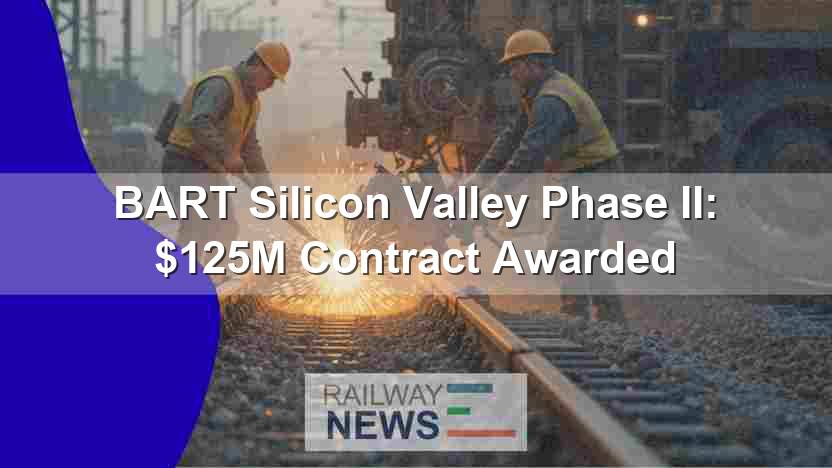
This article explores the significant contract awarded by the Santa Clara Valley Transportation Authority (VTA) to Mott MacDonald and PGH Wong Engineering (MMW) – a joint venture (JV) – for the Bay Area Rapid Transit (BART) Silicon Valley Phase II Extension Project. The $125 million contract represents a crucial step in the ambitious expansion of the BART system into Silicon Valley, a region experiencing rapid population growth and a critical need for robust public transportation infrastructure. This project, estimated at a total cost of nearly $4.7 billion, is not merely about extending rail lines; it’s about strategically addressing the challenges of urban sprawl, mitigating traffic congestion, and fostering sustainable economic development in one of the world’s leading technology hubs. The complexities involved – from detailed engineering and design to securing federal funding and navigating the complexities of expedited project delivery – highlight the intricate planning and execution required for such a large-scale undertaking. We will explore the scope of the contract, the engineering challenges, the funding mechanisms, and the broader implications of this project for the future of Silicon Valley’s transportation network.
Engineering Design and Scope of Work
The awarded contract to MMW encompasses detailed general engineering services for the five-mile tunnel extension, four new station areas, two ventilation structures, and associated system-wide upgrades. This work represents a substantial portion of the overall Phase II project, taking it to a 30% completion level in terms of engineering. The detailed engineering phase is vital for accurate cost estimation, schedule development, and effective risk management. The design process must meticulously consider geological conditions, environmental impact, integration with existing infrastructure, and accessibility standards to ensure a safe, efficient, and sustainable transit system. Additionally, detailed design is crucial for facilitating the procurement of materials and equipment, ultimately contributing to the smooth execution of the construction phase.
Funding and the Expedited Project Delivery (EPD) Program
Securing sufficient funding is paramount for mega-projects like the BART Silicon Valley Extension. The VTA’s application for federal funding through the Federal Transit Administration (FTA) Expedited Project Delivery (EPD) Pilot Program exemplifies a proactive approach to accelerate the project timeline. Participation in the EPD program streamlines the approval process and potentially reduces overall project duration. This expedited approach requires meticulous upfront planning and collaboration between various stakeholders, including the VTA, FTA, and the engineering firm. The success of this funding application underscores the importance of detailed project planning and a strong partnership between local and federal authorities.
Phase I and II: A Phased Approach to Expansion
The BART Silicon Valley Extension is being implemented using a phased approach. Phase I, currently under construction, comprises a ten-mile stretch with two stations and is expected to open soon. This phased approach minimizes disruption, allows for lessons learned to be incorporated into subsequent phases, and simplifies project management. The successful completion of Phase I serves as a testament to the planning and execution capabilities, bolstering confidence in the timely and efficient delivery of Phase II. This incremental approach also allows for continuous public engagement and feedback to refine the design and address any community concerns.
System Integration and Future Impacts
Once completed, the 16-mile BART Silicon Valley Extension, including both phases, will significantly enhance the region’s rapid transit network. The extension will seamlessly integrate with the existing BART system, providing improved connectivity between Silicon Valley and the broader Bay Area. This improved connectivity will not only alleviate traffic congestion and reduce commute times, but it will also contribute to a more sustainable and environmentally friendly transportation system. The expanded network will serve as a catalyst for economic growth, facilitating easier access to employment opportunities, educational institutions, and other essential services. The long-term impact of this project extends beyond transportation, influencing urban planning, community development, and the overall quality of life in Silicon Valley.
Conclusions
The award of the BART Silicon Valley Phase II Extension contract to MMW marks a pivotal moment in the ongoing expansion of the Bay Area Rapid Transit system. The $125 million contract covers crucial design and engineering work for a significant portion of the project, laying the groundwork for construction and bringing the project closer to realization. The strategic use of the FTA’s EPD Pilot Program underscores the commitment to efficient project delivery, highlighting the importance of securing federal funding for large-scale infrastructure projects. The phased implementation approach, with Phase I already underway, demonstrates a well-defined strategy for managing the complexities of such a large undertaking. The successful completion of this project will significantly enhance the region’s transportation infrastructure, benefiting residents, businesses, and the environment. The long-term impact extends beyond improved connectivity, fostering economic growth, sustainable development, and a better quality of life in the dynamic Silicon Valley region. The collaborative effort between the VTA, MMW, and the FTA serves as a model for future large-scale transit projects, emphasizing the importance of strategic planning, efficient project management, and strong partnerships to deliver impactful infrastructure improvements.

Railway infrastructure, rolling stock and transport technologies specialist focused on global rail industry developments, high-speed rail systems, signaling technologies and freight transportation. Covering railway investments, public transport modernization, rail operations and international mobility projects across Europe, Asia and North America.
RELATED POSTS
September 6, 2026 5:19 am
Hitachi delivered Taiwan's first N700ST high-speed train from Japan in...

September 5, 2026 4:19 pm
CPK launched formal tender talks with four consortia to design...

September 5, 2026 7:14 pm
HS2 Ltd signed renegotiated civils contracts with EKFB and Align...

September 6, 2026 4:12 am
Alstom delivered the first of 100 new G Class trams...
September 6, 2026 1:17 am
Hitachi Toshiba Supreme Consortium confirmed the first of 12 N700ST...
September 6, 2026 6:17 am
Hungary ordered a national ban on most freight trains from...