
UK Rail Maintenance: DFTO’s Heaton Depot Efficiency Plan
UK train operators collaborate on Heaton depot maintenance, aiming for efficiency and passenger benefits.
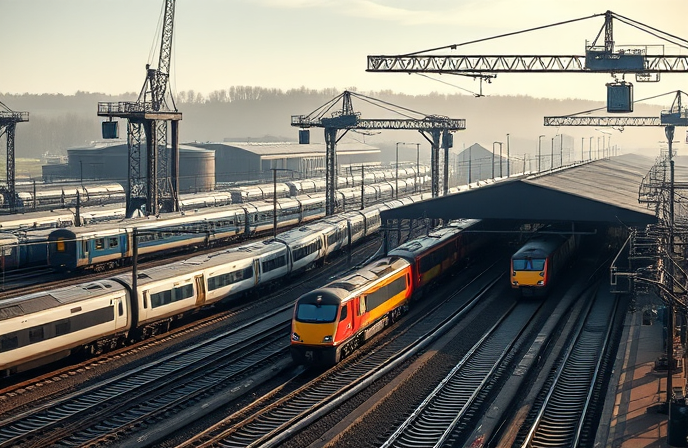
Publicly-Owned Train Operators Unite to Streamline Maintenance at Heaton Depot
In a significant move towards enhanced efficiency and collaborative working, publicly-owned train operators under the Department for Transport Operator (DFTO) have initiated a coordinated maintenance plan at Heaton depot in Tyne & Wear. This initiative, launched on July 3rd, 2025, sees all three DFTO operators working in unison to optimise the utilisation of depot capacity, engineering facilities, and track movements. The primary aim is to reduce operational waste, improve service reliability for passengers, and foster a more agile and responsive railway network. This article explores the intricacies of this new collaborative approach, the benefits it offers, and its implications for the future of rail maintenance in the UK.
Innovations in Collaborative Maintenance
The core of this initiative lies in the collaborative maintenance plan developed for Heaton TrainCare Centre. Previously, individual operators managed their maintenance schedules and resource allocation independently. Now, a single, unified plan governs all activities, allowing for the sharing of resources, expertise, and infrastructure. This strategic shift is designed to maximise the utilisation of engineering facilities, minimise downtime, and streamline track access for maintenance and inspection activities. By coordinating track movements, operators can reduce congestion and improve overall efficiency.
Strategic Advantages of Shared Resources
The advantages of pooling resources are substantial. Shared access to specialised engineering equipment, for example, reduces duplication of assets and ensures that all operators can benefit from the latest technology. Furthermore, cross-operator training and knowledge sharing will enhance the skillsets of the workforce, creating a more versatile and adaptable team. Garry Roseby, Heaton TrainCare Centre manager, emphasised the importance of this aspect: “Working together in this way will enable all of the DFTO operators not only to pool their resources more effectively, but to share learning and experiences across teams to create a more efficient TrainCare Centre.”
Government Support and Strategic Vision
The project has received strong backing from the government, with Rail Minister Lord Hendy highlighting the wider implications: “This is exactly the kind of efficiency that public ownership delivers, with operators working together under one roof to cut waste and improve coordination where it matters.” Lord Hendy added that “By bringing operators into public ownership we’re building a better railway that works for passengers and that delivers better performance, higher revenue and lower costs, leading to growth, jobs and homes as part of this Govts plan for change.” The government views this initiative as a crucial step in delivering a modern, efficient, and passenger-focused railway system.
Expansion Plans and Future Deployment
Following the promising results at Heaton, the DFTO intends to roll out this collaborative maintenance model across other depots. The next facility earmarked for implementation is Neville Hill in West Yorkshire. The phased approach allows for the adaptation of best practices and continuous improvement based on the experiences gained at Heaton. This systematic rollout, combined with continuous monitoring and evaluation, will ensure that the benefits of collaborative maintenance are realised throughout the network, ultimately improving the passenger experience and enhancing the overall performance of the railway.
Conclusion
The collaborative maintenance initiative at Heaton depot marks a significant step forward in the evolution of the UK’s publicly-owned rail network. By fostering a cooperative environment and sharing resources across operators, the DFTO aims to reduce costs, improve operational efficiency, and enhance service reliability. The early signs are very promising; with plans to expand to Neville Hill and potentially other sites, this model promises to redefine how maintenance is conducted across the UK rail network. These strategic changes are likely to have a significant impact on industry practices, making rail transport more efficient and potentially attractive to passengers. The long-term success of this initiative will depend on consistent implementation, ongoing assessment, and effective knowledge sharing across the entire network. It also offers lessons that could be applied to various other fields of rail service.
Company Summary
The Department for Transport Operator (DFTO) manages the UK’s publicly-owned train operators. They are responsible for the safe, reliable, and efficient operation of various rail services across the country. The DFTO’s key objectives include improving passenger satisfaction, reducing costs, enhancing operational performance, and promoting sustainability within the railway system. The recent collaboration project showcases their efforts to utilise shared resources and expertise.
RELATED POSTS

September 24, 2015 1:53 pm
Singapore’s Land Transport Authority (LTA) has awarded a S$136.8m ($97m)...

April 19, 2025 3:23 pm
Improving UK Rail Reliability: A Comprehensive Analysis The UK rail...

July 16, 2020 5:05 am
Modernizing Moldova’s Rail Network: A Case Study in International Collaboration...

June 10, 2017 8:45 pm
Alstom has been awarded a contract worth over €130 million...

April 18, 2025 3:27 pm
Introduction This article examines the critical advancement of the Front...
August 2, 2020 12:11 am
The Lyon-Turin high-speed rail line represents a significant infrastructure project...