
Surrey Hills Station Upgrade: Safety, Sustainability, & Community

This article explores the significant upgrade of the Surrey Hills train station in Melbourne, Australia, focusing on the removal of dangerous level crossings and the integration of sustainable design principles. The project, a key component of the Victorian government’s broader level crossing removal program, showcases a commitment to improving both commuter safety and environmental responsibility. The removal of the level crossings at Union Road in Surrey Hills and Mont Albert Road in Mont Albert addresses a critical safety concern, highlighted by past accidents and near misses. The new station design incorporates improved accessibility features, enhanced pedestrian and cyclist infrastructure, and the incorporation of green spaces, setting a benchmark for future railway station developments. This detailed analysis will examine the engineering challenges, sustainable design elements, and the broader impact on the local community.
Engineering the Elimination of Level Crossings
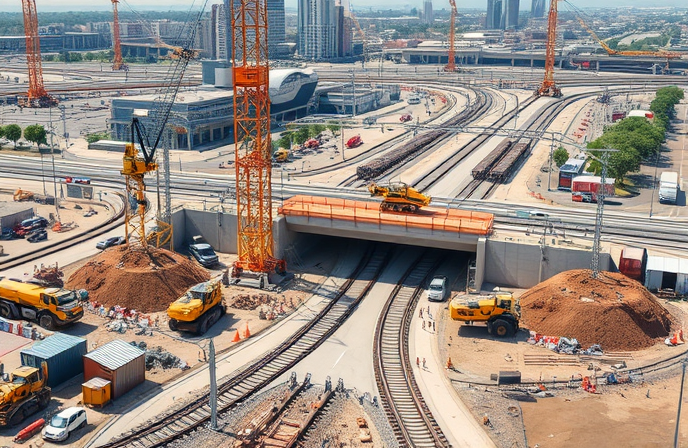
The project’s core objective is the removal of two notoriously dangerous and congested level crossings: Union Road in Surrey Hills and Mont Albert Road in Mont Albert. The chosen method involves a cut-and-cover technique (open pit excavation), where the railway track is lowered beneath the existing road level. This complex undertaking requires meticulous planning and execution to minimize disruption to traffic and nearby businesses. The open-cut construction method, while disruptive in the short term, allows for the comprehensive integration of new infrastructure, including the upgraded station building and associated pedestrian and cyclist pathways. This method also allows for better integration of the new station design with surrounding areas.
Enhanced Station Design and Accessibility
The new Surrey Hills station design prioritizes accessibility and passenger experience. The station will feature a stepped design, seamlessly connecting the concourse level to the new platforms via stairs and elevators (lifts). This ensures ease of access for passengers with disabilities and those traveling with luggage. The inclusion of entrances at both ends of the platform improves passenger flow and reduces congestion, particularly during peak hours. Further enhancing accessibility, a dedicated drop-off zone on Mont Albert Road will expedite passenger arrival and departure from the eastern station entrance. This comprehensive approach to accessibility is crucial for ensuring the station serves all members of the community effectively.
Sustainable Infrastructure and Community Integration
Beyond safety and accessibility, the project emphasizes environmental sustainability and community integration. The design incorporates green spaces, providing recreational areas with seating and play areas for children. Dedicated cycling and pedestrian paths will connect the station to Box Hill and Hawthorn, forming part of a larger cycling corridor network. The repurposing of the old Mont Albert station building into a community center or eatery further demonstrates the commitment to integrating the station into the fabric of the local community. These features aim to transform the station area into a vibrant hub that benefits residents and commuters alike.
Project Timeline and Future Implications
The project is proceeding according to an accelerated timeline, with the aim of completing the level crossing removals by 2023, two years ahead of the initial schedule. Initial works commenced in 2021, with major construction following in 2022. The successful completion of this project not only enhances safety and accessibility but also serves as a model for future level crossing removals and station upgrades across Melbourne. The incorporation of sustainable design principles and the focus on community integration set a new standard for railway infrastructure development.
Conclusions
The Surrey Hills station upgrade exemplifies a holistic approach to railway infrastructure development, prioritizing safety, accessibility, sustainability, and community integration. The removal of the dangerous level crossings at Union Road and Mont Albert Road is a critical achievement, significantly improving road and rail safety for commuters and residents. The innovative design of the new station, with its stepped access, dual entrances, and dedicated drop-off zone, significantly enhances accessibility for all passengers. Furthermore, the integration of green spaces, cycling paths, and the repurposing of the old station building underscore a commitment to creating a sustainable and community-focused infrastructure project. The accelerated timeline of the project, aiming for completion two years ahead of schedule, reflects a proactive approach to addressing key infrastructure challenges. This success story serves as a valuable case study for future railway projects, demonstrating how thoughtful planning and design can lead to the creation of safer, more accessible, and environmentally conscious transportation hubs. The Surrey Hills station upgrade showcases a model of collaborative urban development, effectively integrating transportation infrastructure with the needs and aspirations of the local community. The project’s success points to a future where railway development not only improves transportation but also contributes to the vibrancy and sustainability of surrounding urban environments.
RELATED POSTS
December 20, 2019 10:10 am
The global railway industry is undergoing a period of significant...
October 6, 2019 3:41 pm
This article examines the long-standing relationship between Toshiba Infrastructure Systems...
August 2, 2020 8:53 pm
Strategic Rail Infrastructure Investments by Canadian National Railway (CN) in...
October 25, 2017 9:55 am
Optimize your railway infrastructure for greater efficiency and sustainability. ...

June 16, 2025 5:01 pm
Brazil's Transnordestina Railway gets BRL 1 billion boost, expanding to...
July 4, 2025 6:33 pm
Dandenong level crossing removal and underpass construction begins, improving rail...