
Rail Baltica: €295.5M Boost for Estonia, Latvia, Lithuania High-Speed Rail
Rail Baltica gets €295.5M EU boost, accelerating Baltic railway development.
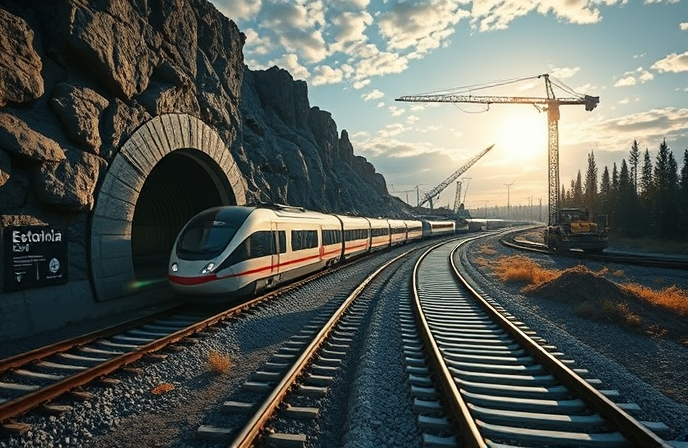
Rail Baltica Secures €295.5 Million Boost from EU for Continued Development
In a significant stride towards integrating the Baltic states into the broader European railway network, RB Rail AS, the coordinating joint venture for the Rail Baltica project, has been awarded €295.5 million in funding from the European Commission. Announced recently, the allocation comes via the Connecting Europe Facility (CEF) Transport call and will propel construction and implementation activities across Estonia, Latvia, and Lithuania. This substantial financial injection, part of the EU’s 2023 multi-annual budget, underscores the EU’s unwavering commitment to this high-speed transnational railway project. The funding is crucial as it will accelerate the development of core railway infrastructure, critical systems, and cross-border coordination, ensuring the timely delivery of this strategically important project. The project’s goal is to drastically improve north-south connectivity across the region, and to integrate the Baltic states more closely with the wider European network.
Funding Allocation and Project Scope
The €295.5 million grant, awarded under the 2023 CEF call, will be distributed among the Baltic states as follows: approximately €47.1 million for Estonia, €153.5 million for Latvia, and €94.9 million for Lithuania. These amounts include allocations to RB Rail AS, functioning as the project coordinator. The European Commission’s commitment extends beyond this recent funding; Director-General for Mobility and Transport, Magda Kopczyńska, highlighted the importance of the project, noting that this award, combined with a similar investment on the adjacent E75 railway line in Poland, solidifies the EU’s resolve to enhance cross-border rail connectivity. This will not only boost the efficiency and safety of rail transport but also spur economic competitiveness throughout the continent.
Construction Advancements Across the Baltic States
Construction is actively underway across multiple sections of the Rail Baltica line. As of mid-2025, around 160 km of the main railway line are under active construction, in addition to work on major rail subsystems. Electrification procurement has been finalized, with contracts in the signing phase, while procurement for control-command and signalling systems are ongoing. By the end of 2025, an estimated 43% of the Rail Baltica mainline is expected to be under construction. In Estonia, significant progress is visible, with contracts signed for the entire corridor from Tallinn to the Latvian border. Currently, over 70 km of embankment and intersections are in development, with activity expected to exceed 100 km between Tallinn (Ülemiste) and Tootsi by the end of 2025. In Latvia, construction is progressing in Riga, at the Riga Central Station and near the airport. Temporary track installation has been completed, and signalling work is underway. This spring saw the resumption of work on the southern section of the station, aiming for passenger traffic by summer 2027. Further developments include construction near Iecava and construction works on the southern corridor. In Lithuania, the project is moving forward near Jonava, with the development of over 46 km of embankment and supporting infrastructure, and tenders are being issued for an additional 68 km. Design work is nearing completion for the section between Kaunas and Ramygala, along with preparations for regional stations.
Financial Strategy and Project Timeline
Securing over €4 billion in total funding to date, including significant contributions from the European Union and national governments, demonstrates the strategic importance of Rail Baltica. Recognizing the challenges of inflation, the project is also exploring alternative financing models, including public-private partnerships (PPPs) and support from the EU Military Mobility Fund. Marko Kivila, acting CEO and Chairman of the Management Board at RB Rail AS, emphasized that this funding is crucial, enabling construction to continue without delay, particularly in sections with ongoing work across all three Baltic countries. The planned discussions in July aim to finalize the scope of the Grant Agreement, ensuring specific activities are covered within the existing budgetary framework. Once finished, the 870-km high-speed line will link Tallinn to the Lithuanian-Polish border, thereby integrating the Baltics with the broader TEN-T network and advancing the EU’s climate and mobility goals.
Key Project Stakeholders and the Role of RB Rail AS
RB Rail AS, the central coordinating entity for the Rail Baltica project, plays a pivotal role in its successful execution. This joint venture brings together the project’s primary stakeholders: the Baltic States themselves, as well as various contractors, and the European Union, through its funding initiatives and regulatory oversight. RB Rail AS is responsible for the design, construction, and marketing of Rail Baltica. This includes everything from securing funding to managing the procurement process and overseeing the construction phases. The recent €295.5 million funding represents a critical step forward, allowing RB Rail AS to continue construction, and ensuring its timely delivery.
Conclusion
The substantial infusion of €295.5 million into the Rail Baltica project from the European Commission represents a pivotal moment in the high-speed rail initiative. This funding, alongside ongoing construction activities and strategic financial planning, emphasizes the strong commitment of the EU and Baltic nations towards completing this crucial infrastructure project. The advancements in construction across Estonia, Latvia, and Lithuania signify significant progress towards enhancing regional connectivity, integrating the Baltics with the wider European network and achieving economic and environmental goals. The focus on cross-border coordination and infrastructure development sets a precedent for future large-scale transnational rail projects, demonstrating the benefits of collaborative, strategically planned investments. The continued exploration of alternative financing models, such as public-private partnerships, shows a proactive approach to addressing potential financial challenges, reflecting adaptive project management. As construction progresses and design work nears completion in several sections, Rail Baltica’s central role in enhancing European connectivity and strategic mobility will become increasingly clear. By the end of 2025, around 43% of the main railway line is projected to be under construction, signifying the momentum of the project and its positive impact on the continent’s rail transport landscape.
RELATED POSTS

July 12, 2015 7:46 pm
Under present plans, HS2 would leave from Euston and would...

September 15, 2025 3:55 pm
ZSSK orders two more Stadler KISS trains, boosting Bratislava-Zilina service....

September 23, 2018 12:37 am
Northern's Class 195 trains are undergoing rigorous testing, bringing modern...

November 20, 2025 7:54 pm
Stadler to supply Nederlandse Spoorwegen (NS) with 36 new FLIRT...
June 5, 2019 9:41 pm
IDOM's expertise ensures Rail Baltica's Tallinn-Rapla section, a crucial high-speed...

July 24, 2025 6:33 pm
Network Rail appoints Jeremy Westlake as CEO, to lead...