
Paris Metro’s €800M Alstom MF19 Train Expansion
Introduction
This article delves into the significant expansion of Alstom’s contract to supply MF19 rolling stock (trains) to the Paris Metro, operated by RATP (Régie Autonome des Transports Parisiens) on behalf of Île-de-France Mobilités (the Île-de-France public transport authority). The €800 million ($875 million) deal adds 103 new trains to the initial 2019 order of 44, significantly bolstering the modernization efforts of the Paris Metro. This expansion highlights several key aspects of the modern railway industry, including the importance of sustainable practices, technological advancements in rolling stock design, and the long-term strategic partnerships between manufacturers and transit authorities. We will examine the technical specifications of the MF19, the environmental considerations driving its design, the logistical challenges of such a large-scale procurement, and the overall impact on the Paris Metro network’s operational efficiency and passenger experience.
The MF19 Rolling Stock: Design and Technology
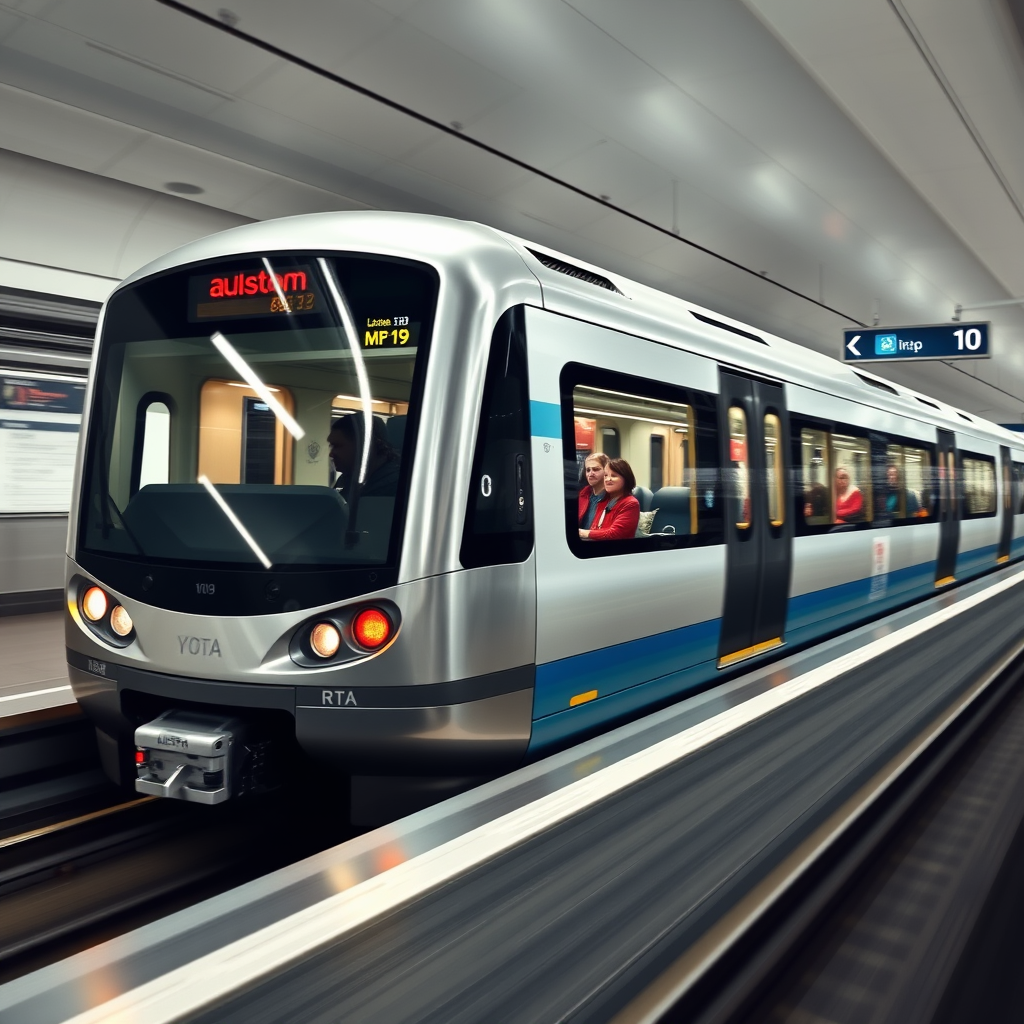
The MF19 represents a significant advancement in rolling stock technology. Its “boa” configuration, an open-gangway design, facilitates passenger flow and improves overall accessibility. This open design, combined with the use of 100% LED lighting, enhances the passenger experience by providing a brighter and more welcoming environment. Furthermore, the incorporation of fully electric braking systems contributes to energy efficiency and reduces reliance on friction-based braking, extending the lifespan of the train’s components. The emphasis on reduced noise pollution underscores a commitment to environmental responsibility and improved urban living conditions. The use of recycled materials (20%) in manufacturing and the design for 98% recyclability at the end of its lifecycle demonstrate a clear focus on sustainable practices, aligning with the broader goals of reducing the environmental footprint of public transport.
Environmental Considerations and Sustainability
The MF19’s design incorporates several environmentally conscious features. The use of 100% LED lighting significantly reduces energy consumption compared to traditional lighting systems. The fully electric braking system recuperates energy during braking, minimizing energy waste and lowering overall operational costs. The incorporation of recycled materials during manufacturing, and the design for almost complete recyclability at the end-of-life, drastically reduces the environmental impact throughout the train’s life cycle. These features directly address concerns regarding carbon emissions and resource depletion, making the MF19 a model for environmentally responsible rolling stock design within the broader railway sector. This aligns with the global trend towards sustainable transportation solutions.
Logistical and Operational Impacts
The scale of this project, involving the manufacture and deployment of 147 MF19 trains across eight Alstom factories in France, presents significant logistical challenges. Coordinating the manufacturing process, ensuring timely delivery, and integrating the new rolling stock into the existing Paris Metro network requires meticulous planning and execution. The phased deployment – starting with lines 10, 7bis, and 3bis in 2025, and continuing to lines 13, 12, and 8 by 2027 – allows for a gradual integration, minimizing disruptions to the existing services. The eventual operation of the MF19 on eight of the sixteen lines represents a substantial upgrade to the Paris Metro’s fleet, significantly impacting operational efficiency and improving the overall passenger experience.
Conclusion
Alstom’s expanded contract to supply 103 additional MF19 trains to the Paris Metro represents a significant milestone in the modernization of the region’s public transportation system. The contract builds upon the initial order and highlights the successful partnership between Alstom and Île-de-France Mobilités. The MF19 train itself embodies a commitment to sustainable practices, incorporating environmentally friendly features such as LED lighting, regenerative braking, and a high degree of recyclability. The “boa” configuration enhances passenger flow and accessibility, improving the overall passenger experience. The phased deployment strategy minimizes service disruption while allowing for a smooth integration of the new rolling stock. This project serves as a compelling case study for the future of rolling stock procurement, emphasizing the importance of sustainability, technological innovation, and effective project management in ensuring the successful modernization of railway systems worldwide. The eventual deployment of 410 MF19 trains by 2033 will significantly improve the efficiency, sustainability, and overall passenger experience of the Paris Metro, setting a benchmark for future urban rail projects. The emphasis on lifecycle considerations, from manufacturing to end-of-life management, further underscores the growing importance of environmental responsibility within the railway industry. This project showcases a successful collaboration between industry and public transport authorities, paving the way for similar large-scale modernization efforts in other cities globally.
RELATED POSTS

June 19, 2019 6:14 am
This article examines the significant investment by Russian Railways (RZD)...
September 16, 2019 2:09 am
This article explores Deutsche Bahn’s (DB) commitment to transitioning to...

April 5, 2016 10:46 am
The Government of Victoria in Australia has announced that new...

April 15, 2025 8:42 pm
This article analyzes the strategic acquisition of Dellner Couplers by...

October 6, 2025 8:54 pm
Rail Vision plans to acquire Quantum Transportation, integrating quantum-AI to...

August 7, 2025 9:33 pm
Texas' Green Eagle Railroad project gains crucial environmental approval, paving...