
Oregon’s Intermodal Port: Rail Infrastructure & West Coast Shipping
Oregon secures $100M for intermodal port, boosting West Coast shipping and railway capacity.
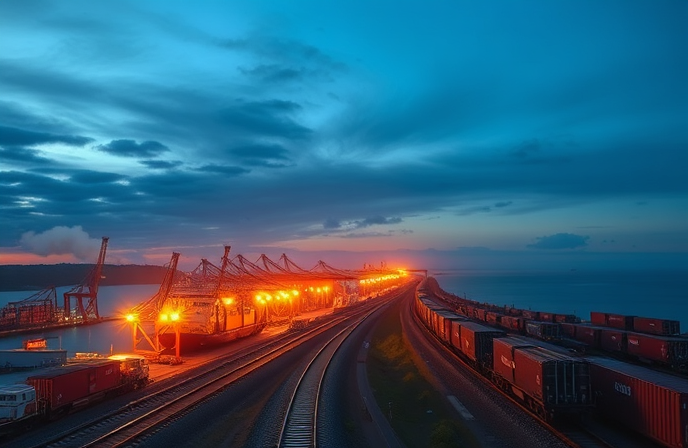
Oregon Secures $100 Million for Pacific Coast Intermodal Port, Poised to Redefine West Coast Shipping
The Oregon legislature has committed $100 million in funding to the Pacific Coast Intermodal Port, a significant public-private partnership that promises to revolutionize shipping infrastructure in the Pacific Northwest. Announced Monday by port officials, this project aims to construct a state-of-the-art container terminal at the Oregon International Port of Coos Bay. The project’s primary objective is to connect southwest Oregon to global markets, offering a new, efficient conduit for cargo transportation. This initiative, combining state, federal, and private investment, marks a pivotal moment in boosting regional trade and enhancing the overall shipping capacity of the U.S. West Coast. The article will delve into the specifics of this ambitious project, examining its operational scope, technological innovations, and anticipated impact on the railway industry and the broader economic landscape.
Strategic Location: Coos Bay’s Advantage
The Oregon International Port of Coos Bay (OICB) provides a strategically advantageous location for this new intermodal terminal. Situated on the West Coast, the OICB offers direct access to the Pacific Ocean, minimizing the need for complex inland transport. The Port’s existing rail infrastructure will be substantially enhanced. This strategic location, coupled with modern terminal technology, is designed to streamline the movement of goods to and from global markets. The port has a natural deepwater harbor, able to accommodate larger vessels, providing a competitive advantage over existing terminals by offering efficient container handling and transloading capabilities. The terminal is the first of its kind on the U.S. West Coast in decades, reflecting a strategic investment in improving shipping options and boosting the region’s economic output.
The Ship-to-Rail Integration: A Core Component
At the heart of the project lies the seamless ship-to-rail integration. The terminal will be designed to efficiently transfer containerized cargo from ships directly onto the Coos Bay Rail Line. This rail line will then connect to Union Pacific Railroad (UPRR) in Eugene, Oregon. The UPRR connection is crucial, as it provides access to Midwest markets. This eliminates the reliance on lengthy and often congested trucking routes. The project’s success depends on sophisticated logistics and real-time tracking systems to manage the flow of cargo, optimize the use of rolling stock, and minimize turnaround times. This integrated approach is designed to significantly reduce transit times, reduce transportation costs, and lessen the environmental footprint of shipping.
Funding and Partnerships: A Collaborative Approach
The financial backing for the Pacific Coast Intermodal Port represents a significant commitment from both public and private sectors. The $100 million allocated by the Oregon legislature demonstrates the state’s resolve in promoting economic development and enhancing its infrastructure. This funding is being complemented by $58 million in federal grants secured through various U.S. Department of Transportation (USDOT) programs. This public-private partnership model is designed to leverage the expertise and resources of various stakeholders, including port authorities, railway operators, and private investors. The collaborative approach ensures a balanced risk management strategy, combining public funding with private-sector efficiency. This integrated funding strategy helps manage both project construction and its continuing operational costs.
Impact on the Railway Industry: A New Horizon
The intermodal port project is expected to have a substantial impact on the railway industry, particularly for companies involved in freight transport. The increased volume of containerized cargo moving by rail will potentially create opportunities for expanding rail lines, the acquisition of more locomotives and rolling stock, and the creation of new jobs. Furthermore, the project could serve as a catalyst for further infrastructure investments across the region, improving railway operations and supporting economic growth. The project will likely incentivize the adoption of advanced technologies, like automated container handling systems and real-time tracking tools, to ensure operational efficiency and competitiveness. This project will provide new prospects for regional railway companies, boosting operational efficiencies and contributing to economic expansion.
Conclusion
The Oregon legislature’s $100 million investment in the Pacific Coast Intermodal Port signals a bold move towards enhancing the West Coast’s shipping capabilities. This project, bolstered by federal funding and private investment, establishes a state-of-the-art container terminal at the Oregon International Port of Coos Bay. This terminal will connect southwest Oregon to international markets via the Coos Bay Rail Line and the Union Pacific Railroad, providing faster, more cost-effective, and more environmentally friendly shipping options. The project’s success has wider industry implications, potentially sparking additional investment in rail infrastructure and technology across the region, boosting operational efficiency and supporting further economic expansion. The intermodal port is strategically designed to enhance regional trade, establish improved railway operations, and improve port efficiency. The new port will undoubtedly bring innovation to the railway market in Oregon.
Company Summary
Union Pacific Railroad (UPRR): One of the largest freight-hauling railroads in North America, UPRR plays a crucial role in this project, connecting the Coos Bay Rail Line to the Midwest. UPRR operates an extensive network that facilitates the efficient transport of a wide range of goods, including containerized cargo, supporting the intermodal port’s broader logistics strategy.
RELATED POSTS

November 3, 2016 4:03 am
DB Cargo UK is restructuring, announcing 183 job cuts in...
June 16, 2019 10:02 pm
This article delves into Amtrak’s recent interior refurbishment of its...
August 14, 2025 3:33 pm
Protecting the Railway: Resilient Solutions for the Future of the...
March 19, 2025 9:27 am
The Dawn of Battery-Electric Heavy Haul: Wabtec’s FLXdrive Locomotive and...

July 1, 2025 10:33 am
Dutch rail operator ProRail pioneers circular rail tracks, using recycled...
December 3, 2016 12:10 am
In 2016, Wabtec strategically acquired Faiveley Transport, a $1.8 billion...