
Modernizing Balkan Rail: North Macedonia-Serbia Corridor X
Modernizing Cross-Border Rail Connectivity in the Western Balkans: The North Macedonia-Serbia Case Study
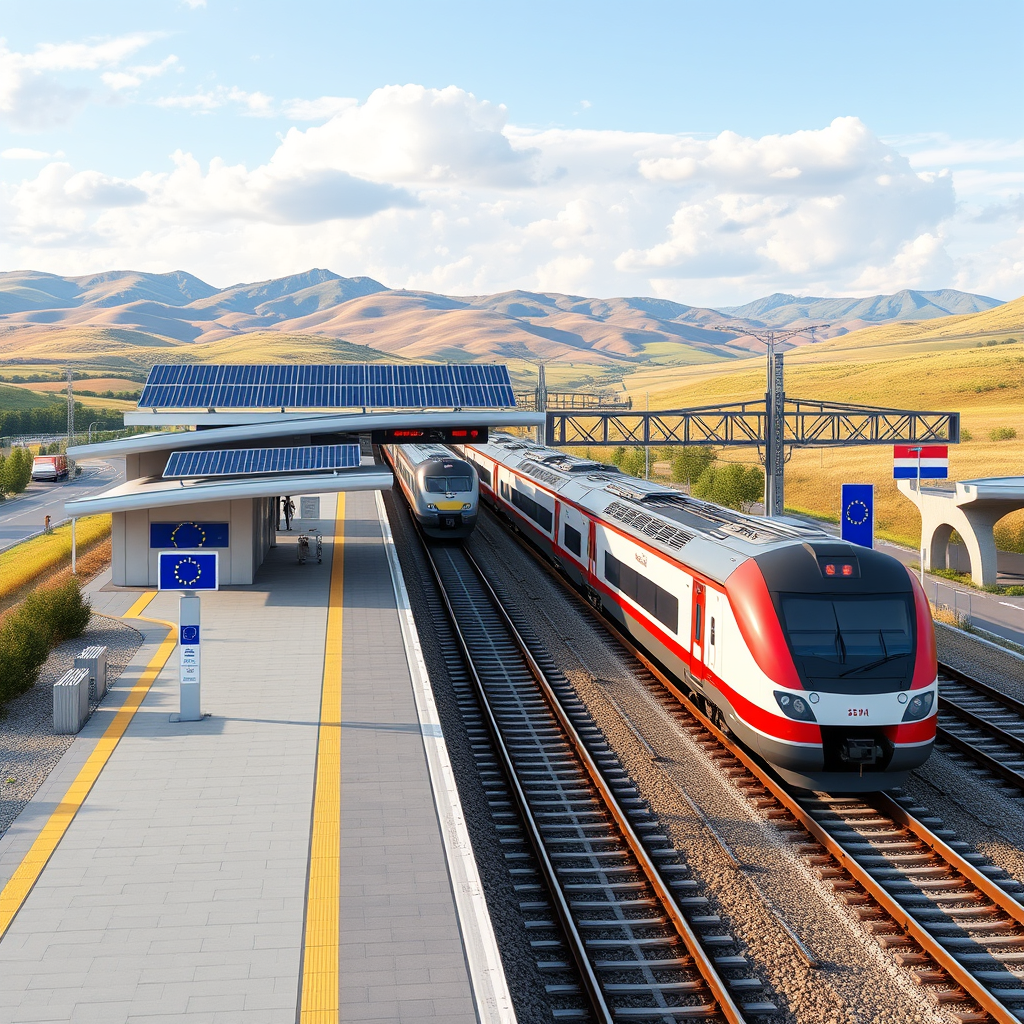
This article examines the significant development of a joint rail border crossing between North Macedonia and Serbia, a project crucial for enhancing regional connectivity within the Western Balkans. This initiative, funded by a €7.5 million investment from the European Bank for Reconstruction and Development (EBRD) and the European Union (EU), represents a pivotal step towards modernizing the region’s rail infrastructure and facilitating smoother cross-border transport. The project, situated along Corridor X (a key route within the Trans-European Transport Network – TEN-T), aims to improve goods transportation, reduce transit times, and foster economic growth. The undertaking encompasses substantial upgrades to existing railway infrastructure, including the construction of new facilities and the integration of energy-efficient technologies like solar panels. This project serves as a case study illustrating the impact of international collaboration and investment in improving railway infrastructure, promoting economic development, and addressing the energy crisis in a strategically important region.
Corridor X and the TEN-T Network: A Regional Perspective
Corridor X (part of the Trans-European Transport Network – TEN-T) is a vital north-south transport artery traversing several countries in the Western Balkans. Improving its efficiency is critical to boosting regional economic integration. The existing rail infrastructure along Corridor X in this region has historically been characterized by outdated technology, inefficient border crossing procedures, and a lack of interoperability between national railway systems. The North Macedonia-Serbia border crossing project directly addresses these issues. Its location on Corridor X ensures that improvements benefit a wider network of connections, facilitating the movement of goods and people throughout the Balkans. This project aims to enhance cross-border rail transport, reducing delays caused by bureaucratic processes and infrastructure limitations. The upgrade is designed to improve efficiency and capacity, making the route a more competitive option for freight and passenger transportation.
Infrastructure Upgrades and Technological Integration
The €7.5 million investment is not merely about constructing a new border crossing. It represents a comprehensive modernization effort. This includes upgrades to existing station buildings, the construction of new facilities designed to improve operational efficiency and passenger experience, and the integration of sustainable technologies like solar panels to reduce energy consumption and environmental impact. These improvements aim to improve operational efficiency through the streamlining of customs and immigration procedures. Improved signaling and communication systems will increase throughput and safety. This comprehensive approach demonstrates a commitment to a sustainable and technologically advanced rail system.
Economic and Environmental Impacts
The project’s benefits extend beyond improved infrastructure. By facilitating faster and more efficient freight transport, the upgraded border crossing will contribute significantly to regional economic growth. Reduced transit times mean lower transportation costs for businesses, increasing their competitiveness and fostering trade within the region and beyond. Furthermore, the integration of sustainable technologies, such as solar panels, highlights a commitment to environmentally responsible development. The shift to a more efficient and greener mode of transport addresses both economic and environmental concerns, aligning with the broader goals of sustainable development and reducing reliance on fossil fuels. This represents a win-win situation for both the economic and environmental health of the region.
Conclusions: A Catalyst for Regional Development
The joint rail border crossing between North Macedonia and Serbia, funded by the EBRD and the EU, is more than just an infrastructure project; it is a catalyst for regional development within the Western Balkans. The project’s success hinges on several key factors: the strategic location along Corridor X, maximizing its impact across the TEN-T network; the comprehensive nature of the infrastructure upgrades, addressing both operational efficiency and sustainability; and the collaboration between international organizations, national governments, and private sector stakeholders. The €7.5 million investment showcases the commitment to improving regional connectivity, boosting economic growth, and fostering sustainable transport solutions. The project’s success will be measured not only by the technical improvements but also by its impact on regional trade, economic competitiveness, and environmental sustainability. It represents a model for future infrastructure projects in the Western Balkans, demonstrating the significant potential for international collaboration to drive positive change in the region. This is a testament to the power of strategic investment in improving cross-border transport infrastructure, promoting economic development, and ensuring a more sustainable future for the Western Balkans. The project’s success serves as a blueprint for future infrastructure development projects in the region, underlining the transformative potential of strategic partnerships and sustainable development initiatives. The enhanced connectivity will facilitate regional trade, stimulate economic growth, and contribute to overall regional stability and prosperity.
RELATED POSTS

CPKC and CN oppose the $85 billion **UP Norfolk Southern...

October 18, 2024 10:27 am
These agreements highlight CAF’s commitment to providing sustainable and efficient...

March 9, 2023 11:32 am
This article delves into the significant role of Acciona, a...
September 28, 2021 1:45 pm
The West Midlands region in the UK is poised for...
December 2, 2022 3:00 pm
The Canadian railway landscape is undergoing a significant transformation driven...
February 13, 2022 2:25 am
This article explores the significant milestone achieved by the MTR...