
METRONET: Rail Innovation & Sustainable Transport Guide
Western Australia’s METRONET Morley-Ellenbrook Line wins top architecture awards, highlighting sustainable design and public impact in railway sector.
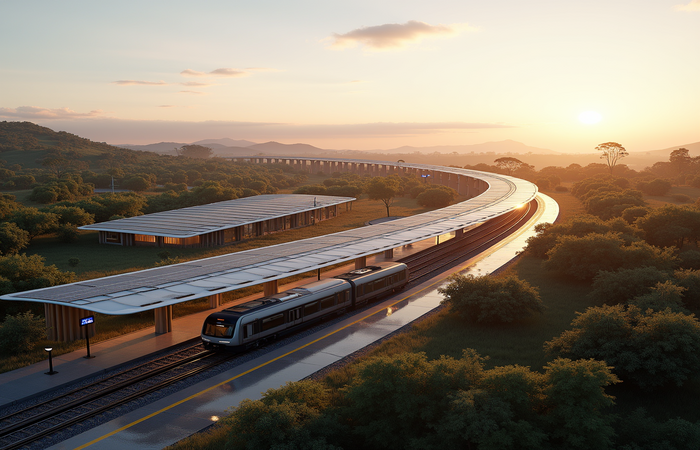
METRONET Morley-Ellenbrook Line Wins Top Architectural Honors in Western Australia
The METRONET Morley-Ellenbrook Line project has been recognized as a landmark achievement in public transport and architectural design, securing a clean sweep at the prestigious Australian Institute of Architects Western Australian Architecture Awards. The award ceremony, held recently, saw the project take home a remarkable four accolades, including the state’s highest architectural honor, the George Temple Poole Award. This recognition highlights the project’s significant impact on the community and its innovative approach to sustainable design. The METRONET initiative (Who) was awarded the George Temple Poole Award and multiple other awards (What) at the Australian Institute of Architects Western Australian Architecture Awards (Where), held recently (When). The project’s triumph underscores its commitment to excellence in design, sustainability, and public infrastructure, setting a new benchmark for future government projects (Why). The success stems from a collaborative effort between Woods Bagot, Taylor Robinson Chaney Broderick (TRCB), TCL, and UDLA, delivering five new stations and precincts along the 21-kilometer line (How). This article will delve into the key aspects that led to this remarkable achievement, exploring the innovative design and construction techniques that have made the Morley-Ellenbrook Line a standout project.
A New Standard in Sustainable Design
The METRONET Morley-Ellenbrook Line not only received the George Temple Poole Award but was also lauded for its commitment to sustainability, taking home the Wallace Greenham Award for Sustainable Architecture. This recognition reflects a comprehensive approach to environmentally responsible design, construction, and operation. The project incorporated numerous sustainable practices throughout its lifecycle. The project team focused on incorporating sustainable materials, energy-efficient technologies, and green infrastructure. The careful consideration of lifecycle costs, environmental impact assessments, and community engagement throughout the planning phases of the projects led to enhanced sustainability outcomes, which ultimately earned the award.
Architectural Excellence and Public Impact
The project’s success goes beyond its sustainable features, as it also earned the Colorbond Award for Steel Architecture and the Public Architecture Award, demonstrating an outstanding contribution to the social and public infrastructure of Perth’s rapidly growing areas. The stations were designed with an emphasis on the end-user experience, creating comfortable, accessible, and aesthetically pleasing environments. The design incorporates a strong emphasis on natural light, ventilation, and the incorporation of local materials, which helped create a sense of place and community identity. The architects utilized design principles to improve passenger flow, ensuring ease of navigation and minimizing congestion within the stations. These elements exemplify the project’s dedication to creating accessible and inclusive spaces for all users. This focus on passenger experience, combined with its design excellence, contributed to its recognition as a top public infrastructure project.
Detailed Design and Construction
The Morley-Ellenbrook Line, spanning 21 kilometers, involved the construction of five new stations and precincts located at Morley, Noranda, Ballajura, Whiteman Park, and Ellenbrook. The project, led by a collaborative team comprising Woods Bagot, Taylor Robinson Chaney Broderick (TRCB), TCL, and UDLA, represents a significant advancement in public transport infrastructure. TRCB, known for their innovative approach to design, worked closely with the project team to ensure that each station seamlessly integrated with the surrounding landscape, providing convenient access for residents. The project team integrated modern construction techniques and management practices, enhancing efficiency and reducing waste. The successful implementation of these new stations and associated infrastructure demonstrate the capabilities in the project.
Conclusion
The METRONET Morley-Ellenbrook Line’s resounding success at the Australian Institute of Architects Western Australian Architecture Awards highlights its significance. The project’s achievements underscore the importance of prioritizing both environmental sustainability and the user experience in large-scale infrastructure projects. The integration of innovative architectural designs, efficient construction techniques, and a commitment to creating inclusive public spaces are key to its widespread success. The project’s impact reaches far beyond aesthetic improvements. It exemplifies the potential of public transport to shape urban environments by enhancing connectivity and promoting sustainable practices. This project provides a model for other railway projects, encouraging them to pursue excellence in design and construction. With increasing urbanization and the need for efficient and sustainable transport systems, the lessons learned from the Morley-Ellenbrook Line are invaluable. The project represents a significant step towards building more sustainable and liveable cities, and sets a high benchmark for future transportation projects worldwide.
Company Summary (Woods Bagot)
Woods Bagot is an international design and consulting firm operating in the architecture, interior design, and urban design sectors. They are known for designing projects that are environmentally sustainable and tailored to the local context. They have an extensive portfolio of transport projects across the globe, from rail stations to airport terminals, demonstrating their expertise in creating public transport infrastructure. Their involvement in the Morley-Ellenbrook Line underscores their commitment to delivering innovative and community-focused architectural solutions within the rail sector.
RELATED POSTS

August 21, 2022 1:03 am
This article delves into the significant expansion of Brightline, a...

A high-speed rail project connecting the Indian state capital of...
July 2, 2023 11:24 pm
The global railway infrastructure sector is experiencing a period of...

August 14, 2025 10:33 am
Railway safety prioritized: Fatigue risk management systems (FRMS) crucial...
July 20, 2022 5:35 pm
Honolulu's new high-capacity rail transit system is alleviating traffic congestion,...

July 29, 2025 2:33 am
BNSF launches new intermodal service between California & Salt Lake...