
Denmark’s Battery Trains: Rail Innovation and Sustainable Transport
Denmark’s first battery-powered passenger trains debut on Midtjyske Jernbaner’s Vemb–Lemvig–Thyborøn route. The Siemens Mireo Plus B trains, part of a broader sustainability push, mark a green railway transition.
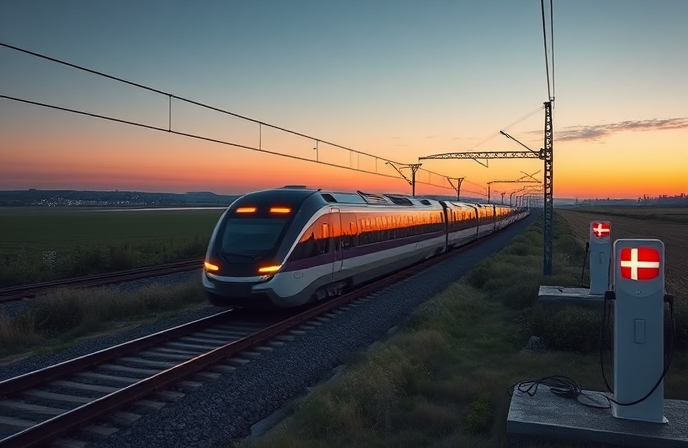
Denmark Debuts Its First Battery-Powered Passenger Trains
Midtjyske Jernbaner (MJ), a Danish regional railway operator, has officially launched Denmark’s first battery-powered passenger train into revenue service. This marks a significant milestone in the country’s commitment to sustainable transportation. The debut of the Mireo Plus B train on the Vemb–Lemvig–Thyborøn route represents a shift towards a greener railway system, following approval from Trafikstyrelsen, the Danish Civil Aviation and Railway Authority. The introduction comes as part of a broader initiative to replace the aging diesel fleet with a modern, environmentally friendly alternative. This article will delve into the details of the new battery train technology, the infrastructure upgrades supporting its operation, and the future implications for the Danish railway network. The key questions answered: Who (Midtjyske Jernbaner), What (battery trains), When (Now), Where (Vemb–Lemvig–Thyborøn route, with future expansion), Why (environmental sustainability), and How (phased rollout with infrastructure upgrades).
Rolling Out the Mireo Plus B
The initial deployment sees the phased integration of Siemens Mobility’s Mireo Plus B battery electric multiple units (EMUs). MJ has contracted for seven two-car trains, representing a crucial investment in sustainable passenger transport. Each Mireo Plus B EMU boasts a capacity of 120 seated passengers and can achieve speeds up to 140 km/h. A significant advantage is the train’s all-electric range of approximately 80 kilometers, making it ideal for the non-electrified lines characteristic of the initial routes. The phased introduction allows MJ to seamlessly incorporate the trains while also adjusting service schedules and training staff on the novel technology. Initial services on the Lemvig Line are the first to feature these trains, with plans to extend operations to the Holstebro–Skjern route as infrastructure improvements are completed. The gradual transition ensures minimal disruption while delivering the benefits of modern rolling stock, including enhanced passenger comfort and improved accessibility with flexible spaces for bicycles and prams.
Charging Infrastructure: The Foundation of Battery Train Operations
The successful operation of battery trains hinges on a robust and reliable charging infrastructure. MJ, with support from Banedanmark, the Danish infrastructure manager, is actively building the necessary facilities. Currently, the primary charging is conducted overnight at Vemb Station using a “granny charger” that supplies 1,000 volts. While a temporary solution, this approach has enabled the introduction of the initial trains. The critical step is the construction of full-scale charging stations at Lemvig, Holstebro, and Skjern stations, expected to be operational by autumn. These stations will utilize 25,000-volt power to provide faster and more efficient charging cycles, ensuring the battery trains can maintain regular service schedules. Banedanmark’s simultaneous upgrade of the 67-km Skjern–Holstebro line is also vital for enabling the extended operations of the battery-powered fleet across the network.
Operational Advantages and Passenger Experience
Beyond the environmental benefits, the Mireo Plus B trains offer significant advantages to both the operator and the passenger. The trains are designed to provide an improved passenger experience, delivering a quieter and smoother ride compared to diesel counterparts. This also leads to more comfortable travel for passengers. The introduction of larger, flexible spaces for bicycles and prams further enhances the usability of the trains for all travelers. MJ also expects reduced operational costs in the long run thanks to lower maintenance needs and the elimination of fuel costs. Furthermore, the modern features of the Mireo Plus B trains, combined with the commitment to sustainable technology, position MJ as a leader in the rail industry.
Conclusion
The launch of Denmark’s first battery-powered passenger trains by Midtjyske Jernbaner is a landmark achievement, demonstrating a clear commitment to sustainable transportation and setting a precedent for other regional operators. The transition to battery-electric EMUs, facilitated by investments in charging infrastructure and rolling stock, addresses growing environmental concerns while enhancing the overall passenger experience. The successful implementation of the Mireo Plus B trains has industry-wide implications, underscoring the feasibility of transitioning away from diesel fleets in non-electrified areas. This rollout highlights the importance of collaborative efforts, between operators, infrastructure managers, and technology providers, and provides a strong foundation for future expansion. This pilot project also illustrates the practical potential of battery technology within the rail transport sector, offering a viable alternative to diesel for many regional rail networks. The anticipated improvements in passenger comfort, accessibility, and operational efficiency signal a positive evolution in the railway landscape, with potential for further exploration of battery train technology and application across the broader rail network.
Company Summary:
Midtjyske Jernbaner (MJ): MJ is a regional railway operator in Denmark, focused on passenger transport within the Midtjylland region. MJ’s commitment to modernizing its fleet and embracing sustainable solutions positions it as a leader in Denmark’s efforts to transition to a more environmentally friendly railway system.
Banedanmark: Banedanmark is the Danish national infrastructure manager responsible for the operation, maintenance, and development of the Danish railway network. Their support and upgrades to infrastructure are a critical enabler for the battery train project.
RELATED POSTS

May 14, 2017 6:10 pm
Here's a voiceover-friendly excerpt for railway professionals:"Network Rail's £29.8 million...

September 13, 2010 12:08 pm
Bombardier Transportation, in consortium with Site, has won a contract...

August 6, 2025 10:33 pm
Chiltern Railways to introduce 13 HVO-powered trains in 2026, boosting...

With the Deutsche Bahn (DB) timetable change on December 9,...
October 7, 2018 4:46 pm
Network Rail's water fountain initiative slashed plastic waste at major...

June 12, 2025 6:00 am
STB aims to streamline railway processes, boost efficiency via stakeholder...