
BEML Wins Mumbai Metro Contract: 378 Railcars, $427M Deal
BEML’s massive Mumbai Metro railcar contract: 378 cutting-edge cars, showcasing India’s railway prowess. Discover how this project is transforming urban transit!
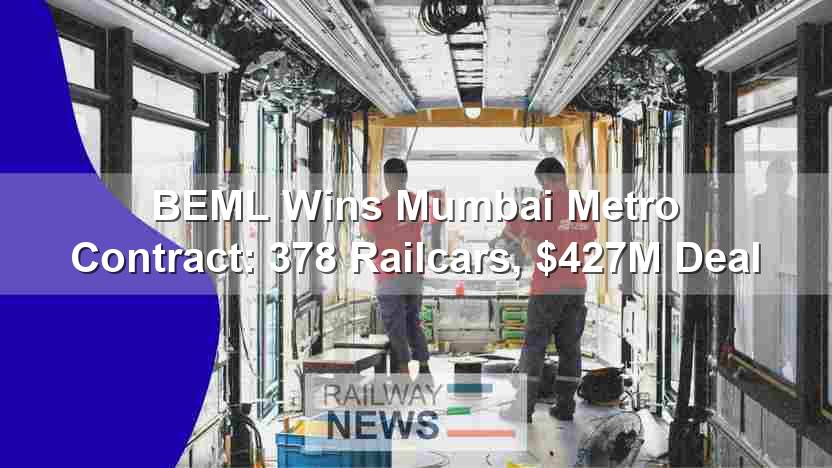
This article examines the significant contract awarded to Bharat Earth Movers Limited (BEML), an Indian public sector undertaking, for the supply of 378 metro railcars for the Mumbai Metro. The Rs 30.15 billion ($427.33 million USD) contract underscores the substantial investment in expanding and modernizing India’s urban rail infrastructure. We will delve into the details of this project, analyzing BEML’s role, the technological specifications of the railcars, the broader context of Mumbai’s metro expansion, and the implications of this contract for the Indian railway industry and its global partnerships. The success of this project is vital not only for Mumbai’s burgeoning transportation needs but also for showcasing India’s growing capabilities in manufacturing advanced rolling stock.
BEML’s Winning Bid and Strategic Partnerships
BEML’s selection as the lowest bidder among seven competing companies, including prominent international players like Alstom, Bombardier, CAF, CRRC, Titagarh, and Hyundai Rotem, highlights the company’s competitive pricing and its ability to meet stringent technical requirements. The competitive bidding process ensures cost-effectiveness and optimal value for the Mumbai Metro project. This win represents a significant achievement for BEML, solidifying its position as a key player in the Indian railway industry. Significantly, this contract marks a departure from BEML’s previous collaborations with foreign rolling stock manufacturers; this time, BEML partners with Hitachi for design, showcasing a shift towards leveraging indigenous design expertise and international technological collaboration.
Technological Specifications and Passenger Capacity
The contract entails the delivery of 378 metro cars, assembled into 63 six-car trains, designed for operation on Mumbai Metro lines 2A, 2B, and 7. These driverless trains, manufactured at BEML’s Bengaluru facility, will utilize 25kV AC traction systems, a standard choice for efficient and high-capacity metro systems. Each stainless steel car features four doors per side, enhancing passenger flow and reducing boarding/alighting times. Key features include regenerative braking systems – which improve energy efficiency by recovering kinetic energy during braking – CCTV surveillance for passenger safety, and a fully air-conditioned environment. With a capacity of up to 300 passengers per coach, these trains are designed to accommodate the high passenger volumes anticipated on these lines. The focus on passenger comfort and safety, alongside technological advancements like driverless operation and regenerative braking demonstrates a commitment to creating a modern and efficient metro system.
Mumbai Metro Expansion and its Significance
The Mumbai Metro expansion, encompassing lines 2A, 2B, and 7, aims to alleviate the city’s chronic traffic congestion and improve accessibility for its vast population. Line 2A will connect Dahisar to DN Nagar, line 2B will link DN Nagar to Mankhurd via Bandra, and line 7 will run from Dahisar to Andheri (East). This significant infrastructure development project is supported by the Asian Development Bank (ADB), reflecting international confidence in India’s commitment to sustainable urban development. The BEML contract plays a pivotal role in the timely completion of this ambitious expansion plan, contributing to the improvement of Mumbai’s public transportation system.
Project Timeline and Broader Implications
The project timeline spans from October 2020 to December 2022, highlighting the ambitious nature of the undertaking. The successful execution of this project will demonstrate BEML’s manufacturing capacity, project management skills, and its ability to deliver complex rolling stock projects on time and within budget. This project further strengthens India’s domestic manufacturing capabilities in the railway sector, reducing reliance on foreign suppliers and boosting the “Make in India” initiative. The successful collaboration with Hitachi also highlights the potential for further technological transfer and strengthening of strategic partnerships, enhancing the overall competitiveness of the Indian railway industry on the global stage. The timely completion of this project is vital for Mumbai’s urban development, and it holds significant implications for the future of urban rail transit development in India and the broader South Asian region.
Conclusions
The BEML contract for the supply of 378 metro railcars to Mumbai represents a substantial investment in India’s urban infrastructure and a significant win for BEML. The contract’s success hinges on several factors, including effective project management, efficient manufacturing processes, and adherence to the stringent technical specifications. The technological features of the railcars, including driverless operation, regenerative braking, and advanced passenger amenities, demonstrate a commitment to creating a modern and efficient metro system. The project’s wider significance lies in its contribution to Mumbai’s much-needed expansion of its metro network, alleviating traffic congestion and enhancing the city’s public transportation system. Additionally, this contract underscores India’s growing capabilities in manufacturing advanced rolling stock and its strategic partnerships with global technology leaders. The successful completion of this project will be a crucial step toward strengthening India’s position in the global railway industry, fostering domestic manufacturing, and enhancing the quality of urban life in major Indian cities.

Railway infrastructure, rolling stock and transport technologies specialist focused on global rail industry developments, high-speed rail systems, signaling technologies and freight transportation. Covering railway investments, public transport modernization, rail operations and international mobility projects across Europe, Asia and North America.
RELATED POSTS

October 1, 2026 7:09 am
United States regulators confirmed a September 30 deadline for the...

October 8, 2026 1:15 pm
Alstom secured a €1bn contract to build 13 automated trains,...

October 4, 2026 5:14 pm
Alstom secured a CA$4.7 billion order from VIA Rail Canada...

October 1, 2026 12:13 am
Illinois approved $1.5 billion annually for the Northern Illinois Transit...

October 6, 2026 2:14 am
Union Pacific launched export rail shipments with Ferromex to deliver...

October 1, 2026 6:10 am
Amtrak approved a System Expansion Committee on July 30 to...