
Alexandria Tram Upgrade: Revitalizing a Historic Rail Network
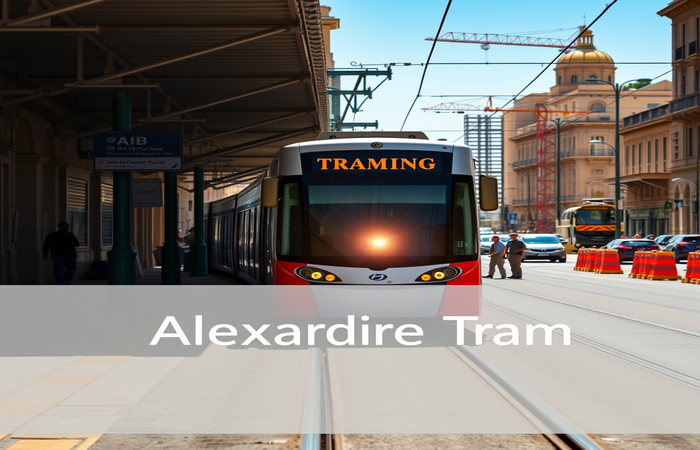
Egypt’s National Authority for Tunnels (NAT) has awarded a contract to a consortium of Hassan Allam Construction and Arab Contractors for the comprehensive rehabilitation of the Alexandria Raml Tram. This project, a significant step in Egypt’s green mobility strategy, aims to modernize the historic tramway, improving efficiency, capacity, and passenger experience. The initiative includes track reconstruction, station upgrades, and the introduction of new rolling stock, all contributing to a more sustainable and accessible urban transport system. This news article will delve into the scope of the project, its objectives, the technical specifications, and the financing behind this crucial infrastructure upgrade, providing a comprehensive overview of the transformation of Alexandria’s iconic tram network.
Alexandria Raml Tram Rehabilitation: A Modernization of a Historic Rail Network
Alexandria, Egypt – October 26, 2024 – The Alexandria Raml Tram, the oldest tramway in Africa and the Middle East, is undergoing a major revitalization. The National Authority for Tunnels (NAT) has contracted a consortium comprising Hassan Allam Construction and Arab Contractors to undertake the comprehensive rehabilitation of this critical urban transport artery. This project underscores the Egyptian government’s commitment to sustainable transport solutions and improving urban mobility within the city.
Project Scope and Technical Specifications
The Alexandria Raml Tram rehabilitation project involves a substantial overhaul of the existing infrastructure. The scope of work includes the complete reconstruction of 24 stations and 13.2 kilometers of tram track. The track infrastructure will be divided into segments: 5.7 kilometers on the surface, 7.3 kilometers of elevated track, and 276 meters underground. The route spans from Victoria station to Raml station, passing through key districts such as San Stefano, Sidi Gaber, and Sporting. The upgraded route will stretch to 14.5 km, including an extension to Mansheya Square, with a total of 25 stations. Furthermore, the project is removing the Sidi Gaber North loop.
The design and supervision of the project are managed by a consortium led by Systra, including Egis, ACE, and Projacs, ensuring adherence to international standards. The existing double-track rail system, which currently operates as two distinct lines, will benefit from the upgrades. Once completed, the project aims to reduce travel time from 60 minutes to 35 minutes, increase operational speed from 11 km/h to 21 km/h, and cut headway from 9 minutes to 3 minutes. These improvements will lead to a significant enhancement of the tram system’s operational efficiency and passenger convenience.
Rolling Stock and Operational Enhancements
A key element of the rehabilitation is the introduction of new, modern tramcars. In 2024, NAT signed a contract with Hyundai Rotem for the manufacture and supply of 30 new trams. These trams will incorporate cutting-edge technology and design to provide a superior passenger experience. This shift to modern rolling stock is a crucial component of the overall strategy to improve the tramway’s performance and attractiveness. The implementation of new trams is expected to increase the total passenger capacity from 4,700 to 13,800 passengers per hour in each direction, significantly easing congestion during peak hours and making public transportation more accessible.
Strategic Alignment and Funding
The Alexandria Raml Tram rehabilitation project is a core part of the Egyptian Transport Ministry’s green mobility strategy. The project aims to reduce reliance on private vehicles, cut down on emissions, and offer a more sustainable transportation option for Alexandria’s residents. By integrating modern infrastructure and expanding the network, the project seeks to enhance urban mobility and reduce congestion. The European Investment Bank (EIB) and Agence Française de Développement (AFD) are providing a loan of USD 521 million to finance the project, with an additional USD 94 million coming from the Egyptian Ministry of Investment and International Cooperation, ensuring the project’s financial backing and sustainability.
Conclusion: Transforming Alexandria’s Urban Mobility
The Alexandria Raml Tram rehabilitation project represents a major investment in the future of the city’s public transport network. By modernizing the infrastructure, introducing new rolling stock, and enhancing operational efficiency, the project will dramatically improve the passenger experience and reduce the environmental impact of urban transport. The project is expected to transform the existing 160-year-old tramway into a modern, efficient, and sustainable transportation system. The upgrade will significantly reduce travel times, increase capacity, and offer increased comfort and accessibility for passengers. This initiative aligns perfectly with Egypt’s green mobility strategy, fostering a shift towards sustainable and efficient urban transportation. The successful completion of this project, coupled with the ongoing Alexandria Metro project, signals a new era of improved public transport in Alexandria.
Summary of Companies Involved:
- National Authority for Tunnels (NAT): The governmental body overseeing the project, responsible for awarding contracts and ensuring project execution.
- Hassan Allam Construction and Arab Contractors (Consortium): The main contractors for the infrastructure rehabilitation, responsible for track and station reconstruction.
- Systra, Egis, ACE, Projacs (Consortium): Responsible for the design and supervision of the tram line rehabilitation.
- Hyundai Rotem: The manufacturer and supplier of the new, modern tramcars.
- European Investment Bank (EIB) and Agence Française de Développement (AFD): Key funders providing loans for the project.
RELATED POSTS

July 27, 2017 11:53 am
Unlock the secrets of Long Island Rail Road's upgrade—optimizing rail...
December 8, 2017 11:27 am
Optimize your rail network for tomorrow—the Green Line Light Rail...
February 22, 2018 3:30 am
Mombasa-Nairobi rail electrification: Mastering engineering challenges for efficient, cost-effective...
August 2, 2020 6:55 pm
This article examines Deutsche Bahn’s (DB) significant investment in expanding...
December 21, 2021 11:24 am
This article explores the transformative partnership between Canadian National Railway...
March 17, 2021 4:48 am
The Melbourne Metro Tunnel Project: A Case Study in Accelerated...