
Blackheath Tunnel: UK Rail Saved by Geopolymer Tech
Blackheath Tunnel gets a 21st-century upgrade! Geopolymer technology stabilized the 175-year-old structure in just five weeks, eliminating over 1,000 minutes of delays.
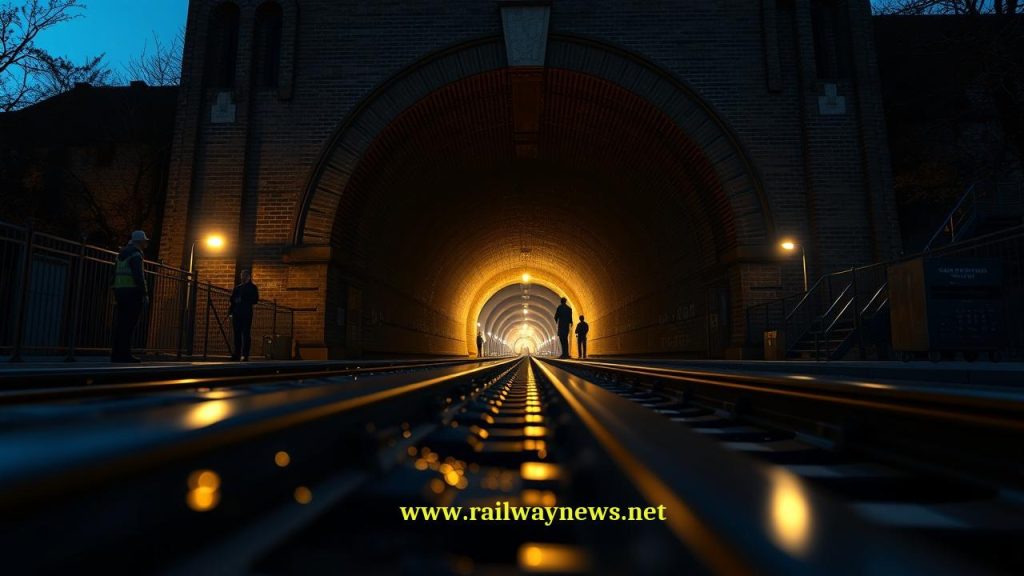
Blackheath Tunnel Secured for Future Generations Using Advanced Geopolymer Technology
LONDON, UK – An intensive five-week engineering project has successfully stabilised the 175-year-old Blackheath Tunnel, utilising innovative geopolymer injection technology to halt decades of water ingress and eliminate a source of over 1,000 minutes of annual passenger delays. The works, completed on July 25 within a scheduled ten-week blockade, showcase a modern, rapid-deployment solution for preserving critical Victorian-era railway infrastructure.
| Category | Details |
|---|---|
| Project Location | Blackheath Tunnel, London, UK |
| Asset Age | 175 years (Opened 1849) |
| Primary Contractor | VolkerFitzpatrick |
| Specialist Technology | Geobear Geopolymer Injection (55 tonnes used) |
| Project Duration | 5 weeks (within a 10-week line closure) |
| Key Outcome | Resolved structural degradation and water ingress, ending 1,000+ annual delay minutes for Southeastern services. |
The mile-long Blackheath Tunnel, a vital artery for Southeastern passenger services into London, has been secured for decades to come following a complex rehabilitation project led by tier-one contractor VolkerFitzpatrick. Opened in 1849, the historic structure had suffered from progressive degradation of its brick lining. This led to persistent water ingress, which washed out fine sediments from behind the brickwork, damaged the tunnel face and overhead lines, and caused rail corrosion from pooling water on the tracks, directly contributing to significant service disruptions.
Confronted with the challenge of repairing the tunnel within a confined environment and a tight schedule, the project team opted for a cutting-edge solution over traditional methods. Standard concrete lining or cement-based grouting were dismissed due to their high water requirements and the associated logistical complexities. Instead, VolkerFitzpatrick engaged specialist firm Geobear to deploy its geopolymer resin injection technology. This material requires no added water, is five times lighter than traditional grouts, and can be deployed twice as fast, making it ideal for the time-sensitive blockade. The preparation, managed by civil engineering contractor Kilnbridge, was extensive, involving the drilling of 1,000 core holes and the installation of 13 km of injection pipework across 900 metres of the tunnel lining.
The injection phase was executed with precision by engineers working in coordinated day and night shifts, successfully injecting 55 tonnes of geopolymer within the critical five-week deadline. This rapid completion was essential to allow for subsequent track and systems work to be finalised before the ten-week line closure concluded. The project also included the strategic diversion of water into controlled drainage channels via newly installed weep holes. “This was a large, complex project that required multiple companies working together to protect the railway,” commented Paul Garthwaite, Geobear Infrastructure Director. “VolkerFitzpatrick did an excellent job coordinating the delivery, ensuring the tunnel is safeguarded for decades to come.”
Key Takeaways
- Innovative Technology Adoption: The use of water-free, lightweight geopolymer resin proved to be a faster and more efficient alternative to traditional methods for repairing heritage tunnels, minimising environmental impact.
- Significant Performance Improvement: The works successfully addressed the root causes of over 1,000 minutes of passenger delays recorded in the last year, enhancing service reliability on a key commuter route.
- Effective Project Collaboration: The project’s success within a highly compressed five-week schedule highlights the effective coordination between contractors VolkerFitzpatrick, Geobear, and Kilnbridge.
Editor’s Analysis
The Blackheath Tunnel project stands as a significant case study for the global rail industry, demonstrating a successful pivot from brute-force civil works to advanced material science for infrastructure renewal. As railway networks worldwide grapple with the maintenance burden of aging 19th and early 20th-century assets, the geopolymer solution offers a compelling blueprint for extending operational life with minimal disruption. This approach is not merely a repair; it is a strategic upgrade that is faster, less resource-intensive, and more sustainable. For network operators, this translates into reduced possession times, lower project costs, and improved passenger satisfaction—a critical trifecta for maintaining the competitiveness of rail transport in the modern era.
Frequently Asked Questions
- Why was the Blackheath Tunnel repair necessary?
- The 175-year-old tunnel’s brick lining had degraded over decades, causing severe water ingress. This damaged the structure, the track, and overhead lines, leading to more than 1,000 minutes of delays for Southeastern passengers in the past year.
- What is geopolymer technology and why was it chosen for this project?
- Geopolymer is a resin-based material used for ground engineering and structural stabilisation. It was chosen because, unlike traditional concrete or grout, it requires no added water, is five times lighter, and can be deployed twice as fast, making it highly suitable for the time-critical and logistically challenging tunnel environment.
- Who were the main companies involved in the Blackheath Tunnel project?
- The project was a collaborative effort. VolkerFitzpatrick was the tier-one contractor managing the overall project, Geobear provided the specialist geopolymer injection technology and execution, and Kilnbridge performed the critical preparatory civil engineering works, including drilling and pipe installation.
RELATED POSTS

January 3, 2020 5:31 pm
This article examines the operational challenges encountered by the Sydney...
August 11, 2025 4:33 pm
New soybean processing plant in Nebraska, strategically located near multiple...
August 18, 2025 8:42 pm
Greenbrier completes $8.9M acquisition of GTO Transportes S.A., solidifying railcar...

June 29, 2023 6:44 pm
Rail manufacturing company Wabtec has secured a significant order for...
March 20, 2017 12:05 pm
Dubai's RTA completed the ambitious Dubai Metro Route 2020 project,...

October 24, 2016 6:40 pm
The Hong Kong metro Kwun Tong Line extension entered into...