
Mt. Rainier Railroad Seeks Freight Line: Tourism to Transport Shift
Mt. Rainier Railroad seeks to acquire a 34-mile freight line, transitioning from tourism to common-carrier operations amidst Washington’s changing industrial landscape.
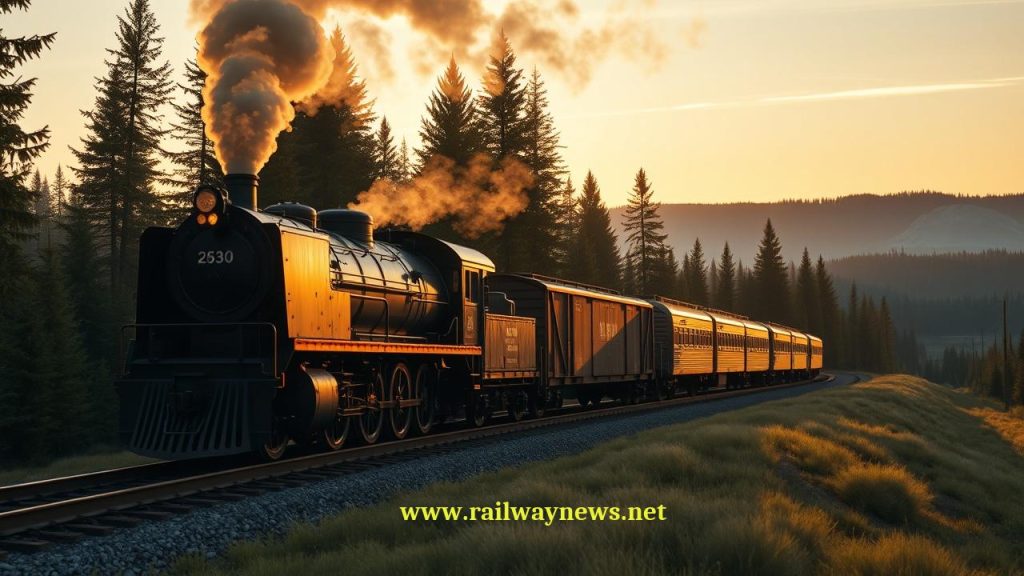
EATONVILLE, WA – Mt. Rainier Railroad LLC (MRSR), operator of a popular tourist excursion line, has filed an application with the Surface Transportation Board (STB) to acquire and operate a 34-mile freight line in Washington State. The strategic move to assume common-carrier status from Tacoma Rail comes as the region’s industrial freight landscape is set to be reshaped by the imminent conversion of the state’s last coal-fired power plant.
| Category | Details |
|---|---|
| Applicant | Mt. Rainier Railroad LLC (MRSR) |
| Parent Organization | Western Forest Industries Museum (WFIM) |
| Transaction Type | Line Acquisition & Assumption of Common-Carrier Operations |
| Line Segment | Eatonville to Morton, Washington (Tacoma Rail’s Mountain Division) |
| Route Length | 34 Miles |
| Regulatory Body | Surface Transportation Board (STB) |
Main Body:
In a significant operational pivot, Mt. Rainier Railroad LLC has formally petitioned the federal Surface Transportation Board for authority to become the new common-carrier service provider on a key rail corridor in western Washington. According to the filing, MRSR, a subsidiary of the Western Forest Industries Museum (WFIM), has entered into an agreement to acquire the 34-mile line connecting Eatonville and Morton from the city and Tacoma Rail. This transition would see MRSR, currently a noncarrier entity known for its Mt. Rainier Scenic Railroad tourist trains, take on the responsibilities of a public freight hauler, replacing Tacoma Rail on the route.
The proposed change in operations is occurring within a dynamic regional economic environment. A critical factor influencing future freight demand in the Pacific Northwest is the scheduled conversion of the state’s last coal-fired power plant in Centralia. The facility is set to cease coal operations by the end of 2025 and, following a $600 million capital expenditure, will reopen as a natural gas-fired plant. The cessation of coal shipments—a staple commodity for rail freight—will fundamentally alter logistics needs in the area, potentially creating an opportunity for a nimble new operator like MRSR to capture alternative freight traffic such as lumber, agricultural products, or other industrial goods.
This local short-line transaction is being reviewed by the STB at a time when the board is also evaluating industry-shaping mega-mergers, such as the proposed $85 billion combination of Union Pacific and Norfolk Southern, which has drawn opposition from major rail unions over safety and cost concerns. The STB’s approval of the Canadian Pacific and Kansas City Southern merger set a precedent for new consolidations, and its docket reflects the full spectrum of the industry’s evolution—from Class I giants reshaping the continental network to smaller entities like MRSR adapting to local market shifts. MRSR’s application to transform from a tourist attraction into a vital commercial freight link underscores the entrepreneurial strategies required for short-line railroads to thrive.
Key Takeaways
- Mt. Rainier Railroad LLC is seeking to transition from a tourist-only operator to a common-carrier freight railroad.
- The plan involves acquiring a 34-mile line between Eatonville and Morton, Washington, from Tacoma Rail.
- This operational shift coincides with major changes in regional freight demand, highlighted by the upcoming closure of Washington’s last coal-burning power plant.
Editor’s Analysis
This move by Mt. Rainier Railroad is a textbook example of the strategic adaptation necessary for the survival and growth of short-line railroads in the 21st century. As legacy industries that once formed the bedrock of rail freight, such as coal, continue to decline due to energy transitions, smaller operators cannot rely on historical business models. By stepping into the common-carrier role, MRSR is betting on the future economic vitality of the corridor beyond a single commodity. This pivot from tourism to diversified freight demonstrates a proactive effort to secure a sustainable commercial future by serving the evolving needs of local industries, a microcosm of the larger challenges and opportunities facing the entire global rail freight sector.
Frequently Asked Questions
- Who is Mt. Rainier Railroad LLC?
- Mt. Rainier Railroad LLC (MRSR) is a subsidiary of the Western Forest Industries Museum. It has historically operated the Mt. Rainier Scenic Railroad, a popular tourist and excursion train service in Washington State.
- What is a common-carrier railroad?
- A common-carrier railroad is a transportation company that is required by law to transport goods for any person or company without discrimination, provided space is available and the published tariff (rate) is paid. This is distinct from a private carrier or a dedicated tourist line.
- What rail line is involved in this application?
- The application concerns a 34-route-mile rail line connecting the towns of Eatonville and Morton in Washington. The line is currently part of Tacoma Rail’s Mountain Division.

Railway infrastructure, rolling stock and transport technologies specialist focused on global rail industry developments, high-speed rail systems, signaling technologies and freight transportation. Covering railway investments, public transport modernization, rail operations and international mobility projects across Europe, Asia and North America.
RELATED POSTS

October 1, 2026 7:09 am
United States regulators confirmed a September 30 deadline for the...

October 4, 2026 5:14 pm
Alstom secured a CA$4.7 billion order from VIA Rail Canada...

October 1, 2026 12:13 am
Illinois approved $1.5 billion annually for the Northern Illinois Transit...

October 6, 2026 2:14 am
Union Pacific launched export rail shipments with Ferromex to deliver...

October 1, 2026 6:10 am
Amtrak approved a System Expansion Committee on July 30 to...

October 5, 2026 6:12 pm
AECOM and Jacobs secured a contract in September 2026 to...