
Portugal Rail Services Face Major Disruptions Amid December 11 Strike
Portugal braces for widespread transport chaos on December 11 due to a general strike. Rail services, including CP trains, face significant disruptions impacting passengers.
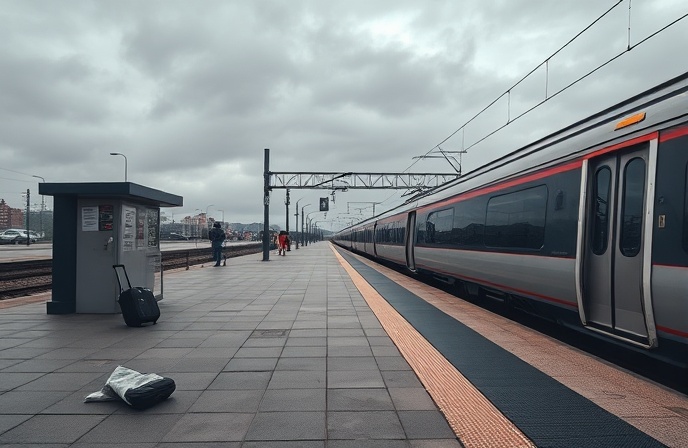
Portugal braced for widespread transport chaos on December 11 as a general strike, the first since 2013, is set to cripple public and air travel. Organized by CGTP and UGT, the protest targets the government’s proposed labor law reform.
| Key Entity | Critical Detail |
|---|---|
| Portugal | General Transport Strike |
| Organizers | CGTP and UGT |
| Date | December 11 |
| Primary Impact Sectors | Rail (CP), Air (TAP Air Portugal), Urban Transport |
| Affected Services | Alfa Pendular, Intercidades, InterRegional, Regional trains; Dozens of TAP flights; Essential SATA/Azores Airlines connections. |
| Underlying Cause | Opposition to labor law reforms expanding mandatory strike services, extending fixed-term contracts, and facilitating layoffs. |
The rail operator CP – Comboios de Portugal has confirmed “significant disruptions” are expected across all its services, including the high-speed Alfa Pendular and Intercidades long-distance routes, as well as InterRegional and Regional services. The impact is anticipated to extend beyond December 11, with potential side effects such as cancellations and delays on both Wednesday, December 10, and Friday, December 12. Passengers holding tickets for affected trains are eligible for full refunds or free exchanges for future journeys within the same service category. These requests can be processed online, via the CP app, or at ticket offices up to 10 days after the strike concludes.
The strike’s reach is not confined to the public sector, significantly impacting air transport. National carrier TAP Air Portugal has already announced the cancellation of numerous flights and will adhere to minimum service requirements mandated by law. According to the SNPVAC union, representing over 5,000 crew members from TAP, easyJet, Ryanair, and Azores Airlines, maintaining normal flight schedules will prove “very difficult.” In the Azores archipelago, SATA and Azores Airlines plan to operate only essential connections, with support from the handling company SPdH.
The core of the unions’ opposition lies in proposed legislative changes that would enlarge the scope of services required during strikes, lengthen the duration of fixed-term employment contracts, and ease the process for redundancies. Leaders from CGTP and UGT have characterized the situation as “very serious,” emphasizing that the strike was called after negotiations with the government failed to yield an agreement. This action occurs within a broader context of industrial unrest across Europe, with Italy and France also experiencing significant transport strikes impacting rail and air networks.
Industry Context
Last June 2025, we published an article about Renfe’s cutting-edge Aranjuez maintenance hub. Click here to read – Future of Rail: Renfe’s Railway Technology Hub, Aranjuez: Essential Guide
This widespread industrial action across Portugal, mirroring similar movements in Italy and France, underscores a growing wave of discontent within the European transport sector. Fueled by persistent inflation, stagnant real incomes, and rising living costs for housing, utilities, and food, transport workers are demanding higher wages and improved working conditions. For industry leaders and stakeholders, this trend signals a critical juncture where operational pressures and staff shortages intersect with escalating labor demands, potentially leading to prolonged disruptions and necessitating strategic re-evaluations of workforce management, compensation structures, and industrial relations across the continent.
RELATED POSTS

November 25, 2020 3:20 pm
Virgin Hyperloop on Sunday successfully tested human travel in its...

March 10, 2019 6:47 am
TfL's commitment to step-free access continues! Four more stations...

August 11, 2025 8:20 pm
North American railroad crossings need safety improvements. Enhanced technology,...
October 9, 2025 5:54 pm
Gemini Trains partners for a new **high-speed rail** fleet! Connecting...
BNSF's $230 million California rail investment boosts capacity and safety,...

August 15, 2007 7:16 am
Leading technology companies, including designers of the Japanese bullet train,...