
ÖBB: EUR 19.7B Rail Investment Fuels Future of Austrian Railway, Trends & Guide
ÖBB invests €19.7B in Austrian rail infrastructure expansion by 2030, boosting sustainable mobility.
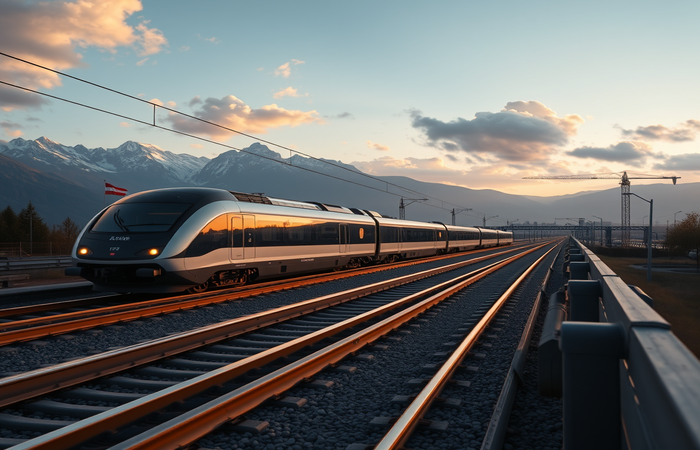
ÖBB Announces Ambitious EUR 19.7 Billion Rail Infrastructure Investment Plan
Austria’s national railway operator, ÖBB, has unveiled a comprehensive investment plan, allocating nearly EUR 19.7 billion for the expansion and modernization of its rail network by 2030. Announced on June 5, 2025, by Federal Minister of Innovation, Mobility, and Infrastructure Peter Hanke and ÖBB CEO Andreas Matthä, this initiative aims to solidify Austria’s position as a leader in sustainable mobility. The plan, which guarantees annual investments of EUR 3.2 billion, represents a significant commitment to the future of rail transport, ensuring the continuity, safety, and enhanced capacity of the country’s rail infrastructure. This article will delve into the key projects outlined in the framework, their impact on regional and national connectivity, and the broader implications for the Austrian economy and the future of rail transport in the region.
Network Expansion and Bottleneck Mitigation
A significant portion of the investment, totaling EUR 1.4 billion, will be channeled towards new and urgent projects designed to alleviate potential bottlenecks within the rail network. These projects address critical pinch points, ensuring smoother and more efficient operations. These improvements include capacity enhancements and the construction of new lines, specifically targeting areas with high traffic density and strategic importance. Key initiatives include the planning of a double-track expansion between Hard-Fußach and Lustenau in the Vorarlberg region. This investment acknowledges the growing need for improved capacity and aims to alleviate the constraints that hinder efficient rail transport. Further developments focus on stations like Dornbirn and Innsbruck’s Westbahnhof in Tyrol, upgrading crucial hubs for passenger flow and intermodal transport.
Prioritizing Maintenance and Safety
Maintaining the integrity and safety of the existing infrastructure is paramount, and the plan allocates a substantial EUR 4.8 billion for vital maintenance activities. This allocation ensures the longevity and reliability of the existing network by covering essential repairs, routine upkeep, and swift fault clearance. These efforts are not merely reactive; they are proactive measures to preserve the quality, stability, and, critically, the safety of the rail network. This significant investment in maintenance underscores ÖBB’s commitment to ensuring that Austria’s rail infrastructure remains a reliable and dependable mode of transport, capable of meeting current and future demands.
Regional Connectivity and Line Upgrades
The framework plan prioritizes projects with substantial impacts on regional connectivity, recognizing the vital role of local rail services. In Southern Austria, the construction of a new double-track line from Graz to Frohnleiten is underway. This initiative will reduce travel times between Bruck an der Mur and Graz, strengthen the Southern Line’s capacity, and facilitate more frequent local services north of Graz. This enhances the link to the Pyhrn-Schober axis at Bruck an der Mur, and branching into routes towards Koper and the Koralm Railway heading to Carinthia. In Upper Austria, the focus is on the “New Innkreis Railway”, featuring plans for a four-track expansion between Wels and Lambach, along with the redevelopment of Wels station, and selectively double-tracked upgrades between Ried im Innkreis and Braunau am Inn. The “Pass Lueg” line upgrade between Golling-Abtenau and Sulzau in the Salzburg region is also receiving construction funding to shorten travel times.
Vienna Metropolitan Area Development and Digitalization
The Vienna metropolitan area will see significant investments, including the extension of the S45 suburban line from Wien Handelskai to Wien Praterkai. This extension is a key element in the creation of the Vienna S-Bahn Ring. This two-line ring, consisting of the S45 and S80, will integrate at interchange stations at Wien Hütteldorf and Wien Praterkai, complemented by new stops at Reichsbrücke and Donaumarina. Furthermore, digitalization efforts are a crucial component of the plan, with investments aimed at modernizing train operations and control systems. The strategic allocation of funds underscores ÖBB’s forward-thinking approach to rail operations.
Conclusion
ÖBB’s EUR 19.7 billion investment plan by 2030 signifies a pivotal moment for Austria’s rail network. The plan’s focus on network expansion, crucial maintenance, regional connectivity, and digitalization positions Austria at the forefront of sustainable and efficient rail transport. The commitment to annual investments of EUR 3.2 billion highlights ÖBB’s long-term vision for rail infrastructure, while simultaneously balancing fiscal responsibility. The focus on critical projects will eliminate current and future bottlenecks, while improvements to digitalization ensures a modern, passenger-centric travel experience. Moreover, these actions aim to enhance the resilience of the network against unforeseen events and advance the modernization of train operations and control systems. This strategic investment not only fortifies Austria’s economic standing but also contributes to the global shift towards environmentally friendly mobility solutions, ensuring the railway’s pivotal role for years to come. Minister Hanke’s reaffirmation that every new train will enhance passenger comfort, further bolsters this positive outlook.
Company Summary:
ÖBB (Österreichische Bundesbahnen) is Austria’s state-owned railway company, responsible for passenger and freight rail transport within Austria. ÖBB operates a vast network of tracks and stations, serving as a critical component of Austria’s public transport system. Beyond providing passenger services, ÖBB also plays a crucial role in freight logistics, connecting Austria to international markets through efficient rail freight transport. Its commitment to modernizing and expanding its network is essential for maintaining Austria’s competitiveness and fulfilling its role as a transportation hub in Central Europe.
RELATED POSTS

September 14, 2018 9:19 pm
Irish Rail's 20-year partnership with ISS showcases the power of...

July 4, 2025 11:33 pm
Amsterdam's GVB awarded public transport concession, boosting services and sustainability....
November 20, 2016 3:56 pm
"Canadian Pacific Railway is actively investing in its network to...
April 14, 2025 11:10 pm
This article explores the significant advancement in sustainable rail transportation...
November 25, 2020 6:17 pm
This article examines the strategic expansion of Keolis, a global...
August 14, 2021 2:05 am
Maintaining the Operational Integrity of SkyTrain’s SkyBridge: A Case Study...