
TETRA Critical Comms: Secure Railway Operations & Hybrid Solutions
TETRA critical comms are crucial for secure railway operations, providing reliable communication for train control and emergencies.
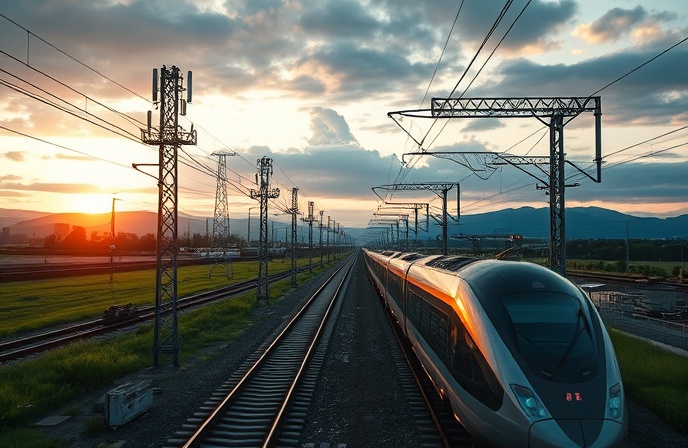
Keeping Railways Connected: The Vital Role of TETRA Critical Communications
The smooth and safe operation of modern railways relies on instant, reliable communication. From train control to emergency services, every aspect hinges on a robust and resilient network. But what technology underpins this crucial lifeline? The answer lies largely with TETRA critical communications, a technology specifically designed to meet the demanding needs of railway environments. This article will delve into the importance of TETRA, examining its capabilities, the challenges it addresses, and its ongoing relevance in an evolving technological landscape. We’ll explore why TETRA critical communications remains the backbone of secure railway operations and how it continues to evolve to meet the needs of the modern railway industry.
Understanding TETRA: The Foundation of Secure Railway Communication
TETRA, which stands for Terrestrial Trunked Radio, is a digital radio standard specifically designed for professional mobile radio (PMR) use. It’s a technology that prioritizes security, reliability, and group communication, making it ideal for railway operations. Unlike consumer-grade communication systems, TETRA offers encryption, secure authentication, and features like direct mode operation (DMO) that allows communication even when the network infrastructure is compromised. This inherent resilience is critical for railway applications. Features like push-to-talk (PTT) and group calls enable rapid communication between train drivers, control centers, and trackside personnel, ensuring swift responses to incidents and efficient day-to-day operations. The robust nature of a TETRA critical communications system directly translates to improved safety and operational efficiency across the railway network.
TETRA’s Key Advantages for Railway Applications
The inherent characteristics of TETRA provide numerous advantages specifically tailored for railway environments. One of the most important is its ability to provide guaranteed service availability. Redundancy is built into the network, ensuring continued communication even during infrastructure failures or extreme weather events. Furthermore, TETRA’s security features, including end-to-end encryption, prevent unauthorized access and protect sensitive operational data. This is paramount given the potential for cyberattacks and the need to maintain the confidentiality of train schedules and signaling information. Another benefit is its support for location-based services, enabling operators to track the precise location of trains and personnel in real-time. This enhances situational awareness and improves emergency response capabilities. Finally, the system’s ability to manage multiple users and groups simultaneously is critical for coordinating complex operations and ensuring everyone is informed.
Addressing the Challenges of Modern Railway Operations with TETRA
Modern railways face numerous challenges, from increasing passenger volumes to the integration of new technologies. TETRA critical communications is adept at handling these complexities. In high-density areas, TETRA’s capacity to manage a large number of users efficiently is a significant advantage. The system can support a high volume of simultaneous voice and data transmissions without compromising call quality or network performance. Furthermore, as railways embrace automation and data-driven operations, TETRA can be integrated with other systems, such as train control systems and condition monitoring sensors, enabling real-time data exchange. This facilitates predictive maintenance, optimizes train performance, and enhances overall operational efficiency. The inherent reliability and security of TETRA also help reduce downtime and improve safety margins.
Evolving TETRA: Maintaining Relevance in a Converging Technological Landscape
While TETRA critical communications remains a critical infrastructure, the industry is seeing the rise of hybrid solutions. Many railway operators are exploring the integration of TETRA with other communication technologies, such as broadband LTE and 5G networks. This allows for wider coverage and enables new data-rich applications, such as high-definition video streaming and the transmission of large files. However, even with the evolution of these advanced communications, TETRA remains vital for its reliability and security for mission-critical communications. Future developments in TETRA will likely focus on interoperability, allowing seamless communication across different networks, and continued enhancements in security and data capacity. The ongoing development and deployment of hybrid networks will ensure that railway operators have the best of both worlds – the reliability of TETRA for core services and the bandwidth of newer technologies for advanced applications.
Conclusion
In summary, TETRA critical communications remains an indispensable component of railway infrastructure, offering a secure, reliable, and efficient platform for mission-critical communications. From the core principles of secure group communication and robust network design to its ongoing evolution and integration with other technologies, TETRA continues to be a powerful tool for railway operators. The industry implications are significant. By leveraging the strengths of TETRA, railways can improve safety, enhance operational efficiency, and prepare for the challenges of a rapidly changing technological landscape. The future is hybrid, with interoperability and the integration of new technologies set to further enhance railway communication capabilities. Expect to see continued investment in TETRA critical communications systems and a growing focus on hybrid solutions that combine the security of TETRA with the bandwidth of advanced technologies. This focus will allow the railway industry to continue to operate at its best, and ensure the security of its operations for years to come.
RELATED POSTS

September 6, 2019 8:00 am
This article delves into the specifics of the rolling stock...

June 11, 2025 3:00 am
VTA seeks new contractor for San Jose BART extension tunnel...
June 12, 2025 12:00 am
Railway safety leaders unite at conference. Improved passenger safety...

Total sales volume of JSC Transmashholding and its subsidiaries is...
September 6, 2025 8:24 pm
Ohio railway grade crossings receive $1.4M in safety upgrades, with...

Brightline Florida's East-West Connector wins prestigious AREMA railway award, connecting...