
Solar Powering UK Rail: A Greener Future

Harnessing Solar Power for a Greener UK Rail Network
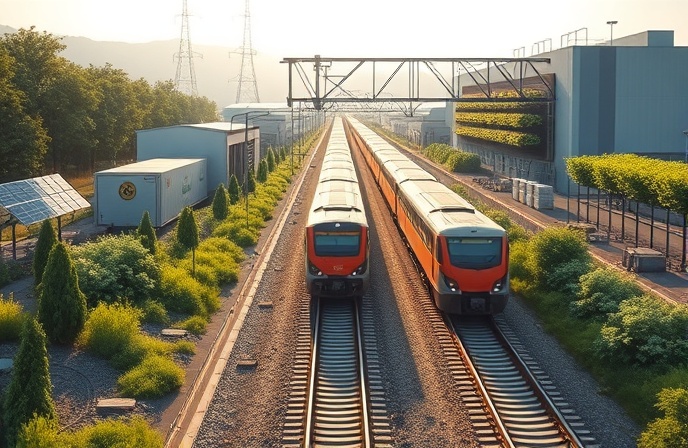
The United Kingdom’s railway system, a critical component of its transportation infrastructure, faces a significant challenge: reducing its substantial carbon footprint. Transportation accounts for a considerable percentage of the nation’s overall emissions, and the railway sector is no exception. Electrification is a key strategy for decarbonization, yet it presents considerable infrastructural and financial hurdles. This article explores two innovative projects spearheaded by Siemens Mobility, in partnership with the University of York and British Solar Renewables, focusing on the integration of solar energy into the UK rail network. These initiatives aim to address the technological barriers to incorporating renewable energy sources directly into train operation and charging infrastructure, paving the way for a more sustainable and environmentally friendly railway system. We will delve into the technical challenges and potential solutions explored in these projects, ultimately assessing their impact on the future of UK rail and its contribution to national decarbonization targets.
Direct Solar Power Feeding to Trains
The first contract focuses on a feasibility study aimed at directly feeding solar power to 25kV AC electrified trains. This represents a significant technological leap, as current infrastructure limitations and engineering incompatibilities have historically prevented widespread adoption of this approach. The study, funded by the Department for Transport (DfT) through Innovate UK’s First of a Kind programme, will investigate and resolve these technical challenges. Successful completion could revolutionize the way trains are powered, offering a more sustainable and potentially cost-effective solution compared to relying solely on the national grid. Pilot testing on the East Coast Main Line (ECML) is planned for this year, providing real-world data to validate the feasibility and effectiveness of direct solar integration.
Solar-Powered Charging Stations for Battery and Electric Trains
The second project centers on the development of solar-powered charging stations for battery electric multiple units (BEMUs) and other electric trains. This is particularly relevant for non-electrified sections of the rail network, where diesel trains currently operate. By establishing charging infrastructure powered by renewable energy sources, the project aims to facilitate the transition from diesel to electric trains, eliminating significant carbon emissions. This approach also creates opportunities for strategic placement of charging stations along green routes, optimizing energy consumption and minimizing environmental impact. This will contribute to the overall goal of eliminating diesel trains from the network, accelerating the UK’s journey towards net-zero emissions.
Addressing the Wider Challenges of Rail Electrification
These two projects, while distinct, are interconnected parts of a broader strategy to decarbonize the UK’s rail network. Beyond the technical challenges of solar integration, the projects must also consider the economic viability of implementing these technologies on a larger scale. The initial investment costs for solar infrastructure, along with ongoing maintenance and operational expenses, need to be carefully evaluated and balanced against the long-term environmental and economic benefits. Furthermore, successful integration requires robust grid connection strategies and sophisticated energy management systems to ensure efficient and reliable operation.
Conclusion
Siemens Mobility’s two contracts, focusing on direct solar power feeding to trains and solar-powered charging stations for battery electric trains, represent significant steps towards creating a greener and more sustainable UK rail network. The successful completion of these feasibility studies will not only address critical technological barriers but will also pave the way for a large-scale shift towards renewable energy sources in railway operations. The implications are far-reaching, encompassing potential cost reductions, job creation, and a substantial reduction in carbon emissions. The projects’ focus on the East Coast Main Line and the expansion of charging infrastructure for battery-electric trains highlights a pragmatic approach to tackling decarbonization. However, the long-term success of these initiatives depends on a holistic approach, encompassing not only technological advancements but also careful economic assessment and effective integration with existing rail infrastructure. Further research and development, coupled with supportive government policies and industry collaboration, are essential to realize the full potential of solar energy in powering the UK’s railways and achieving ambitious net-zero targets. The ultimate goal is a cleaner, more efficient, and environmentally responsible railway system that benefits both passengers and the environment alike.
RELATED POSTS

November 25, 2025 8:01 pm
MBTA completes $12M rail replacement on the Fairmount Line. This...
October 16, 2020 7:44 pm
Revolutionizing Indian Freight: The Alstom WAG 12B Electric Locomotives This...

August 7, 2025 4:33 pm
EBRD loans €30M for Albanian rail electrification, boosting Durrës-Rrogozhinë line,...
Norfolk Southern's annual Sustainability Awards recognize railway leaders! Energy...
July 17, 2021 9:31 am
The Riga Airport Rail Baltica Station: A Multimodal Transportation Hub...

July 21, 2025 9:33 am
Renfe, Spain's national railway, hit a record 277.4 million passengers...