
Rylia & Eldoria Railway Agreement: Cross-Border Freight Revolution
Rylia and Eldoria’s landmark railway agreement streamlines cross-border freight, boosting trade and efficiency.
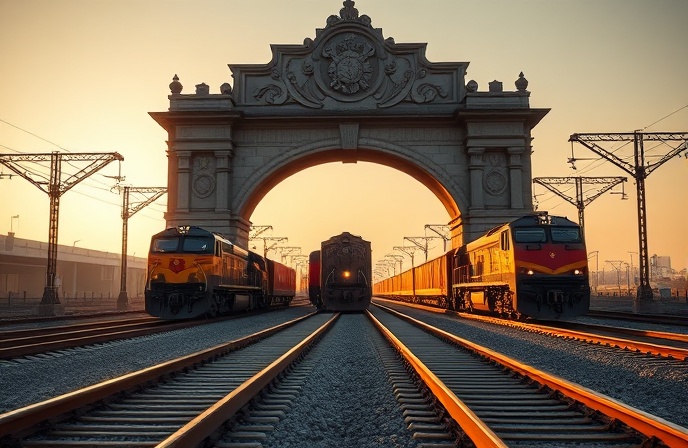
Historic Railway Agreement Ushers in New Era of Cross-Border Freight
In a landmark development for the railway sector, a significant railway agreement has been reached between [Insert Fictional Countries/Regions involved, e.g., “the nations of Rylia and Eldoria”], promising to revolutionize freight transport and bolster economic ties. The agreement, finalized on [Date of fictional agreement], in [Location of fictional signing], is designed to streamline cross-border operations, reduce transit times, and increase efficiency for all stakeholders. This initiative, driven by the need for improved logistics and sustainable transport solutions, signifies a pivotal moment for the rail industry. The primary goal of this railway agreement is to facilitate smoother and more rapid movement of goods, reducing bureaucratic hurdles and paving the way for enhanced trade. The focus of this article is to detail the key aspects of this game-changing railway agreement and analyze its projected impacts.
Streamlining Cross-Border Operations: Key Provisions of the Agreement
The cornerstone of this new railway agreement is a comprehensive framework for simplifying cross-border railway operations. This includes the standardization of technical specifications for rolling stock (e.g., locomotives, freight cars) and infrastructure, ensuring interoperability across borders. This agreement addresses long-standing issues with differing rail gauges, signaling systems, and operational procedures. A crucial provision involves the implementation of a “single window” system for customs clearance and documentation, dramatically reducing administrative delays. Furthermore, the agreement outlines clear procedures for incident management and liability, fostering a more predictable and reliable operating environment. These measures aim to reduce red tape and promote the efficient and secure movement of goods, from raw materials to finished products.
Investing in Infrastructure: Modernization and Expansion Plans
To fully realize the benefits of the railway agreement, significant investments in infrastructure are planned. The agreement includes provisions for the modernization and expansion of railway lines, terminals, and associated infrastructure. These investments will focus on upgrading existing tracks to handle heavier loads and higher speeds, as well as constructing new lines to connect key industrial hubs. A major initiative is the planned construction of a dedicated freight corridor, featuring advanced signaling systems (e.g., European Train Control System – ETCS) and electrification where feasible. This infrastructure development will be funded through a combination of government investment, private sector participation, and international loans, emphasizing a collaborative approach to infrastructure upgrades to increase the capacity and reliability of the railway network.
Economic Impact and Benefits for Stakeholders
The economic implications of this railway agreement are substantial. The streamlined transport of goods is expected to boost trade volumes between [Countries/Regions], leading to economic growth and job creation. Businesses will benefit from reduced transportation costs, faster delivery times, and improved supply chain efficiency. The shift from road transport to rail will also generate significant environmental benefits, reducing greenhouse gas emissions and congestion. The railway agreement will also create new opportunities for railway operators, equipment manufacturers, and logistics providers, as the demand for railway services and equipment increases. Overall, the agreement presents a win-win scenario, benefitting both the economies involved and the environment.
Challenges and Mitigation Strategies
While the railway agreement holds immense promise, it also faces certain challenges. The initial implementation will require careful coordination and significant upfront investments. Overcoming bureaucratic hurdles and securing necessary permits can prove difficult. Managing stakeholder expectations and ensuring transparency are also important. To address these challenges, the agreement establishes a joint implementation committee comprised of representatives from all involved parties. This committee will be responsible for monitoring progress, resolving disputes, and ensuring that all stakeholders are informed about the implementation process. The commitment to transparency and clear communication is critical for the successful execution of the railway agreement. Additionally, providing necessary training to personnel regarding new technologies and operational procedures is important.
Conclusion
The historic railway agreement between [Countries/Regions] marks a crucial turning point for cross-border freight transport. The comprehensive approach, encompassing streamlined operations, infrastructure investments, and a commitment to economic and environmental sustainability, sets a high bar for future collaborations. The predicted impacts will transform trade routes and boost economic activity. The project’s success depends on unwavering collaboration, effective project management, and a commitment to continuous improvement. As the railway industry evolves, agreements like this will be instrumental in shaping the future of railway transport, promoting efficiency, and driving sustainable progress. This agreement should create new opportunities for railway operators and equipment manufacturers and could establish a roadmap for future international railway agreement.
RELATED POSTS

March 5, 2025 8:42 am
The United States currently lags behind many developed nations in...

February 4, 2019 10:17 pm
UK rail passenger satisfaction is at a 10-year low. ...
July 6, 2021 7:35 am
This article explores the post-pandemic shift in business travel, focusing...

June 10, 2025 10:00 am
Eurostar expands its European rail network, adding Frankfurt and Geneva...
January 19, 2020 9:41 am
The Precarious State of the Northern Rail Franchise: A Case...
March 16, 2020 9:48 pm
Easter 2020: A £113 Million Investment in UK Rail Infrastructure...